

Innovation from thinking to action.
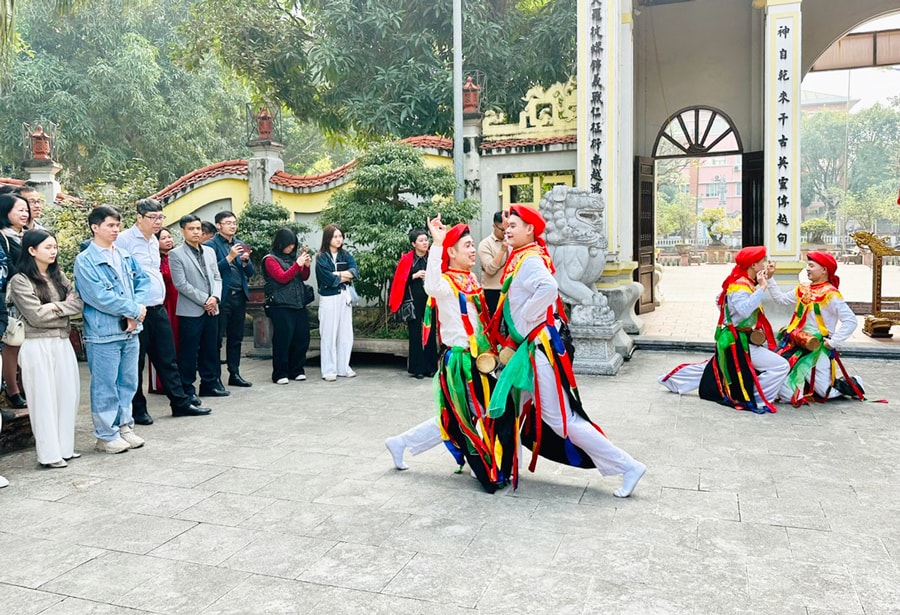
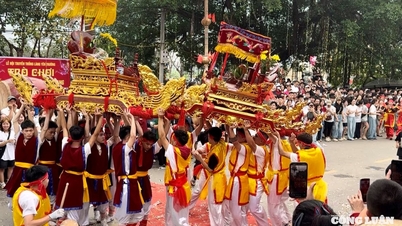
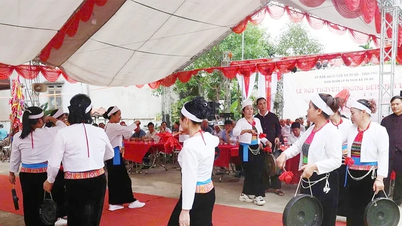
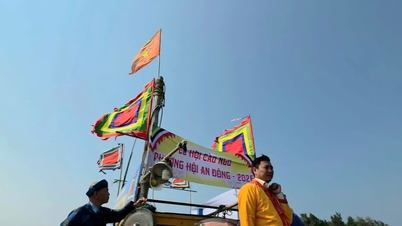
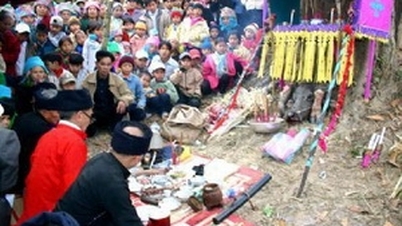
Hanoi, the capital city, boasts one of the richest cultural heritage systems in the country, with thousands of historical and cultural relics. This includes 1,661 traditional festivals of varying sizes held annually, ranging from city-wide events like the Giong Festival at Soc Temple (Soc Son commune), the Huong Pagoda Festival (Huong Son commune), the Co Loa Festival (Dong Anh commune), the Hai Ba Trung Temple Festival (Me Linh commune), and the Ngoc Hoi - Dong Da Victory Commemoration Festival (Dong Da district), to village festivals and traditional craft festivals. Each festival embodies unique historical, religious, customary, and folk art values.
According to Associate Professor Bui Hoai Son, Standing Member of the National Assembly's Committee on Culture and Social Affairs, in the context of cultural industries being identified as one of the pillars of Hanoi's development, traditional festivals are a valuable "soft resource." If organized, exploited, and promoted in the right direction, festivals can not only be limited to religious activities and seasonal entertainment, but can also become attractive cultural and tourism products, contributing to added value for the economy and spreading the image of Hanoi to the region and the world.
In recent years, Hanoi has made significant efforts in preserving and promoting the value of traditional festivals. According to Pham Xuan Tai, Deputy Director of the Hanoi Department of Culture and Sports , the management and organization of festivals are receiving increasing attention. Many traditional festivals have undergone innovation and improvement in their organization, initially linking with tourism development. The digitalization of festivals is considered a new highlight as many localities strive for digital transformation, applying technology to management and visitor experiences.
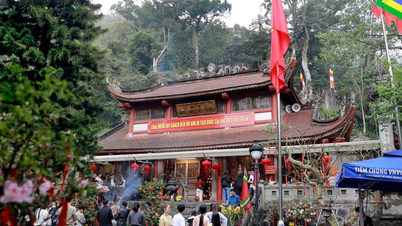
The Huong Pagoda Festival is a highlight. Besides continuing to sell electronic and online tickets, Huong Son commune has installed AI cameras to proactively manage traffic flow. According to Mr. Vuong Trong Dao, Vice Chairman of the Huong Son Commune People's Committee, the locality has dismantled and renovated 155 business establishments, including 71 that were completely dismantled and 84 that were dismantled and renovated simultaneously, returning approximately 6,500 square meters of land to the common area of the historical site. “We aim for a Huong Pagoda Festival rich in cultural identity, civilized, and professional in service. In the future, the commune will standardize the stalls in an environmentally friendly direction; boat drivers will wear branded uniforms, and each boat will have a QR code for tourists to look up information,” Mr. Vuong Trong Dao shared.
At the Co Loa historical site in Dong Anh commune, a "Digital Historical Site - Traditional Festival Space" has been put into operation for the first time, creating a new experience for locals and tourists. According to Nguyen Thi My Linh, Head of the Culture and Social Affairs Department of Dong Anh commune, the locality has digitized historical documents, gradually forming a "Dong Anh Digital Cultural Data Bank." 3D and VR/AR technologies are being applied to recreate the Co Loa festival space, processions, traditional rituals, folk games, and experiential spaces. Artifacts are scanned and digitized in 3D; documents that no longer exist are reconstructed using video and motion graphics, contributing to the vivid and accessible restoration of cultural memories for the public, especially young people.
Meanwhile, at the Soc Temple historical site (Soc Son commune), this year's Soc Temple Festival is also being urgently prepared with many new features. According to Dao Anh Tu, Director of the Soc Temple Tourism and Historical Site Management Center, the locality is undertaking large-scale renovations and improvements to many construction items to expand the historical site's space and create new highlights for the festival. A key feature of this year's Giong Festival at Soc Temple is the launch of the Soc Temple night tour and the program "Sacred Night - The Spirit of Saint Giong" (on the evening of the 7th day of the first lunar month of the Year of the Horse, February 23, 2026), expected to attract approximately 10,000 participants.
Forming a cultural industry ecosystem from festivals.
According to the Hanoi People's Committee's Plan for the Management and Organization of Festivals in Hanoi in 2026, the city requires that festival activities in the Year of the Horse (2016) be conducted in a solemn, safe, healthy, and lawful manner. One of the key objectives is to gradually transform festivals from purely religious and traditional cultural activities into products of the cultural industry, linked to sustainable tourism development. The city also aims to promote the application of digital transformation and innovation in the management, organization, and promotion of festivals, thereby building Hanoi's image as a "Safe - Friendly - High-Quality - Attractive" destination.
According to Vu Van Tuyen, General Director of Travelogy travel company, festival tourism combined with spiritual tourism is a very attractive type of tourism, becoming an economic lever for localities. Meanwhile, Phung Quang Thang, Chairman of the Vietnam Green Association, believes that festivals are not only spaces for recreating traditions but also "stages" to tell stories about the history, people, and identity of Hanoi through the language of traditional and creative culture. "Innovations in the content of festival organization are creating positive changes as festivals increasingly attract large numbers of people and tourists, especially young people. They come to festivals not only for fun but also to better understand the culture, beliefs, and history of each region. Exploitation must be based on respecting original values, preserving the identity and spirit of the festival," Mr. Phung Quang Thang shared.
However, according to Pham Hai Quynh, Director of the Asian Tourism Development Institute, many festivals are still heavily focused on rituals, organized in a conventional way, and lack accompanying creative cultural products. Communication and promotion efforts are not commensurate with the potential; the application of digital technology is still limited. Many localities still lack essential service facilities such as accommodation and food, thus failing to "retain" tourists... These limitations highlight the urgent need to innovate the thinking and methods of organizing festivals towards a more professional, creative, and sustainable approach. To make traditional festivals truly a "lever" for the development of the capital's cultural industry, Mr. Pham Hai Quynh believes that a festival tourism ecosystem needs to be built. In addition to traditional festival activities, localities need to upgrade the quality of services such as accommodation, shopping, and food; and link local festivals with spiritual tourism destinations to create a unique and attractive chain of cultural-festival-spiritual tourism products.
It is evident that developing traditional festivals in the direction of cultural industries not only creates economic impetus but also contributes to shaping identity and spreading the image of Hanoi as a creative city. More importantly, this process awakens pride and responsibility in the community in preserving and promoting heritage. In this way, festivals are not just limited to a few days of events but become living cultural spaces, nurturing spiritual life and promoting sustainable development.
Source: https://hanoimoi.vn/le-hoi-truyen-thong-don-bay-phat-trien-cong-nghiep-van-hoa-thu-do-733660.html



















































Comment (0)