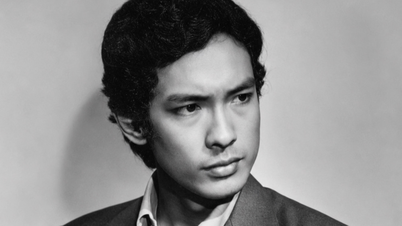
1. The story of Mr. Le Van Hoan, a National Assembly representative from Binh Tri Thien province, 8th term (1987-1992), was previously depicted in our series of biographical articles published in the Saigon Giai Phong newspaper (the article "Mr. Hoan '7 in 1'," which won third prize in the Dien Hong Journalism Award of the National Assembly in 2023). In Mr. Hoan, the image of an elected representative is clearly evident both in the parliamentary arena and in the years he was closely connected with the people.
In his memoir "Homeland," Mr. Le Van Hoan recounts his revolutionary journey amidst the harsh realities of war. What moves readers are the heroic sacrifices, the life-or-death battles, and above all, the deep affection he has for the people. Even after retirement, he continues to connect with many international organizations and philanthropists to support the construction of rehabilitation centers and schools for children in disaster-stricken areas, and to obtain breeding cattle to support the livelihoods of poor households. He once simply said, "I owe the people so much."
At the end of his memoir, he dedicated a chapter to listing the revolutionary families who had sheltered and protected him during his life-or-death moments. It was a chapter of gratitude, a profound reminder of the enduring bond between a revolutionary cadre and the people.



2. Recently, former Minister of Planning and Investment Vo Hong Phuc recounted a memory from his 2002 run for National Assembly representative in Lao Cai province. During a meeting with constituents in Bao Thang district, a resident spoke up, recalling meeting Mr. Phuc 18 years earlier when he was seeking building materials to construct resettlement housing for the people. At that time, materials were scarce and required multiple levels of allocation. Mr. Phuc had helped resolve the issue quickly for the residents. Eighteen years later, that constituent still remembered! The story brought laughter to the audience but also left a profound lesson. After the meeting, Provincial Party Secretary Giang Seo Phu jokingly but meaningfully remarked: “Luckily, you didn’t do anything bad. If you had, he would have recounted the story as he did today, and that would have been troublesome!” Mr. Vo Hong Phuc then concluded with: “People remember things for a long time. Good deeds or bad deeds, people always record them.”
Another story about the people's devotion in Northwest Vietnam, recounted by Mr. Vo Hong Phuc, still moves many. It was in the 1980s, during a trip to a remote village in Bac Ha on National Day, September 2nd, when the delegation discovered the village lacked a national flag. During the flag-raising ceremony, the village chief shouted: "Attention! Turn around! Salute the flag!" Everyone turned in one direction and saluted. Upon inquiry, the delegation learned that the village chief, having achieved great success and visited the Ho Chi Minh Mausoleum in Hanoi , was deeply moved by the sight of the large flag flying in front of Ba Dinh Square. Because his village didn't have a flag, every time they saluted, the villagers would turn towards Hanoi to salute "the common flag of the whole nation."
The story of the difficult 1980s, when the villagers in remote areas saluted the flag, facing the capital even without a flag, somehow keeps haunting me. For so many years, every time I go to these border villages, my first priority is always to look for the warm red flag with a yellow star amidst the clouds, rivers, and mountains.

Source: https://www.sggp.org.vn/long-dan-va-dai-bieu-dan-cu-post842912.html