

 |
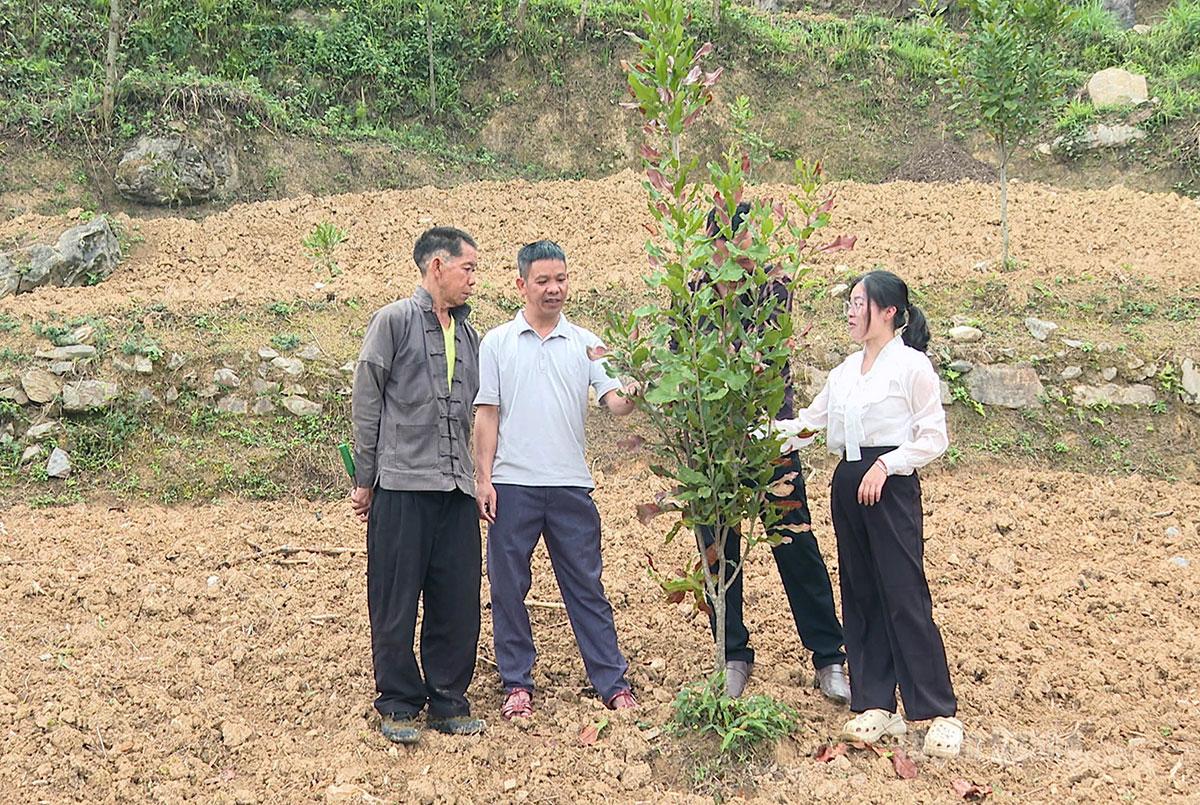
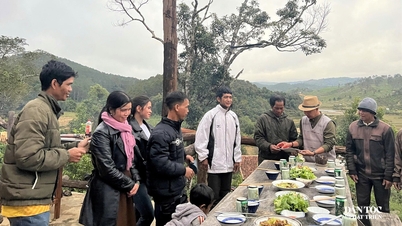
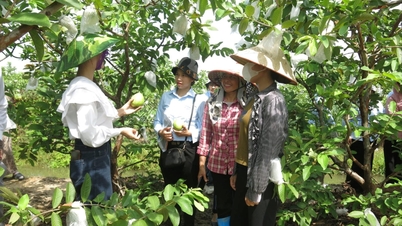
| Macadamia trees thrive and are well-suited to the soil and climate of Lung Cu commune. |
Lung Cu commune has a total natural area of 9,520 hectares. Due to its unique characteristics as a mountainous commune with rugged terrain, steep slopes, and strong fragmentation, mainly consisting of jagged limestone mountains, farming faces many difficulties. The harsh climate with cold winters, frequent frost and ice; the sloping, dry, and nutrient-deficient soil directly affects crop growth. However, on land seemingly only suitable for traditional crops, a new direction is gradually taking shape under the guidance of the local Party committee and government.
According to Mr. Dang Van Hoai, an official from the Economic Department of Lung Cu commune, the locality is currently experimenting with a macadamia tree planting model in Say Sa Phin village. Few would have thought that this woody plant could take root, adapt, and thrive in the rocky mountainous region at the northernmost point of the country. Currently, the entire commune is implementing the model with approximately 350 macadamia trees, equivalent to nearly 0.9 hectares, including the area cared for by the Border Guard forces. Initial assessments show that the trees are growing well and adapting quickly to the local soil and climate conditions.
According to calculations, with current selling prices ranging from 60,000 to 100,000 VND/kg of fresh fruit, macadamia trees in Lung Cu will enter the harvesting stage in about two years. It is estimated that each hectare of macadamia trees could generate an income of approximately 100 million VND per year. Compared to traditional crops, macadamia trees not only offer higher economic value but also significantly reduce the amount of care required.
Not limited to macadamia trees, the agricultural landscape of Lung Cu is becoming increasingly diverse and profound thanks to the harmonious combination of traditional fruit trees, seed-producing forestry trees, and short-term medicinal plants. To date, the entire commune has successfully converted 13.4 hectares of low-yield agricultural land to cultivate new crops.
Recognizing that many areas of sloping, dry, and barren land were unsuitable for efficient corn cultivation, the commune authorities actively encouraged people to switch to ginger cultivation. To date, the total area planted with ginger in the commune has reached an impressive 174,547 hectares. Ginger not only tolerates drought well and has deep roots that prevent soil erosion, but also yields an average of 35-40 tons per hectare. With a price of 8,000-10,000 VND per kilogram, it generates hundreds of millions of dong in income, helping people cover their immediate living expenses.
In addition, the entire commune has planted 1,180 chestnut trees, equivalent to an area of nearly 5 hectares, nearly 80 hectares of local pear trees and Tai Nung pear (VH6) variety, and plum trees. People have applied pruning and fruit bagging techniques to create high-quality products. During the season, many orchards open their doors to visitors for sightseeing and photography, with entrance fees usually ranging from 20,000 to 30,000 VND per person. Some orchards also allow visitors to pick and enjoy plums and pears directly from the trees and cater to the needs of tourists who want to buy them as gifts when visiting Lung Cu flagpole.
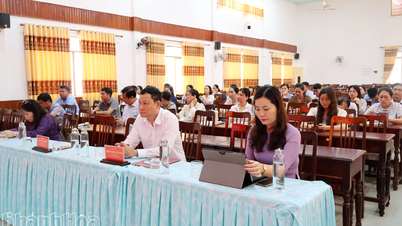
Sharing about the development strategy for the coming period, Comrade Ma Doan Khanh, Vice Chairman of the People's Committee of Lung Cu commune, said: “To maximize the potential of the land and at the same time create a highlight of characteristic agricultural products associated with tourism development, Lung Cu commune will continue to introduce some suitable crops such as walnut trees and Angelica sinensis. Our motto is "short-term gains to support long-term growth". After the woody trees have established their canopies, people will implement intercropping of short-term crops with high economic value under the trees to optimize the area and increase income per unit of cultivation.”
Text and photos: Phi Anh
Source: https://baotuyenquang.com.vn/kinh-te/202606/lung-cu-chuyen-doi-co-cau-cay-trong-cfd59e3/




























































Comment (0)