

Start your day with health news; you can also check out these articles: The mysterious mechanism between diabetes and cancer; If you experience this during exercise, you need to reduce your workout immediately; More cases of limb paralysis and mental disorders due to nitrous oxide abuse...
An unusual sensation in the neck may signal dangerously high blood pressure.
High blood pressure is known as the 'silent killer' because it's difficult for sufferers to notice the symptoms, but there's a common sign that can be seen in the neck that people shouldn't ignore.
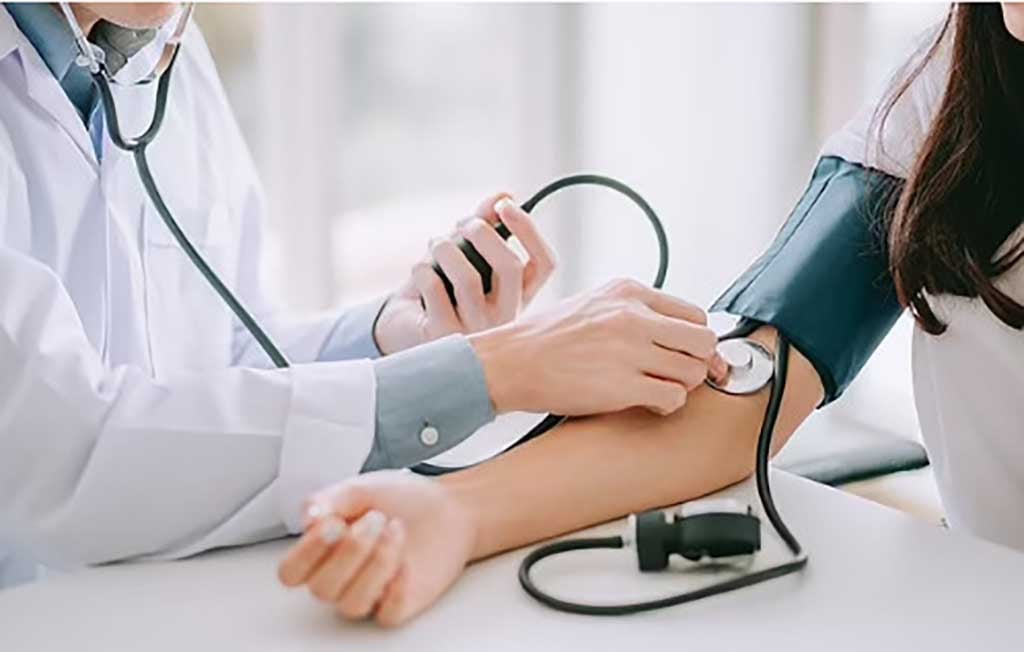
The only way to know if you have high blood pressure is to have your blood pressure checked regularly.
According to Riverside Mathews Medical Center (USA): In many cases, high blood pressure has no symptoms, so most people don't even know they have it. People with a family history of high blood pressure are at a higher risk of developing the condition.
This dangerous disease has only a few noticeable symptoms, and one of them is an unusual pulse in the neck. Patients will notice a strong pulse in their neck.
In addition, there are other symptoms such as headache, facial flushing, blood spots in the eyes, anxiety, shortness of breath, nosebleeds, blood in the urine, rapid heartbeat, dizziness, and nausea.
These are often late signs that the disease has been present for some time, so people should check their blood pressure regularly. Further details of this article will be available on the health page on September 25th.
The mysterious mechanism between diabetes and cancer
New research, published in the medical oncology journal Acta Oncologica, has found that insulin resistance, commonly associated with type 2 diabetes, also occurs in cancer patients and may cause cancer cells to multiply more rapidly, accelerating the spread of the disease.
In the 1920s, scientists discovered that the urine of cancer patients had a sweet smell. Initially, this puzzled doctors, but they realized it was due to elevated blood sugar levels .

In the 1920s, scientists discovered that the urine of cancer patients had a sweet smell.
One of the study's authors, Dr. Lykke Sylow, associate professor in the Faculty of Health Sciences at the University of Copenhagen (Denmark), said: "This is one of the first things we've learned about cancer patients."
Urine that smells sweet suggests that cancer is affecting the body's blood sugar levels. But how? This new research has answered that question.
In cancer patients, cells don't respond well to the hormone insulin. Therefore, these individuals need more insulin. Dr. Lykke Sylow explains: If a patient is insulin resistant, the body has to produce more insulin than normal to regulate blood sugar levels. And the body's ability to respond to insulin is impaired in both cancer patients and those with type 2 diabetes.
Symptoms of type 2 diabetes, such as fatigue, excessive thirst, and frequent urination, develop gradually and are therefore difficult to detect. And in cancer patients, insulin resistance is even harder to identify. Readers can find more information on this topic in the health section of this article dated September 25th.
If you experience this during exercise, you should reduce your workout immediately.
A common misconception in exercise is that the more you exercise, the better. But in reality, overexertion can be dangerous.
Next, fitness expert TJ Mentus, a certified personal trainer at Garage Gym Reviews (USA), will reveal the warning signs that you are overtraining .

A common misconception in exercise is that the more you exercise, the better. But in reality, overtraining can be dangerous.
Regularly reduced performance. According to a 2021 study published in the journal Frontiers in Network Physiology , poor physical activity is a common sign of overexercising.
According to Mentus experts, one of the first signs of overtraining is decreased workout performance. Occasional occurrences are fine, but if you're struggling with this all week or so, you need to make changes.
Heart rate remains high even at rest. A 2019 study in the scientific journal PLOS One showed that excessive exercise can put the heart at risk, according to Eating Well.
According to Mentus experts, a heart rate that is difficult to return to a normal resting state may be a sign of an overactive nervous system due to prolonged stress from excessive exercise. Additionally, overexertion can also lead to difficulty sleeping and loss of appetite. Start your day with health news to read more in this article!
Source link




![[Photo] General Secretary and President To Lam presides over a working session with the Central Policy and Strategy Committee on the development of the materials industry.](https://vphoto.vietnam.vn/thumb/1200x675/vietnam/resource/IMAGE/2026/05/21/1779359935432_a3-bnd-3129-1412-jpg.webp)
![[Photo] National Assembly Chairman Tran Thanh Man working with the Standing Committee of the Law and Justice Committee](https://vphoto.vietnam.vn/thumb/1200x675/vietnam/resource/IMAGE/2026/05/21/1779378929214_ndo_br_1-4610-jpg.webp)





























































































Comment (0)