

On the 16th day of the 8th lunar month, the main day of the Nghinh Ong Thang Tam Festival, before dawn broke, groups of young men, women, and elderly people could be seen gathering along the Bai Truoc beach, dressed in traditional long robes and headscarves, with five-colored flags fluttering in the early morning breeze. The elders, respected members of the community, led the procession on ceremonial boats, carrying ancestral tablets, incense burners, and offerings. Following them were dozens of smaller boats, adorned with fresh flowers, fluttering ribbons, and vibrant red and yellow flags, like a long silken ribbon stretching across the waves.
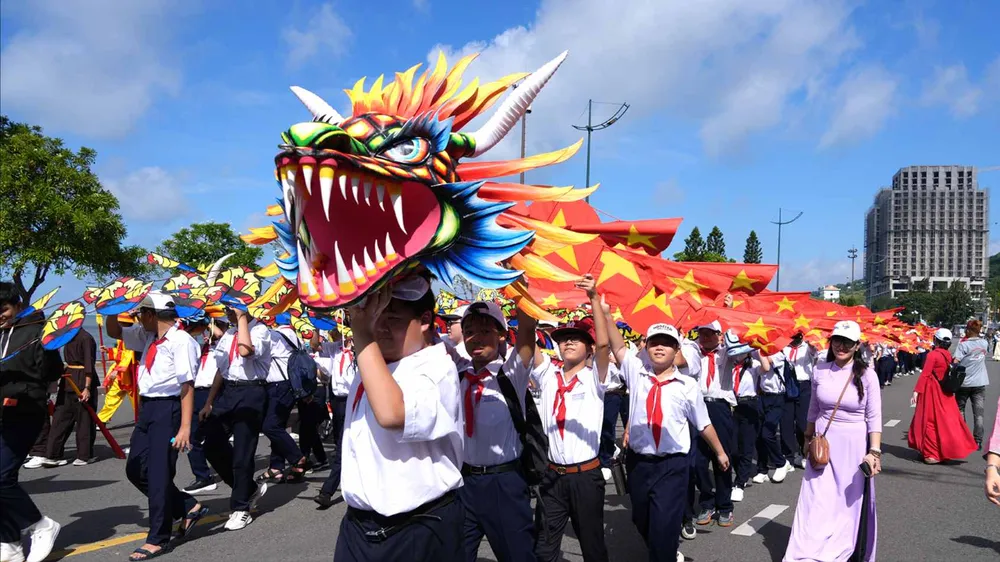
As the resounding drums and gongs rose, the procession of boats set off from Bai Truoc beach towards Bai Sau beach. The altar dedicated to the "Whale God" was solemnly placed on the main ceremonial boat, carrying the fishermen's wishes for peace and a bountiful fishing season. Local leaders and fishermen on the ceremonial boat lit incense and offered prayers. Once the procession was complete, the group returned to shore and gathered at Bai Truoc park.
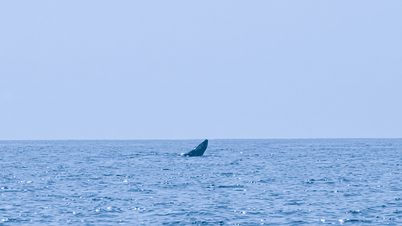
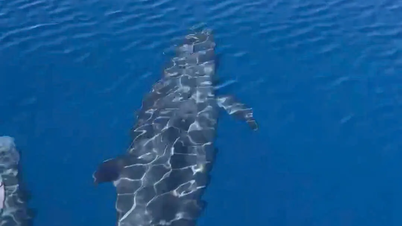
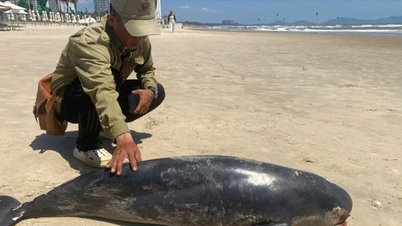
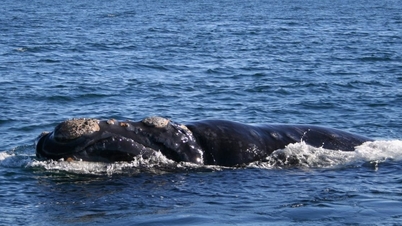
According to fishermen's legend, whenever they go out to sea and encounter storms and imminent danger, the Whale God will appear to guide them, helping their boats avoid the storm and reach shore. Since then, fishermen have believed that the Whale God always watches over and protects them. The Nghinh Ông Festival is an occasion for people to express the principle of "drinking water, remembering the source," not only towards the Whale God but also towards their ancestors and those who have fallen for the sea. The rituals commemorating heroic martyrs and worshipping ancestors blend into a solemn atmosphere, reminding today's generation to continue the tradition of living in harmony with nature and the community.
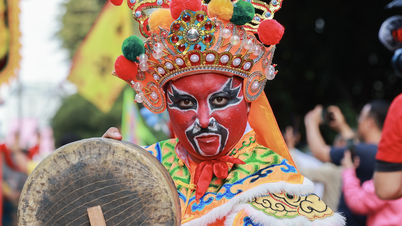
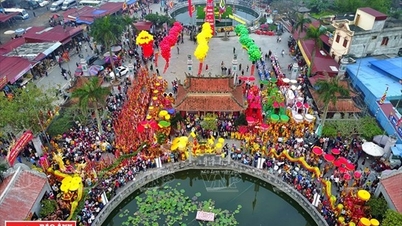
Following the solemn ceremony is a vibrant and colorful festival. Familiar yet captivating activities include lion, dragon, and unicorn dances, traditional opera performances, folk songs, and traditional games (such as net weaving, carrying fish, tug-of-war, boat racing, and sea swimming). In recent years, the festival has also included activities related to the sea, such as an open swimming competition, sand-based sports competitions, exhibitions of marine crafts, and seafood cuisine … attracting a large number of participants and significantly contributing to the development of cultural tourism in the area.
In the context of integration, many traditional festivals are at risk of fading away, but the Nghinh Ong Thang Tam festival has retained its vitality thanks to the collective efforts of the fishing community and the attention of the government. In 2023, this festival was recognized as a national intangible cultural heritage, contributing to promoting and showcasing the beauty of the local culture, attracting domestic and foreign tourists , and creating potential for sustainable tourism development in Ho Chi Minh City.
Amidst the vibrant flags, flowers, and resounding drumbeats, young faces—the next generation of fishermen—are following in the footsteps of their ancestors, preserving the spirit of the ancient Nghinh Ông ritual. They become storytellers of the sea, silently continuing the faith and gratitude of generations of fishermen.
Source: https://www.sggp.org.vn/mua-nghinh-ong-thang-tam-post817599.html
![[Image] National Assembly discusses the implementation of the socio-economic development plan.](https://vphoto.vietnam.vn/thumb/1200x675/vietnam/resource/IMAGE/2026/04/20/1776696707422_ndo_br_img-20260420-185419-jpg.webp)
![[Photo] General Secretary and President To Lam meets with National Assembly delegates from ethnic minorities.](https://vphoto.vietnam.vn/thumb/1200x675/vietnam/resource/IMAGE/2026/04/20/1776696701056_a1-bnd-8331-3342-jpg.webp)


















































Comment (0)