

In the US, inactive wells, estimated to cost $30 billion to seal, could release methane, oil, or other pollutants that contaminate the environment.
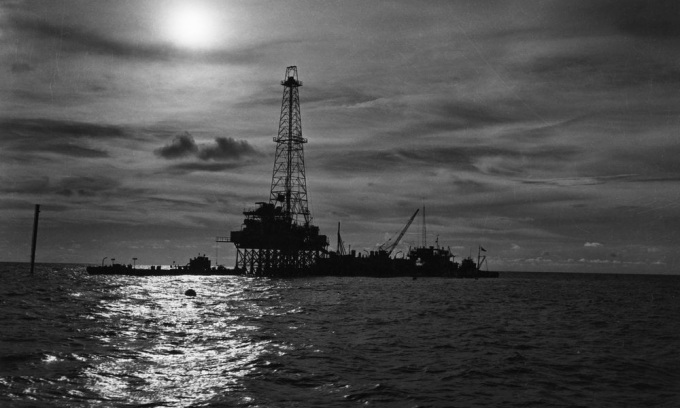
An oil well in the Gulf of Mexico, off the coast of Louisiana. Photo: Louisiana Bettmann
When oil and gas wells are no longer in use, operators must seal them to prevent leaks. However, approximately 14,000 inactive wells in the U.S. Gulf of Mexico remain unsealed, the Smithsonian reported on May 16. The new research was published in the journal Nature Energy.
The research team estimates that sealing all of these wells, typically with cement, could cost up to $30 billion. While left untreated, they could harm the environment.
Wells that have ceased operation but haven't been sealed can release methane, oil, or other pollutants. These are not good for the ecosystem or human health if released in large quantities, according to energy economist Mark Agerton of the University of California Davis, co-author of the study. "We don't want those things in our drinking water, our food, or on the ground right next to us," he said.
The team of experts studied data on 82,000 oil and gas wells in the Gulf of Mexico from the U.S. Bureau of Safety and Environmental Enforcement (BSEE) and other databases. They discovered a large number of inactive wells in offshore waters, inland waters, and wetlands.
David Pettit, a lawyer for the non-profit Natural Resources Defense Council (NRDC), argues that it is unlikely all of these decommissioned wells will be sealed due to financial constraints.
However, according to the research team, focusing on wells in shallow water could be an effective way to mitigate the risk. They found that 90% of the inactive wells are located in shallow water, and sealing them would only cost a quarter of the total estimated cost.
Wells in shallow waters should also be prioritized because they pose a greater risk to the environment. Pollution near shore can destroy coastal ecosystems more easily. Methane leaking from shallow-water wells can also easily rise to the surface and enter the atmosphere, according to energy expert Gregory Upton at Louisiana State University, co-author of the study.
However, if the U.S. continues to shift away from and reduce its use of fossil fuels, the enormous cost of capping all unused oil and gas wells in the Gulf of Mexico will increase. The team of experts hopes the new research will provide information to help address the issues related to the cost of capping wells.
Thu Thao (According to Smithsonian )
Source link


![[Photo] Prime Minister Pham Minh Chinh attends the Conference on the Implementation of Tasks for 2026 of the Industry and Trade Sector](/_next/image?url=https%3A%2F%2Fvphoto.vietnam.vn%2Fthumb%2F1200x675%2Fvietnam%2Fresource%2FIMAGE%2F2025%2F12%2F19%2F1766159500458_ndo_br_shared31-jpg.webp&w=3840&q=75)


























































































Comment (0)