

At a meeting on industrial production and trade activities in the first three months of 2024, Bui Huy Son, Director of the Planning and Finance Department, stated that, in general, all three main sectors of the Ministry of Industry and Trade – industrial production, import and export, and the domestic market – showed very positive results in the first quarter of 2024, continuing the recovery trend from the end of 2023 and making a positive contribution to the overall economic growth in the first quarter of 2024.
Specifically, industrial production in the first quarter of 2024 continued to thrive, with the total value added of the entire industry estimated to increase by 6.18% compared to the same period last year (compared to a decrease of 0.73% in the same period last year), contributing 2.02 percentage points to the overall increase in the total value added of the entire economy (GDP in the first quarter of 2024 is estimated to increase by 5.66% compared to the same period last year, higher than the growth rate of the first quarter of 2020-2023). Of this, the manufacturing industry was the driving force of the entire economy's growth with a growth rate of 6.98%, contributing 1.73 percentage points; the electricity production and distribution industry increased by 11.97%, contributing 0.45 percentage points; and the water supply, waste management and wastewater treatment industry increased by 4.99%, contributing 0.03 percentage points. The mining sector alone decreased by 5.84% (coal production decreased by 0.3% and crude oil production decreased by 3.2%), resulting in a 0.2 percentage point drop.
The Director of the Planning and Finance Department added that industrial production increased across the board, with the industrial production index (IIP) in the first quarter of 2024 rising in 54 out of 63 localities. In particular, some localities saw relatively high increases in the IIP, reaching double to triple digits, due to strong growth in the processing and manufacturing industry or the electricity production and distribution sector ( Tra Vinh 's IIP increased by 102%; Khanh Hoa by 37%; Bac Giang by 23.9%; Thanh Hoa by 20%; Ha Nam by 17.2%; Quang Ninh by 14%...).
Notably, several key industrial products in Q1 2024 increased compared to the same period last year: Steel bars and angles increased by 29.1%; rolled steel increased by 24.1%; NPK compound fertilizer increased by 23.1%; textiles made from natural fibers increased by 21.8%; gasoline and diesel increased by 21.7%; urea fertilizer increased by 14.4%; and electricity production increased by 11.4%. Conversely, some products decreased compared to the same period last year: Natural gas and mobile phones both decreased by 13.3%; automobiles decreased by 11.3%; televisions decreased by 11.1%; liquefied petroleum gas (LPG) decreased by 11.0%; and motorcycles decreased by 5.2%.
Regarding import and export activities, with the recovery of the global market and the increase in export orders, import and export activities in the first quarter of 2024 showed positive signs and achieved favorable results. Total import and export turnover in March 2024 is estimated at US$65.09 billion, an increase of 35.6% compared to the previous month and 12% compared to the same period last year. Of this, exports are estimated at US$34 billion, an increase of 37.8% compared to the previous month and 14.2% compared to the same period last year (compared to a decrease of 14.3% in the same period of 2023); imports are estimated at US$31.08 billion, an increase of 33.4% compared to the previous month and 9.7% compared to the same period last year (compared to a decrease of 13.1% in the same period of 2023).
Overall, in the first quarter of 2024, the total value of goods exports and imports is estimated at US$178.04 billion, an increase of 15.5% compared to the same period last year. Of this, exports are estimated at US$93.06 billion, an increase of 17% compared to the same period last year (compared to a decrease of 11.6% in the same period of 2023); imports are estimated at US$84.98 billion, an increase of 13.9% compared to the same period last year (compared to a decrease of 15.4% in the same period of 2023).
Regarding the domestic market, the commodity market in March did not experience significant fluctuations; the supply of goods was abundant, meeting the needs of the people; the prices of some food items remained relatively stable thanks to abundant supply (except for live pig prices, which increased slightly). However, due to the return of consumer demand to normal after the Lunar New Year, total retail sales of goods and consumer service revenue in March increased by only 0.5% compared to the previous month and by 9.2% compared to the same period last year. Overall for the first quarter of 2024, total retail sales of goods and consumer service revenue at current prices are estimated at VND 1,537.6 trillion, an increase of 8.2% compared to the same period last year (Q1 2023 increased by 13.9%), or 5.1% if excluding the price increase factor (Q1 2023 increased by 10.1%). Retail sales of goods in the first quarter of 2024 are estimated at VND 1,190.3 trillion, accounting for 77.4% of the total and increasing by 7% compared to the same period last year (excluding the 4.5% increase due to price increases).
According to Director Bui Huy Son, the above results were achieved thanks to: (i) The effectiveness of government support measures and the decisive directives of the Prime Minister in disbursing public investment capital and implementing key industrial projects; (ii) The results of attracting and disbursing FDI capital, which helped increase domestic production capacity; (iii) The recovery of the world market, gradually shifting to a new state, adapting to the major fluctuations in 2022 and 2023; The number of new export orders has increased; (iv) Efforts in diversifying export markets, especially upgrading relations with our major trading partners such as the US, China, Japan... have strengthened investor confidence; (v) The capacity of enterprises, especially domestic enterprises, has improved.
However, despite the positive results mentioned above, the development of the Industry and Trade sector in the first quarter of 2024 still had limitations such as an upward trend in the inventory index of processed and manufactured products; lower growth in the domestic market compared to the same period last year; continued dependence on a few main markets for export and import activities; and limited contribution of domestic enterprises to exports (28.1%).
Accordingly, in the coming period, the Ministry of Industry and Trade will continue to focus on implementing synchronously and effectively the tasks assigned in Government Resolutions 01 and 02. It will concentrate on implementing the National Sectoral Planning Plans in the energy and mineral sectors immediately after their approval by the Prime Minister, especially the Power Plan 8, to encourage investment and development of key energy projects, creating momentum for industrial growth in the coming years. At the same time, it will focus on perfecting the institutional framework, specifically by drafting and submitting to the Government for consideration and submission to the National Assembly four draft laws (the Law on Chemicals, the Law on Electricity (amended) have been included in the 2024 legislative program; the Law on Key Industrial Development and the Law on Efficient Energy Use are currently being proposed for inclusion). Finalize and submit to the Government for consideration and promulgation mechanisms to remove difficulties and promote investment in offshore wind power and solar power projects, direct power purchase agreements (DPPA), mechanisms for developing rooftop solar power, and electricity purchase prices from Laos.
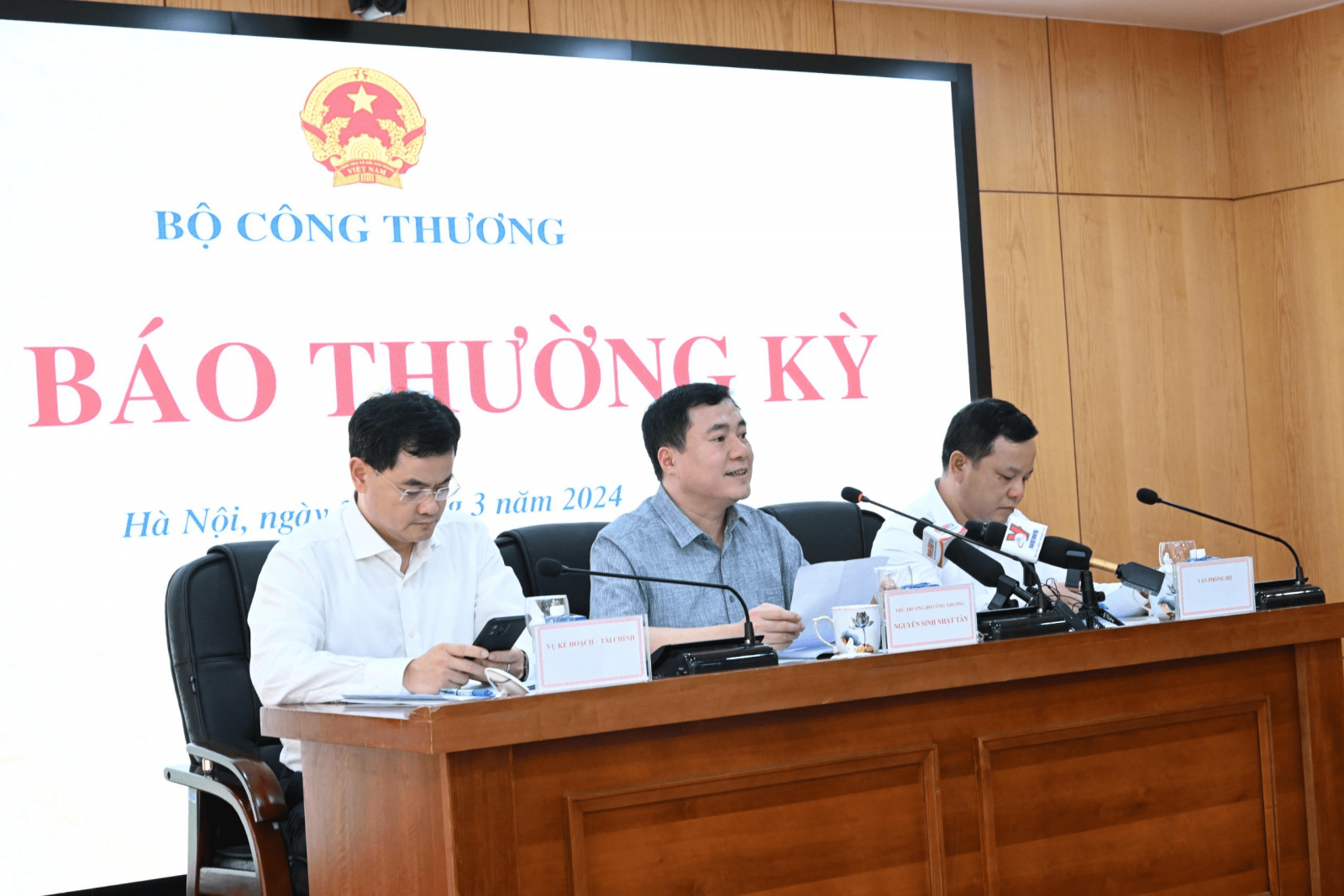
Also at the press conference, Deputy Minister of Industry and Trade Nguyen Sinh Nhat Tan and leaders of several units under the Ministry answered many questions from the press related to issues under the management of the Ministry of Industry and Trade.
The new Decree on Petroleum Business moves closer to a market mechanism.
Responding to a reporter's question regarding the drafting of a new Decree on Petroleum Business to replace the three current decrees on petroleum management, Deputy Director of the Domestic Market Department Nguyen Thuy Hien stated that, following the Government's directive, the Ministry of Industry and Trade is currently coordinating with relevant ministries, agencies, and units to develop a draft decree on petroleum business. Regarding the petroleum pricing mechanism, the draft decree is expected to move closer to a market-based mechanism, with the state issuing a pricing formula to allow petroleum businesses to proactively determine selling prices, but the price must not exceed the level stipulated in the pricing formula.

Regarding the second point concerning the mechanism for stabilizing gasoline and diesel prices, the Gasoline and Diesel Price Stabilization Fund has recently revealed some shortcomings that need to be studied, reviewed, and amended. Accordingly, more specific regulations on the level of contributions and expenditures, the time frame for contributions and expenditures, as well as other related issues, are currently being considered.
Regarding the draft Decree, as expected, it clearly stipulates that in cases of price stabilization, the Ministry of Industry and Trade will take the lead in coordinating with other ministries and agencies to propose and compile a report for the Government to consider and decide on the policy of stabilizing gasoline and diesel prices. This is also consistent with the provisions of the 2023 Law on Prices, which will come into effect on July 1, 2024. The draft is currently being reviewed by specialized agencies and relevant organizations. The Ministry of Industry and Trade will work with relevant ministries and agencies to study and evaluate it in order to finalize it and seek broader feedback.
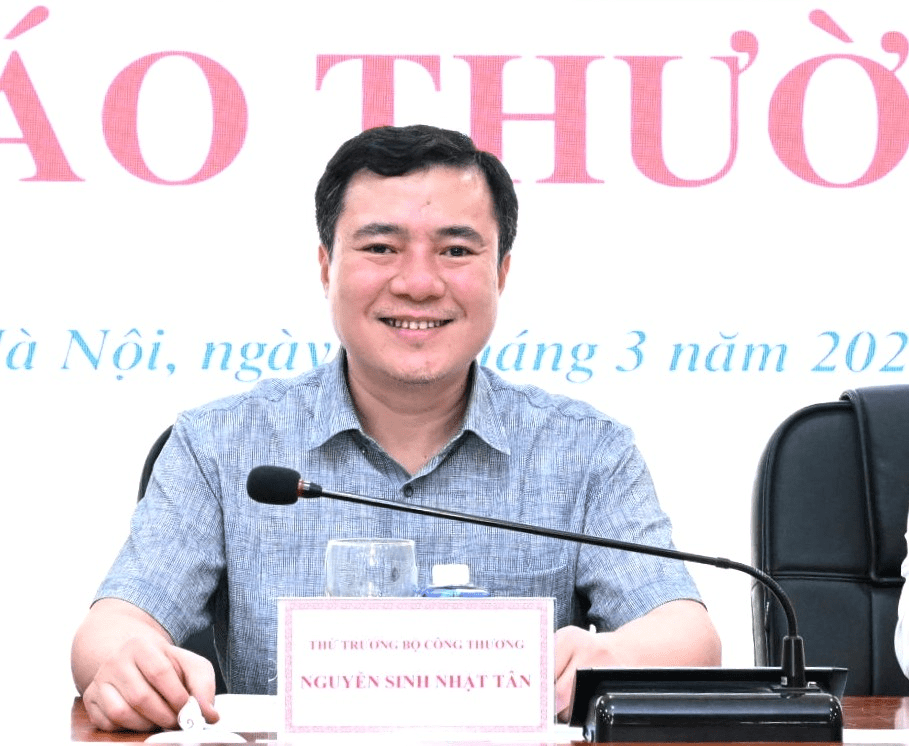
Providing further information on this matter, Deputy Minister Nguyen Sinh Nhat Tan - Spokesperson of the Ministry of Industry and Trade - said that, according to the process of drafting legal documents, the new Decree on Petroleum Business, intended to replace the three current Decrees on petroleum management, needs time to be publicly announced and widely discussed with units, organizations, and individuals for 60 days. During the drafting process, the Ministry of Industry and Trade, in coordination with the Drafting Committee, agreed to begin the public consultation process starting from March 27th.
The new draft decree contains many innovative provisions aimed at ensuring the ultimate goal of balancing supply and demand and guaranteeing energy security. Furthermore, the implementation process needs to be both market-oriented and subject to regulation by state agencies.
Regarding price management, currently, price management is carried out in an inter-ministerial spirit, setting a ceiling price for reference, and from there, businesses determine their own calculated prices to suit their actual business situation, but without exceeding the ceiling price, Deputy Minister Nguyen Sinh Nhat Tan said.
We are determined to ensure electricity supply throughout the year, especially during the 2024 dry season.
Responding to a reporter's question about concerns regarding electricity shortages this year, Deputy Director of the Electricity Regulatory Authority Nguyen The Huu stated that as of the end of March 2024, electricity demand had increased by approximately 11.5%. To ensure electricity supply from the end of 2023, the Ministry of Industry and Trade has directed relevant units to implement a comprehensive range of solutions regarding mechanisms, policies, investment in construction, and strict adherence to operational procedures to ensure the highest possible electricity supply for daily life, production, and business.
Specifically, the Ministry of Industry and Trade has proposed solutions to ensure electricity supply, including: Firstly, focusing resources on completing power grid and power generation projects to alleviate power congestion and enhance transmission capacity; Secondly, ensuring sufficient supply of raw materials and fuel for power generation, especially coal and gas; Thirdly, strengthening supervision and inspection of the operation of electricity sector regulations, promptly resolving incidents, and preparing spare parts to ensure system operation; Fourthly, rationally regulating hydropower plants to ensure reserve power capacity during peak dry season periods; Fifthly, strengthening the review of 500kV and 200kV transmission lines, inspecting and rectifying any defects to minimize the risk of incidents; Sixthly, strengthening public awareness campaigns and promoting electricity saving programs.
The Deputy Director of the Electricity Regulatory Authority further informed that, in February and March, following the Minister's directive, relevant departments and divisions of the Ministry of Industry and Trade organized working groups with power generation, transmission, and distribution units to review and ensure electricity supply throughout the year, especially during the 2024 dry season.
In fact, the forecast for electricity demand in 2024 continues to show high growth compared to 2023. As early as the end of 2023, the Ministry of Industry and Trade issued Decision 3110/QD-BCT dated November 30, 2023, approving the plan for electricity supply and operation of the national power system in 2024. The Ministry of Industry and Trade also issued Decision 3376/QD-BCT dated December 29, 2023, approving the plan for electricity supply during the peak dry season months (April, May, June, July) in 2024, with a projected load increase of 9.6% to provide for the operation of the power system during the peak summer months.
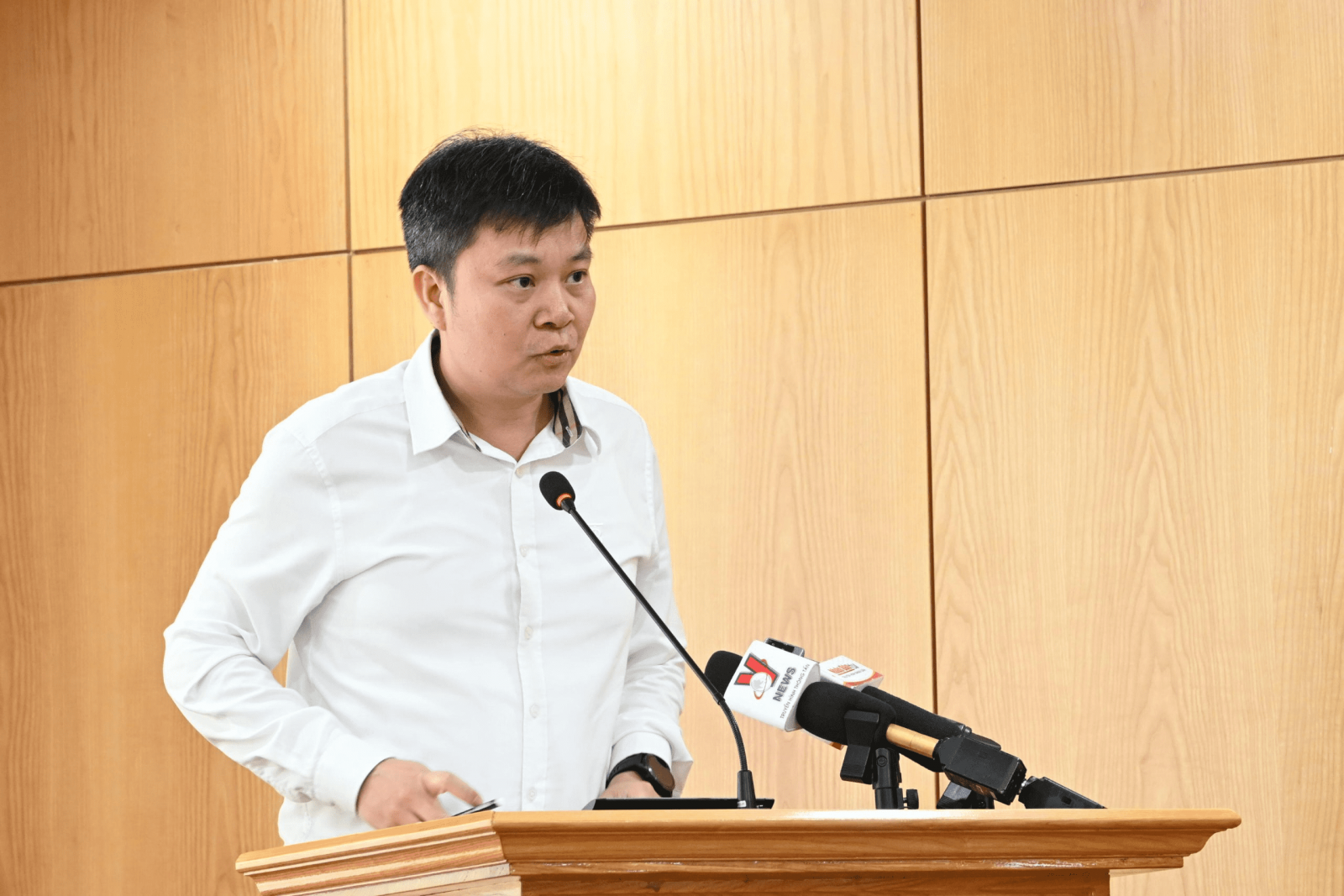
Regarding electricity prices, according to Mr. Nguyen The Huu, adjustments should be made according to a roadmap to minimize the impact on the macroeconomic economy and electricity consumers. Consideration should be given to shortening the minimum cycle for electricity price adjustments to ensure that costs do not accumulate excessively, which could affect EVN's financial balance; and to gradually adapt electricity prices to fluctuations in input parameters according to market conditions.
"This proposal is also consistent with the guiding principles in Resolution No. 55-NQ/TW dated February 11, 2020, of the Politburo on the strategic orientation for the development of Vietnam's national energy sector until 2030, with a vision to 2045, according to which market prices should be applied to all types of energy," Mr. Nguyen The Huu emphasized.
Regarding the new points in Decision 05/2024/QD-TTg, according to Mr. Nguyen The Huu, it is the proposal to shorten the minimum time between two price adjustments from 6 months to 3 months. This does not mean that electricity prices will be adjusted every 3 months, but rather depends on the assessment of the impact on the macroeconomic situation, as well as whether the updated electricity price calculations have reached a level sufficient to be considered for adjustment according to regulations.
"Decision 05/2024/QD-TTg, which replaces Decision No. 24/2017/QD-TTg, was recently issued. It inherits and only adjusts some new contents to conform with the Party and State's policies and directions, and the Government's guidance on the energy market in general and the electricity market in particular, in line with reality and the trend of integration," said Mr. Nguyen The Huu.
Providing further information on this matter, Deputy Minister Nguyen Sinh Nhat Tan stated that, as the ministry managing the industry, the Ministry of Industry and Trade still retains its primary role and responsibility in managing electricity prices; in the process of inspecting and reviewing electricity pricing plans developed by EVN; in the process of inspecting and adjusting electricity prices; and in advising the Prime Minister on electricity price management.
Regarding concerns about electricity shortages this year, Deputy Minister Nguyen Sinh Nhat Tan stated that the power load reduction in some localities in June 2023 was an unfortunate incident. The Prime Minister is also very concerned and has issued many directives to ensure electricity supply in 2024. Specifically, firstly, the Prime Minister has assigned the Ministry of Industry and Trade to directly supervise and participate in the operation, together with EVN, to ensure electricity supply.
Secondly, there needs to be innovation in planning, operation, and ensuring the supply of raw materials for the power system. In addition, since Decision 05/2024/QD-TTg, the Ministry of Industry and Trade has proactively issued a plan for electricity supply, while also ensuring the supply of raw materials, especially gas and coal, to serve power sources.
In particular, the Ministry of Industry and Trade has issued a separate plan for electricity supply during the dry season months. This plan covers the period from April to July, with monthly and quarterly reviews and reports to ensure timely adjustments. "The Ministry of Industry and Trade, together with EVN and relevant units, will propose many solutions to ensure electricity supply. We are confident and affirm that there will be no electricity shortage in 2024 and we will strive to ensure sufficient electricity in the following years," Deputy Minister Nguyen Sinh Nhat Tan emphasized.
Regarding the implementation plan for the Power Development Plan VIII, Mr. Bui Quoc Hung, Deputy Director of the Electricity and Renewable Energy Department, stated that the Power Development Plan VIII is highly anticipated by investors, but there have been delays due to numerous difficulties and obstacles. In accordance with the tasks assigned in Decision No. 500/QD-TTg approving the National Power Development Plan for the period 2021-2030, with a vision to 2050, and based on Article 45 of the Planning Law, the Ministry of Industry and Trade has coordinated with relevant agencies to research and develop an implementation plan for Power Development Plan VIII.
The Ministry of Industry and Trade has implemented this plan, submitting it to the Government six times. The Government has also held numerous meetings, including two recent meetings on February 29, 2024 and March 25, 2024, assessing the Power Development Plan VIII as a complex issue, attracting attention from many levels of government and domestic and international sectors, and generating many opinions during its development and refinement. The goal is to create a comprehensive, feasible plan with the ultimate objective of ensuring electricity supply for socio-economic development. During the development process, although the Ministry of Industry and Trade has made great efforts to finalize the implementation plan for Power Development Plan VIII according to schedule and the directives of the Government and the Standing Committee of the Government, 17 localities submitted proposals for renewable energy projects significantly behind the deadline set by the Government. After reviewing the legal aspects and criteria of the projects provided by the localities, the Ministry of Industry and Trade has finalized the list and proposed it to the Prime Minister for approval, in accordance with the allocated renewable energy power generation capacity.
Many solutions to open up the market.
Regarding the question about the results of import and export activities in the first three months of 2023, Deputy Director of the Import and Export Department Tran Thanh Hai said that currently, the recovery of production is quite good, contributing to the recovery of export growth. In particular, many major export markets have recovered, overcoming the recession period.
These results were achieved thanks to government solutions to support businesses such as tax reductions and administrative procedure reforms; Vietnam actively attracted investment, as well as welcomed waves of foreign investment.
In addition, regarding the exploitation of benefits from the FTAs that Vietnam has signed, Mr. Nguyen Thanh Hai said that Vietnam has currently signed 16 FTAs, and the markets are basically very effective, with Vietnam's major trading partners all being included in these FTAs.
In addition, the Ministry of Industry and Trade is also striving to explore the possibility of signing FTAs with regions that do not yet have FTAs, such as the Middle East, South Asia, and Africa, thereby improving and increasing export turnover.
According to a representative from the Import-Export Department, in addition to the 16 FTAs, Vietnam is currently negotiating three more: the FTA between Vietnam and the EFTA bloc (comprising Switzerland, Norway, Iceland, and Liechtenstein); participation in the ASEAN-Canada FTA negotiations; and the FTA between Vietnam and the UAE, which is also in the process of being finalized soon.
To achieve the export growth target for 2024, according to Mr. Tran Thanh Hai, in the current context, the Ministry of Industry and Trade will continue to strive to implement many proposed solutions, including expanding negotiations on FTAs, disseminating information to realize the benefits from FTAs that we have signed and put into effect; innovating trade promotion activities, implementing digital transformation; helping businesses facilitate the export of goods; and simplifying import and export procedures.
Further emphasizing the effective exploitation of markets where Vietnam already has FTAs, Deputy Minister Nguyen Sinh Nhat Tan added that, in addition to continuing to expand and research the signing of more FTAs, Vietnam continues to strengthen and upgrade existing FTAs such as those related to ASEAN, further expanding markets; making better use of existing FTAs, and exploiting traditional markets.
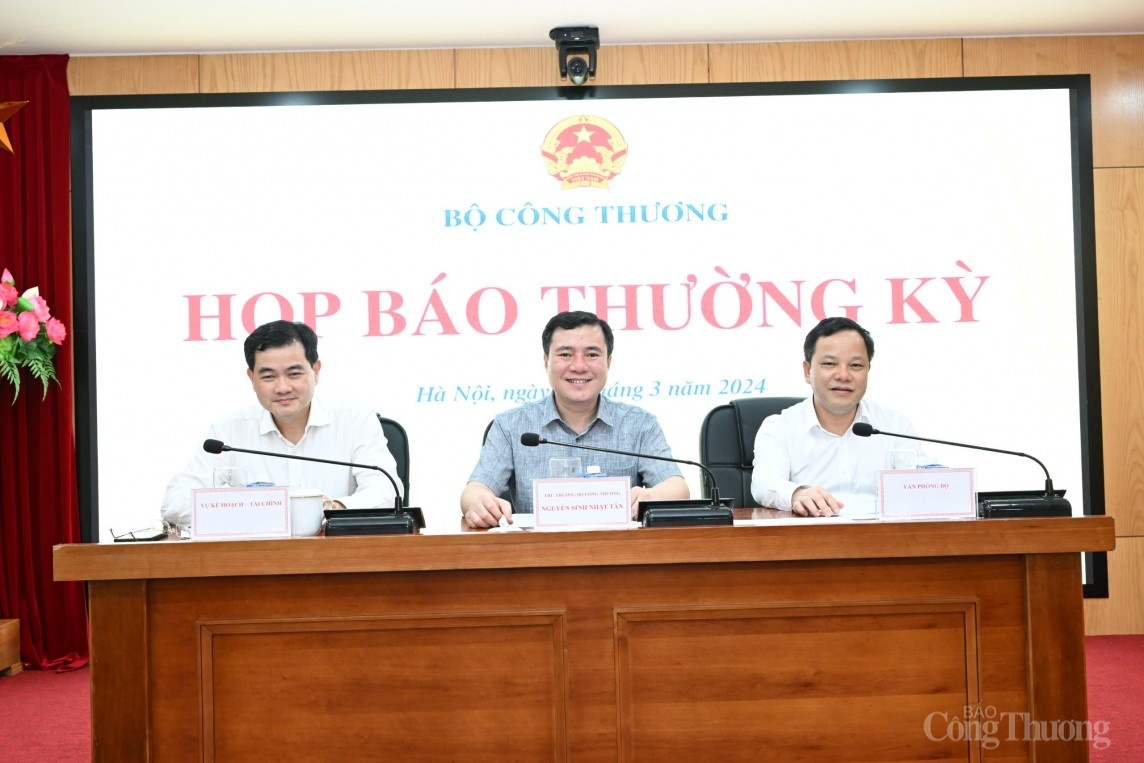
The spokesperson for the Ministry of Industry and Trade also noted that export and import activities still depend on a few key markets; the contribution of domestic enterprises to exports remains limited. To maintain growth momentum, the Ministry of Industry and Trade, together with relevant ministries and agencies, will continue to support businesses in utilizing existing FTAs, upgrading existing FTAs to expand markets, and increasing the export capacity of Vietnamese goods. The Ministry of Industry and Trade will closely monitor market developments and policy changes of partners to propose appropriate solutions, developing diverse traditional and new export markets. At the same time, the Ministry of Industry and Trade will continue to inform industry associations about developments in export markets so that businesses can promptly adjust their production plans and orient themselves towards seeking orders from various markets.
Responding to a reporter's question regarding a request from a steel manufacturing company to the Trade Remedies Department for an anti-dumping investigation into hot-rolled steel, Mr. Chu Thang Trung, Deputy Director of the Trade Remedies Department, stated that the Ministry of Industry and Trade recently received anti-dumping dossiers from several domestic companies concerning certain imported products from China and India. According to the Law on Foreign Trade Management, domestic steel manufacturers have the right to submit dossiers to the competent authorities when they perceive dumping practices or signs of damage to the domestic industry.
“Immediately after receiving the application dossiers from businesses, based on regulations and procedures, the competent authority will conduct an assessment of the validity of the dossier (lasting 15 days). In case the dossier is incomplete, representatives of domestic production industries must submit supplementary documents. Once the dossier is complete and valid, the dossier will be assessed within 45 days. Based on that, a recommendation will be made to the Ministry of Industry and Trade to initiate or not initiate an anti-dumping investigation. The investigation period after initiation will last from 2 to 6 months (maximum 8 months). During the process, the investigating authority will provide specific notifications to relevant parties to ensure they provide complete evidence for comprehensive and fair consideration before reaching a reasonable conclusion. Even after the investigation is initiated, no measures will be applied to imported goods,” Mr. Chu Thang Trung clarified, adding that the investigation process will be conducted publicly and transparently; The relevant documents are fully publicized through various information channels. The Ministry of Industry and Trade, as well as the Trade Remedies Department, provide information to the press and businesses, and fully comply with the regulations of Vietnamese law and the World Trade Organization.
Adding to the answer, Deputy Minister of Industry and Trade Nguyen Sinh Nhat Tan stated that the right to request an anti-dumping investigation belongs to the businesses. Businesses have the right to file an application. There are differing opinions regarding the application process (some supporting anti-dumping investigations, others suggesting they should not be implemented). The Ministry of Industry and Trade always acts in accordance with regulations. The investigation process is conducted rigorously, and the results may or may not be applied. Therefore, sufficient grounds and evidence are needed to demonstrate whether or not an anti-dumping investigation should be implemented. “The Ministry of Industry and Trade is reviewing the matter and continuing to request further documentation from the parties involved; no final conclusion or decision has been made regarding whether or not an investigation should be conducted,” Deputy Minister Nguyen Sinh Nhat Tan informed.
Source


![[Photo] Prime Minister Pham Minh Chinh holds a phone call with the CEO of Russia's Rosatom Corporation.](/_next/image?url=https%3A%2F%2Fvphoto.vietnam.vn%2Fthumb%2F1200x675%2Fvietnam%2Fresource%2FIMAGE%2F2025%2F12%2F11%2F1765464552365_dsc-5295-jpg.webp&w=3840&q=75)


































































Comment (0)