

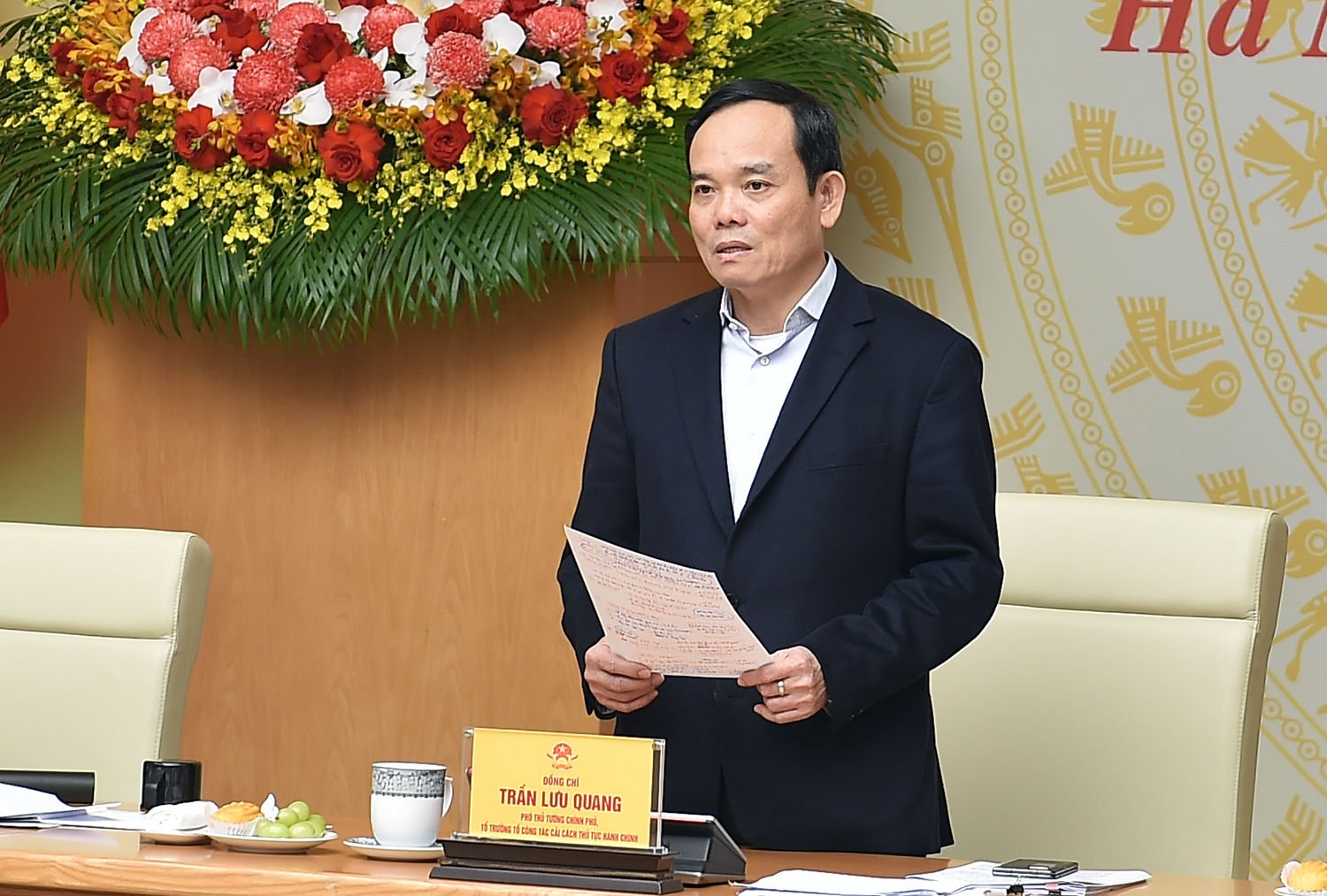
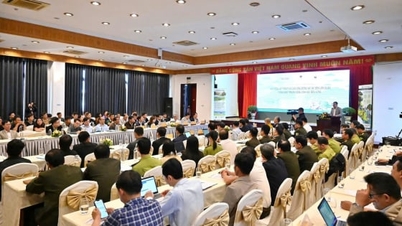
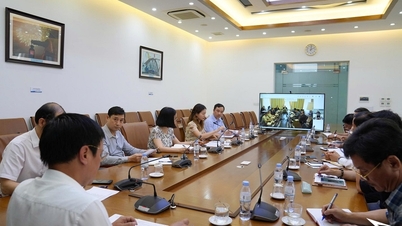
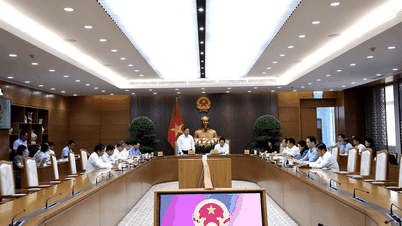
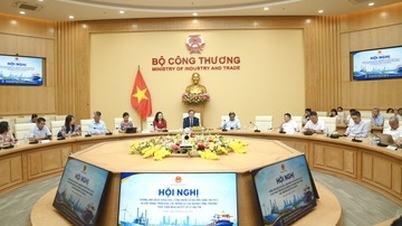
This spirit was emphasized by the Deputy Prime Minister at the third meeting of the Prime Minister's Task Force on Administrative Procedure Reform and the Prime Minister's Advisory Council on Administrative Procedure Reform, held in Hanoi on the morning of February 26th.
Also attending were Minister of Home Affairs Pham Thi Thanh Tra; Minister and Head of the Government Office Tran Van Son; and representatives of leaders from ministries, sectors, and business associations that are members of the Task Force and Advisory Council.
This is the first time that members of the Advisory Council have attended a meeting of the Task Force to exchange and share information and strengthen coordination between the Task Force and the Council.
Strengthening the Advisory Council on Administrative Procedure Reform of the Prime Minister's Office.
At the meeting, Minister and Head of the Government Office Tran Van Son announced Decision No. 1682/QD-TTg dated December 26, 2023, on the restructuring of the Advisory Council on Administrative Procedure Reform of the Prime Minister, with the Minister and Head of the Government Office as Chairman.
The Council is responsible for advising and proposing to the Prime Minister reform initiatives on mechanisms, policies, and administrative procedures related to production, business activities, and people's lives; and evaluating the implementation of administrative procedure reforms in ministries, sectors, and localities.
The Government Office is the permanent body of the Council, responsible for coordinating and ensuring the working conditions of the Council and mobilizing other relevant agencies and units to participate in the Council's activities; studying administrative reform initiatives proposed by Council members before the Chairman of the Council reports to the Prime Minister for consideration and decision.
The Department of Administrative Procedure Control, under the Government Office, is the supporting agency of the Council, performing the duties of the Council's secretary.
The Council has four working committees: the Committee on Reform of Mechanisms, Policies, and Administrative Procedures (Committee I), chaired by the President of the Vietnam Association of Small and Medium Enterprises; the Committee on Evaluating the Implementation of Administrative Procedure Reforms (Committee II), chaired by the President of the Vietnam Federation of Commerce and Industry; the Secretariat (Committee III), chaired by the Director of the Department of Administrative Procedure Control, Government Office; and the Committee on Research and Development of the Private Economy (Committee IV), chaired by the Chairman of the Founding Council of the Association of Software and Information Technology Services.
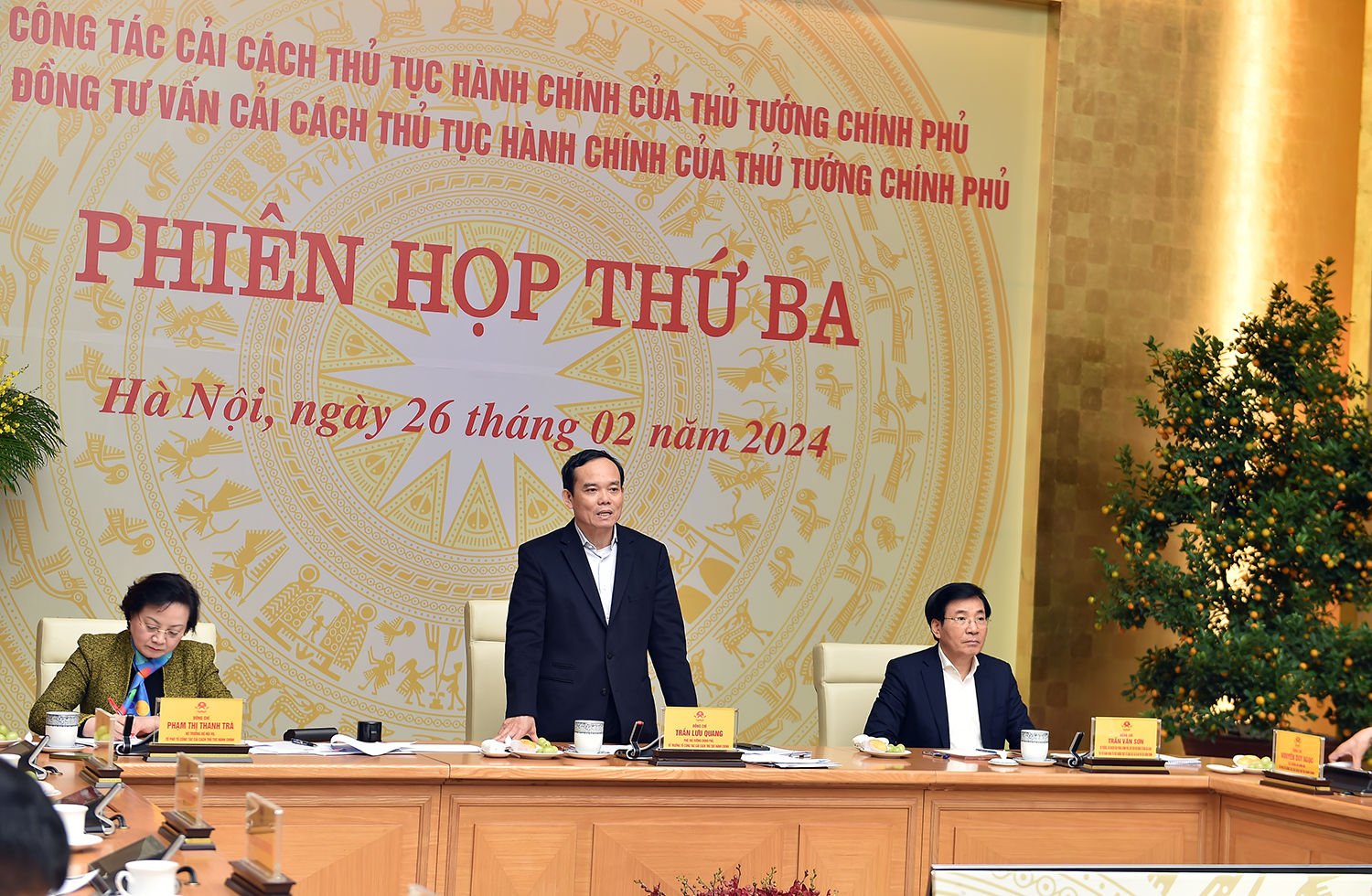
The task force handled 130 requests and feedback from businesses.
The report presented at the meeting showed that, despite being newly established and with a new approach emphasizing the responsibility of each member, the Task Force has played a significant role and achieved remarkable results. These include advising and proposing to the Prime Minister the issuance of Directive No. 27/CT-TTg dated October 27, 2023, on continuing to promote solutions for reforming and improving the efficiency of administrative procedures and providing public services to citizens and businesses, as well as 19 documents directing and urging ministries, sectors, and localities to implement assigned tasks on administrative procedure reform, and rectifying the issuance of some inappropriate regulations that cause inconvenience to citizens and businesses.
The task force received and directed ministries and agencies to handle 130 feedback and recommendations from business associations and member agencies of the Advisory Council on Administrative Procedure Reform. Ministries and agencies processed and responded to 116 feedback and recommendations in 2023, achieving a rate of 89.3%.
The advisory council has also been streamlined to be more efficient and effective. Over the past year, the advisory council has developed and published numerous reports related to administrative procedure reform and business support policies, with many recommendations for ministries, sectors, and localities to study and refer to; it has also compiled feedback and suggestions on difficulties and obstacles in implementing mechanisms, policies, and administrative procedures, reporting them to the task force for resolution.
According to the report, significant results have been achieved so far in reducing and simplifying regulations and administrative procedures, including the reduction and simplification of over 2,700 business regulations and 561 out of 1,086 administrative procedures under 19 thematic resolutions of the Government, and the decentralization of 156 out of 699 administrative procedures for resolution.
Ministries, departments, and localities have actively published lists of internal administrative procedures for review and proposed simplification plans.
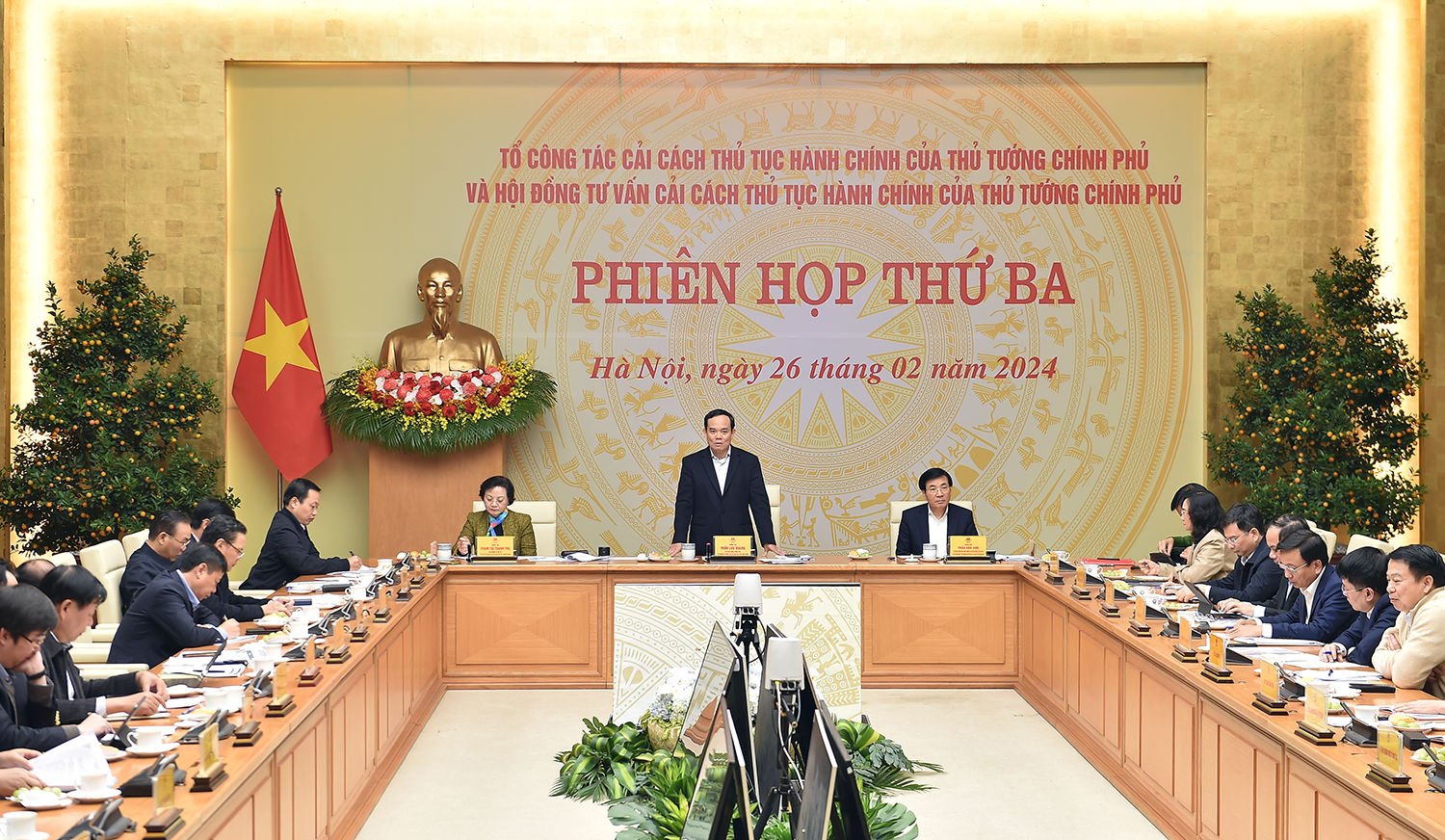
Providing over 4,500 online public services.
Innovation in the implementation and resolution of administrative procedures has been emphasized, and to date, more than 4,500 online public services are provided on the National Public Service Portal, completing the integration of 25/25 essential public services according to Project 06.
The rate of online applications from ministries and agencies reached 30.4%, a 1.4-fold increase compared to 2022; for localities, it reached 37.4%, a 3.7-fold increase compared to 2022.
The rate of digitization of administrative procedure resolution results at ministries and agencies is 28.59%, an increase of 11% compared to 2022, while at localities it is 39.48%, an increase of 31.44% compared to 2022.
At the meeting, representatives from domestic and foreign business associations raised several issues and obstacles related to on-site import and export taxes, social insurance, interest rates on old loans, environmental protection, and the origin of goods.
Representatives from various ministries and agencies acknowledged and responded to the aforementioned shortcomings and obstacles; and proposed several solutions to further improve the effectiveness of the Task Force's work.
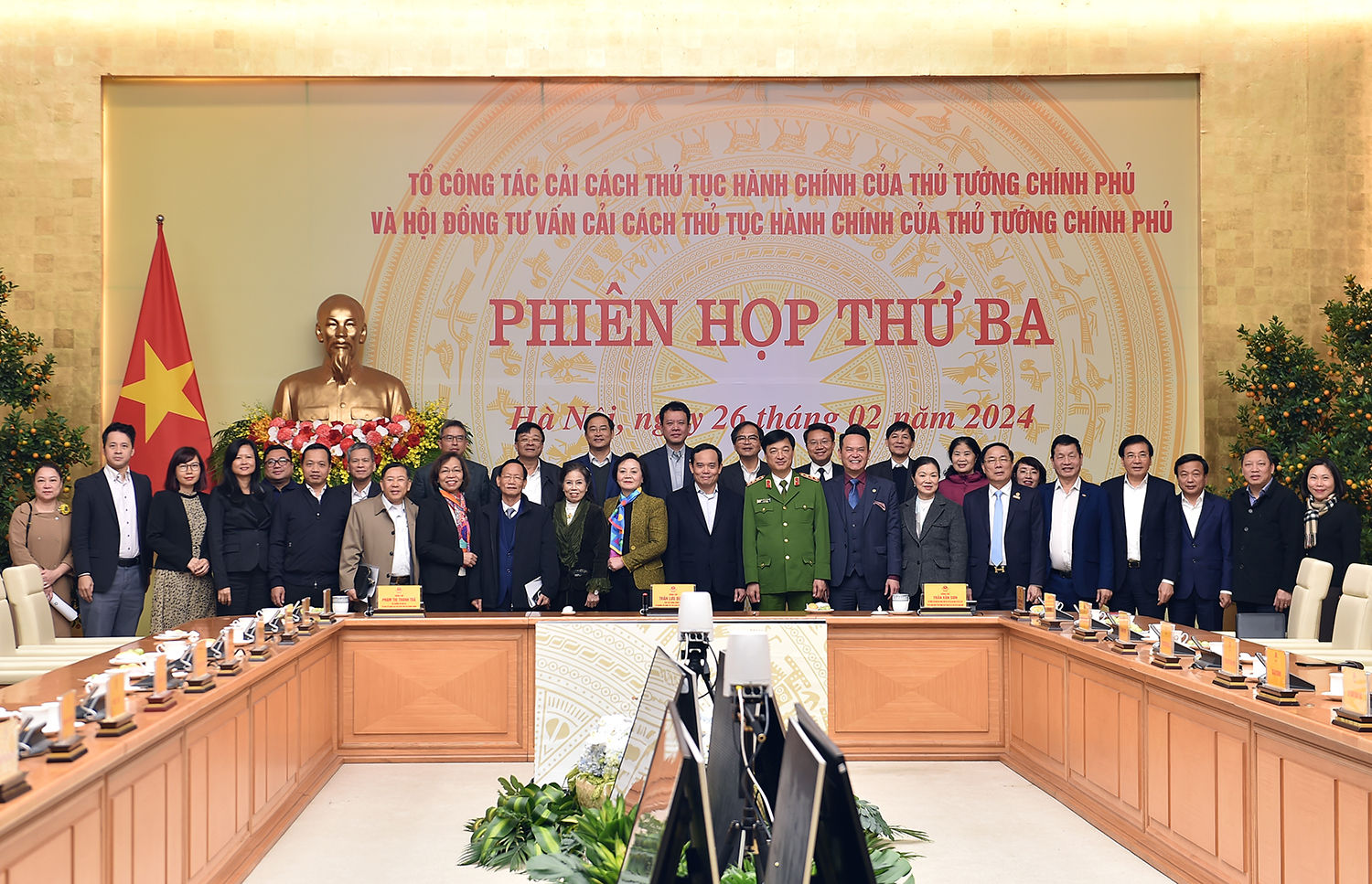
It's not enough to simply acknowledge the issue; it must be actively considered and addressed.
Concluding the meeting, Deputy Prime Minister Tran Luu Quang acknowledged and highly appreciated the efforts of the members of the Task Force and the Advisory Council on the results achieved in administrative procedure reform in various fields in 2023, especially the strong decentralization of authority to localities.
Besides the achievements, the Deputy Prime Minister also emphasized that there is still much work to be done, many obstacles remain, and some tasks are very difficult, so we must continue to strive and change our way of thinking and working. Because if we do not continue to reform, things will not go smoothly, we will lose, we will fail.
According to the Deputy Prime Minister, there are still regulations that are not in line with the country's current level of development and the general development trends, while Vietnam is increasingly integrating deeply into the international community and participating in the common rules of the world.
In addition, there are inconsistencies between regulations in laws, circulars, and decrees; between central agencies; between central and local agencies; and even between different localities.
The problem of shirking responsibility stems from the internal administrative procedures of central and local agencies. Some issues are handled ineffectively because they only go as far as "noting" feedback and suggestions made during meetings.
For administrative procedures in emerging fields such as digital transformation, green transformation, artificial intelligence, new energy, e-commerce, innovation, etc., we must strive to view these as opportunities instead of complaining about difficulties, because if we complain about difficulties, we will certainly fail, let alone develop.
Regarding future tasks, the Deputy Prime Minister requested that members of the Task Force continue to maintain the mechanism for receiving feedback through various forms, including direct dialogue, and to process information and feedback in a highly responsible manner, primarily information, feedback, and proposals from the Advisory Council on Administrative Procedure Reform.
Regarding the Advisory Council, the Deputy Prime Minister hopes that its members will share information and offer timely and clear suggestions to the Task Force.
The Standing Committee of the Task Force and the Standing Committee of the Coordinating Council shall advise on the list of tasks that ministries and agencies must implement, with specific deadlines for completion; and compile a report on the results of implementation at the next meeting.
The Deputy Prime Minister emphasized that the general principle is that each ministry or agency should proactively handle its own tasks within its authority; issues beyond its authority should be reported to the Task Force for proposed solutions by the competent authority.
The Deputy Prime Minister also agreed in principle that there should be specialized meetings on administrative procedure reform in specific areas such as e-commerce, insurance, and taxation… to further improve the quality and efficiency of administrative procedure reform.
Source
![[Photo] Capturing the moment the tide recedes at Yen Binh Son rapids - a million-year-old scenic spot in Quang Ngai.](https://vphoto.vietnam.vn/thumb/1200x675/vietnam/resource/IMAGE/2026/05/19/1779175463885_yen9-1199-jpg.webp)
![[Photo] General Secretary and President To Lam presides over a meeting on the implementation of Directive No. 34-CT/TW of the Party Central Committee.](https://vphoto.vietnam.vn/thumb/1200x675/vietnam/resource/IMAGE/2026/05/19/1779187768672_a1-bnd-2350-631-jpg.webp)
![[Photo] National Assembly Chairman Tran Thanh Man attends the groundbreaking ceremony for the National Highway 1A spatial axis project.](https://vphoto.vietnam.vn/thumb/1200x675/vietnam/resource/IMAGE/2026/05/19/1779161360398_ndo_br_bnd-1412-jpg.webp)




















































![[Photo] General Secretary and President To Lam receives Indian Defense Minister Rajnath Singh](https://vphoto.vietnam.vn/thumb/402x226/vietnam/resource/IMAGE/2026/05/19/1779184046302_anh-man-hinh-2026-05-19-luc-16-46-58.png)
























Comment (0)