

Ask:
My father is 67 years old and has been diagnosed with an enlarged prostate gland. Does he need surgery, or can he be treated with medication? Please advise, doctor.
Hoai Thanh ( Hanoi )
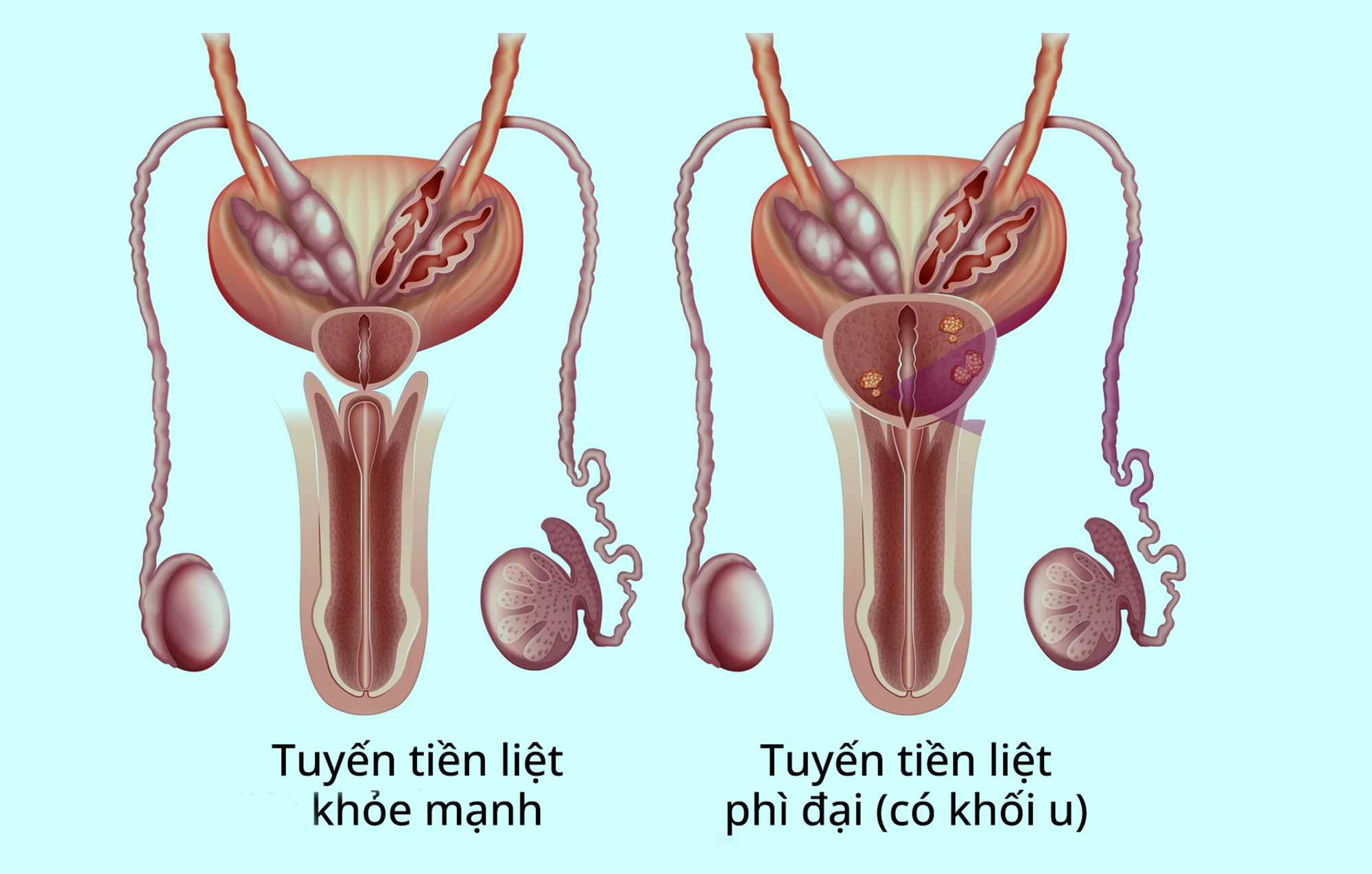
Illustrative image.
BSCK II. Nguyen Quang Khoi, Center for Nephrology, Urology and Dialysis, Bach Mai Hospital answered:
The majority of cases of benign prostatic hyperplasia (80%) are well controlled with medical treatment such as: medications to reduce prostate size (5-alpha reductase inhibitors); and medications to relax the urinary tract muscles, helping to reduce symptoms.
Cases that do not require surgical intervention include: patients with mild to moderate symptoms that do not seriously affect their daily lives; and patients who are in poor health and not suitable for anesthesia or surgery.
The decision to choose surgical treatment will depend on several factors: prostate size, age, overall health status, severity of symptoms, etc.
Surgery is indicated in cases of dangerous complications such as acute urinary retention; renal failure due to prolonged urinary tract obstruction; recurrent urinary tract infections; and bladder stones. It is also indicated for severe symptoms that do not improve despite proper medication, significantly impacting quality of life.
There are three criteria that determine whether or not surgery is necessary: age and overall health (if the patient is young and in good health, early surgery can be considered to prevent complications); prostate size (if the prostate is too large (>80g), it usually responds poorly to medication).
Patients with complications of benign prostatic hyperplasia: urinary retention, renal failure, recurrent bladder stones, recurrent urinary tract infections, persistent hematuria, and patient preferences.
Source: https://www.baogiaothong.vn/phi-dai-tuyen-tien-liet-co-can-phau-thuat-192250317225018888.htm

![[Photo] Explore the US Navy's USS Robert Smalls warship](/_next/image?url=https%3A%2F%2Fvphoto.vietnam.vn%2Fthumb%2F1200x675%2Fvietnam%2Fresource%2FIMAGE%2F2025%2F12%2F10%2F1765341533272_11212121-8303-jpg.webp&w=3840&q=75)


![[Photo] The captivating scenery of the fragrant maple forest in Quang Tri](/_next/image?url=https%3A%2F%2Fvphoto.vietnam.vn%2Fthumb%2F1200x675%2Fvietnam%2Fresource%2FIMAGE%2F2025%2F12%2F10%2F1765353233198_lan09046-jpg.webp&w=3840&q=75)


























![[Video] The craft of making Dong Ho folk paintings has been inscribed by UNESCO on the List of Crafts in Need of Urgent Safeguarding.](https://vphoto.vietnam.vn/thumb/402x226/vietnam/resource/IMAGE/2025/12/10/1765350246533_tranh-dong-ho-734-jpg.webp)


















































Comment (0)