

Piazza Navona is one of the most perfect symbols of Baroque architecture in Rome, Italy. Since the 17th century, under Pope Innocent X, Piazza Navona has been a great example of art.
The most prominent feature of Piazza Navona is the Church of Sant'Agnese in Agone, where young martyrs are buried, said to have died there. The building is famous for its dome covered with splendid frescoes, masterpieces by Ciro Ferri and Sebastiano Corbellin.
In the middle of Navona Square is the artistic masterpiece Fontana dei Quattro Fiumi - Fountain of the Four Rivers, symbolizing the four great rivers of the world : the Nile, the Ganges, the Danube and the Río de la Plata.
This is a design by the famous architect Gian Lorenzo Bernini in the 17th century. When spraying water, the color of the water will change and sense the music and sound in the square.
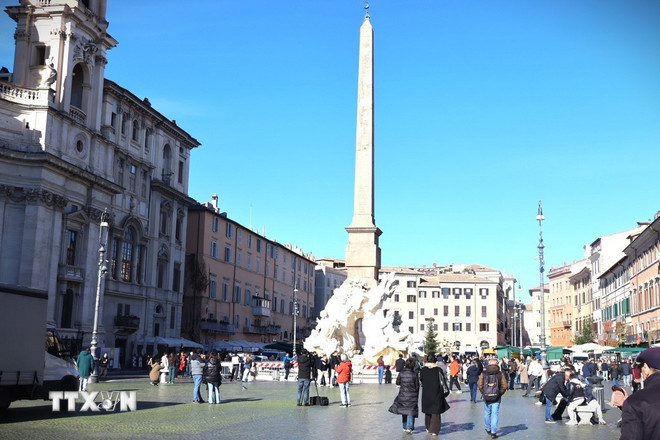
The fountain is designed to depict the story of four river gods. Each god rules over an area and has its own characteristics. It is the novel and unique design that makes this place a special attraction.
There are also two marble fountains at either end of the square. Located on the south side of the square is the Moro Fountain (Fontana del Moro), decorated with sculptures.
Also located to the north is the Fountain of Neptune (Fontana del Nettuno), depicting the battle between the sea god and a giant octopus. The combination of design, materials and water flow contributes to the majesty and bravery of the ancient gods.
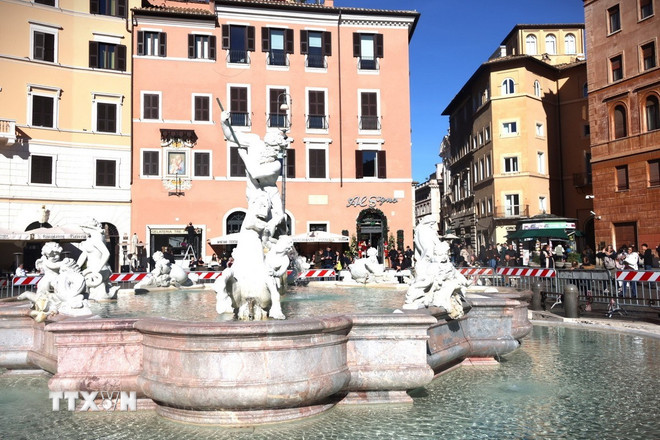
Next to the fountains are exquisite, ancient architectural works, bearing the mark of history. Famous monuments with impressive designs, along with wonderful art create a square space like a small paradise for history and art lovers.
Surrounded by colorful baroque buildings, quaint cafes and talented street artists, it creates an inspiring atmosphere.
Navona is not only a place to enjoy the view but also a place to listen to music , to enjoy cool gelato in the afternoon sun and to capture random yet profound moments.
Coming here, people not only admire the artistic values, but also have the opportunity to enjoy the fun, liberal atmosphere, a bit of ancient but vibrant space of the city of Rome.
Every weekend evening, this walking space often has many cultural activities so it attracts many locals and tourists.
If you don’t like crowds and want to admire the beautiful scenery of the square, early morning is the best time. The peaceful atmosphere combined with the beautiful architecture will definitely leave many unforgettable impressions at Navona Square.
Speaking to a reporter from the Vietnam News Agency, Mr. Lorenzo Zalomon - a tourist from the city of Bolzano, Northern Italy - shared: "Navona is the most beautiful square in Rome, where many artists have created masterpieces of art in churches, with special methods.
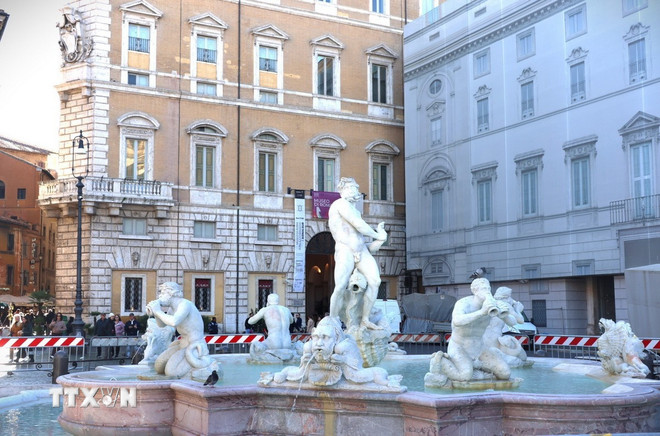
The three fountains in the square deserve much praise and depict wonderful stories. The whole world comes here to admire these beautiful fountains. I do too. I have been to Rome six times and have returned to this square every time.”
Before being renovated and transformed into a square surrounded by buildings and magnificent fountains in the 15th century, Navona was the ancient Roman stadium of Domitian, the site of major sporting events in the area.
With a length of 276m and a width of 54m, this place can accommodate up to 30,000 spectators. Every time there is a sporting event, the square is surrounded by a bustling sea of people. Up to now, the square is still the venue for cultural and sporting activities, attracting many participants.
Piazza Navona is one of the most beautiful squares in Europe and is the oldest building with the most valuable historical value in Rome.
Located right in the city center, with its magnificent beauty, Navona Square has long been the pride of the people of Rome./.
Source: https://www.vietnamplus.vn/quang-truong-navona-bieu-tuong-kien-truc-baroque-cua-thanh-pho-rome-post1080151.vnp

















![[Photo] Dan Mountain Ginseng, a precious gift from nature to Kinh Bac land](/_next/image?url=https%3A%2F%2Fvphoto.vietnam.vn%2Fthumb%2F1200x675%2Fvietnam%2Fresource%2FIMAGE%2F2025%2F11%2F30%2F1764493588163_ndo_br_anh-longform-jpg.webp&w=3840&q=75)





































Comment (0)