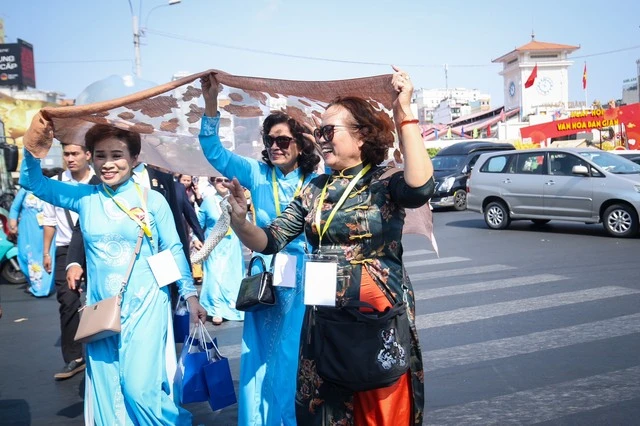
Celebrating Lunar New Year in Singapore is enjoyable, but those living abroad like Mr. Dang still miss their homeland, their families, and the festive atmosphere of Tet back home. Since returning to Ho Chi Minh City, every Tet holiday, Mr. Dang and his family maintain traditional customs such as making banh chung (traditional rice cakes), decorating the house, exchanging New Year greetings, and giving lucky money. Mr. Dang was one of 100 exemplary overseas Vietnamese who participated in the "Spring in the Homeland" program in Ho Chi Minh City on February 1-2, 2024. Many overseas Vietnamese couldn't hide their emotions when participating in activities celebrating Tet in their homeland. Visiting the Hung Kings Memorial Temple in the National Historical and Cultural Park in Thu Duc City, Ms. Pham My Dung, President of the Association for the Promotion and Development of New Immigrant Culture in Hsinchu County (Taiwan), carefully used her phone to record images of stones brought back from the islands of the Truong Sa archipelago. "We are expatriates, but we are Vietnamese. Recording these images is an opportunity to pass on to our children and grandchildren abroad that
Hoang Sa and Truong Sa belong to Vietnam. It's also valuable material for us to promote Vietnamese culture and language," Ms. Dung said, adding that deep down, even though she lives abroad, she always misses her homeland. Ms. Dung shared that no matter how busy she is, she will always make time to return home to reunite with her family during Tet (Vietnamese New Year). This woman is determined to try her best to convey to her children and grandchildren about her country, its maritime
sovereignty , language, and culture.
I love the familiar old corners.
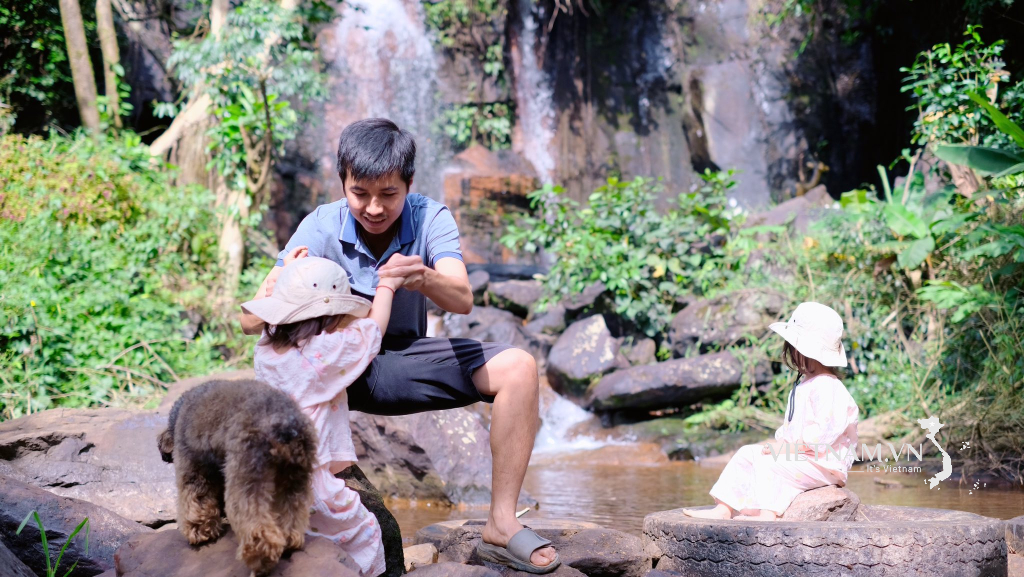
Ten years ago, Ms. Le Thi Ngoc Giao (35 years old, a Vietnamese expatriate in Finland) left her homeland to seek opportunities for self-development. Today, Ms. Giao is the strategic director of a cloud computing corporation and also a co-founder of the Association of Vietnamese Experts and Intellectuals in Finland. Participating in releasing carp into the Saigon River on the day of the Kitchen God and Stove God festival on February 2nd was also her first time returning to Vietnam for Tet (Lunar New Year) in 10 years. "I am moved and honored to participate in this event with other expatriates, those who have been away from their homeland for many years, but whose hearts still yearn for their country," Ms. Giao said. Another special aspect of Ms. Giao's return home for Tet this time is that she brought her two young children along. The young mother plans to take her two children to visit places that hold many memories for her before returning abroad. After visiting the headquarters of the People's Council and People's Committee of Ho Chi Minh City, a national-level architectural and artistic heritage site, Ms. Giao said she would tell her children about the history of the building, a significant location in the city's formation. According to Ms. Giao, Ho Chi Minh City has undergone significant changes in the past 10 years. The city center looks modern like those in developed countries, while the suburban urban areas have also been well-invested in, with full amenities serving residents. Ms. Giao's two children expressed their delight when visiting the book street, traditional market, and large bookstores. "Ho Chi Minh City has preserved its old corners and invested in new ones suitable for development," Ms. Giao shared. Professor and doctor Nguyen Duong Phuong, a specialist in pediatric plastic surgery and co-director of the Cleft Lip and Palate Program at Children's Hospital Colorado (USA), also felt that the country and the city are constantly changing. Mr. Duong is the founder of the Nuoy Reconstructive charity project, which has collaborated with hospitals in Vietnam to examine and perform surgery on many children with congenital craniofacial deformities. After 20 years abroad, Mr. Phuong had the opportunity to experience a test run of
Metro Line 1 (Ben Thanh - Suoi Tien). Looking at the cityscape of Ho Chi Minh City through the window, he had many emotions, a mixture of joy, excitement, and pride. "The city now looks completely different from when I left, full of life and more vibrant than before. I also hope that Ho Chi Minh City will continue to have more metro lines to alleviate traffic pressure," Mr. Phuong said.
Sharing more about his future plans, Mr. Phuong expressed his determination to do his best for his current projects in Vietnam. Along with that, he plans to bring his two young daughters back to Vietnam so they can learn about their Vietnamese roots.
Overseas Vietnamese serve as a bridge for cooperation with the world.
For many years, the Vietnamese community abroad has been an important bridge to strengthen friendly relations and cooperation between Vietnam and countries around the world, contributing to promoting the image and enhancing the position of Ho Chi Minh City in particular, and Vietnam in general, in the process of development and international integration. Ho Chi Minh City has welcomed many overseas Vietnamese experts and intellectuals to work long-term or cooperate directly with institutes, universities, high-tech zones, and hospitals. Every year, tens of thousands of young Vietnamese from developed
economies return to the country to seek business opportunities through startup projects. Associations of Vietnamese entrepreneurs and businesses abroad cooperate, exchange information, and propose solutions to mobilize and connect the consumption of Vietnamese branded products, actively participating in introducing and developing distribution channels for Vietnamese goods in their host countries. Ho Chi Minh City always strives to create a favorable legal environment for the overseas Vietnamese business community to become increasingly connected and contribute more to overall development.
Chairman of the People's Committee of Ho Chi Minh City , Phan Van Mai I feel a responsibility to my country.
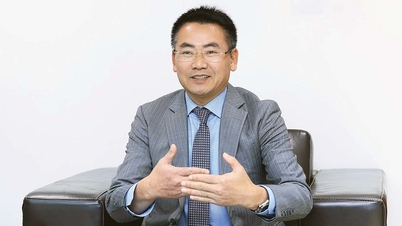
In recent years, Dr. Tran Ba Phuc, Chairman of the Vietnamese Business Association in Australia, has regularly returned to Ho Chi Minh City to celebrate Tet (Lunar New Year), participating in meetings between Ho Chi Minh City leaders and the overseas Vietnamese community. "Celebrating Tet feels like bringing me closer to my homeland, making me feel more connected to it," Dr. Phuc said. He recalled Resolution 36 of 2004 by the Politburo, affirming that overseas Vietnamese are an inseparable part and a resource of the Vietnamese nation, and an important factor contributing to strengthening cooperative and friendly relations between Vietnam and other countries. While the overseas Vietnamese community numbered approximately 2.7 million in 2004, it has more than doubled to nearly 6 million today. Dr. Phuc shared that he has lived abroad for nearly 50 years but remains connected to his homeland through activities such as connecting investments, charitable work, supporting vaccine funds, assisting poor students, and helping people in flood-affected areas. "I feel a responsibility to my country."
- Dr. Tran Ba Phuc, President of the Vietnamese Business Association in Australia. thanhnien.vn
Source 

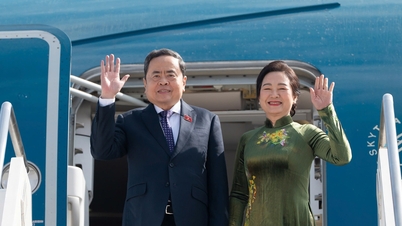
![[Photo] National Assembly Chairman Tran Thanh Man arrives in Türkiye to attend IPU-152](https://vphoto.vietnam.vn/thumb/1200x675/vietnam/resource/IMAGE/2026/04/15/1776261003665_tnk10-jpg.webp)
![[Photo] National Assembly Chairman Tran Thanh Man attends the opening session of IPU-152](https://vphoto.vietnam.vn/thumb/1200x675/vietnam/resource/IMAGE/2026/04/16/1776277863731_ctqh5-jpg.webp)
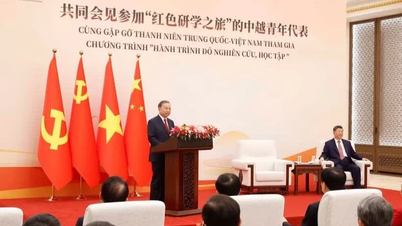
![[Photo] The General Secretary, President and his wife meet with Vietnamese-Chinese friendship leaders.](https://vphoto.vietnam.vn/thumb/1200x675/vietnam/resource/IMAGE/2026/04/15/1776264829725_vna-potal-tong-bi-thu-chu-tich-nuoc-to-lam-gap-mat-nhan-sy-huu-nghi-viet-nam-trung-quoc-8703641-3130-jpg.webp)
![[Photo] National Assembly Chairman Tran Thanh Man concludes official visit to Italy, departs for IPU-152](https://vphoto.vietnam.vn/thumb/1200x675/vietnam/resource/IMAGE/2026/04/15/1776253436109_vna-potal-chu-tich-quoc-hoi-ket-thuc-tham-chinh-thuc-italy-len-duong-du-ipu-152-tai-tho-nhi-ky-8702876-7969-jpg.webp)
![[Photo] My Son at night: A thousand-year-old heritage site amidst the Milky Way](https://vphoto.vietnam.vn/thumb/1200x675/vietnam/resource/IMAGE/2026/04/15/1776261039184_ndo_br_chon6-jpg.webp)
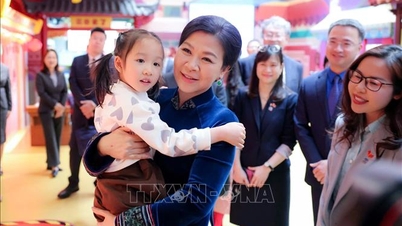
![[Photo] Mrs. Ngo Phuong Ly meets and exchanges views with Mrs. Peng Li Yuan](https://vphoto.vietnam.vn/thumb/1200x675/vietnam/resource/IMAGE/2026/04/16/1776277858080_phu-nhan-1-jpg.webp)







































Comment (0)