

The delegates agreed on the necessity of enacting the Law to institutionalize the Party's guidelines and policies, and the State's policies on promoting the application of information technology, proactively participating in the Fourth Industrial Revolution, building an e- government , resolving administrative procedures and providing online public services; creating a legal basis for implementation, and creating a breakthrough in digital transformation in all fields.
Proposal to retain the place of origin section on the national identity card.
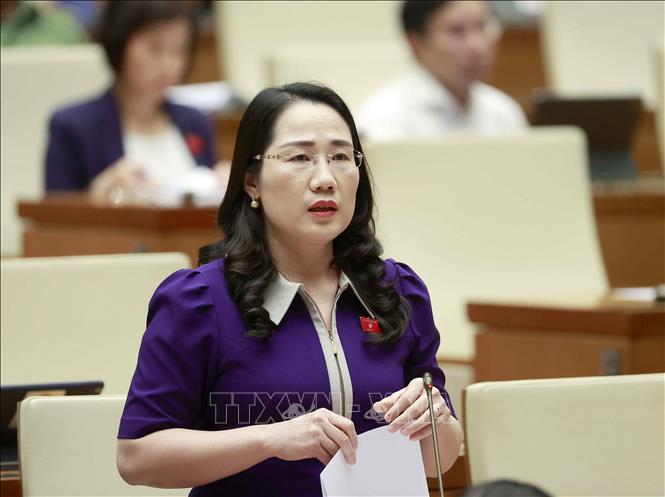
National Assembly representative Nguyen Thi Thuy from Bac Kan province delivers a speech. Photo: Doan Tan/TTXVN
Evaluating the draft law as meticulously and seriously prepared and of high quality, delegate Nguyen Thi Thuy (Bac Kan) contributed several specific points.
Regarding the information of citizens collected and integrated into the National Population Database (Article 10), the draft Law stipulates that 24 groups of citizen information will be collected and integrated into the National Population Database. However, the last clause of this Article states: In addition to the information mentioned above, other citizen information shared from the national database and specialized databases will also be collected and integrated. Representatives suggested further consideration of these regulations, as there are many specialized databases such as those in healthcare, education , labor, taxation, and securities.
At the same time, the draft Law's provision regarding "other information of citizens" is unclear, raising concerns about whether it includes information related to citizens' private lives. Therefore, the drafting agency needs to continue reviewing the draft to specifically define "other information of citizens" within the Law itself.
Regarding the entities authorized to access information (Article 11), the draft Law stipulates that the entities authorized to access information include state management agencies, political organizations, and socio-political organizations. According to Representative Nguyen Thi Thuy, the information in the National Population Database is very extensive; for example, citizens' phone numbers, if not properly managed, can cause inconvenience to citizens. Furthermore, each agency and organization has different functions and responsibilities, so the purpose and scope of access vary. For instance, traffic police only need to access information related to driver's licenses, while land administration agencies only need to access information related to citizens' land and housing.
"The draft law only specifies the entities that can access information but does not define the scope of information access, leaving it to the Government to regulate. This includes information directly related to individual citizens and even information related to citizens' private lives. I propose that the revision process should review and specifically define the scope of information access for each entity in the law, ensuring it aligns with their functions and responsibilities," the representative stated.
Regarding the information on the citizen identity card (Article 19), the draft Law has adjusted some information on the identity card compared to the current Law, including removing the place of origin section. Delegates argued that, in the context of accelerating the development of the National Population Database and the Citizen Identity Card Database, adjusting the information on the identity card is appropriate; however, further research is needed on removing the place of origin section from the identity card.
The delegate analyzed that Article 3 of the draft Law stipulates that "the identity card helps to identify a person's background." According to current legal regulations, only agencies and organizations that access information in the National Population Database and use specialized equipment inspected and evaluated by the Ministry of Public Security can access the information integrated in the identity card. Daily transactions with other entities require the use of this identity card to identify a person's background. Therefore, the delegate proposed that the place of origin section should not be removed from the identity card.
Ensure that regulations are constitutional, legal, and strict.
Representative Do Thi Viet Ha (Bac Giang) noted that the draft Law amends 39 out of 39 articles and adds 7 articles compared to the current Law. These amendments include provisions to supplement and update information in the National Population Database and the National Identity Card Database, as well as regulations on collecting, connecting, sharing, exploiting, and using information in these two databases, and many other important contents. These are all related to personal privacy and human rights as stipulated in the 2013 Constitution. Furthermore, many provisions of the draft Law relate to existing laws and international conventions such as the Law on Nationality, the Law on Civil Status, the Law on Residence, the Civil Code, and the International Covenant on Civil and Political Rights. Therefore, the representative requested that the drafting agency continue to thoroughly research each specific content to ensure that the regulations are constitutional, legal, rigorous, consistent, and feasible.
Regarding the issue of electronic identity cards, delegates noted that, compared to the current Law on Citizen Identity Cards, the draft Law has expanded the scope to include electronic identity cards and the identification of electronic identification accounts as electronic identity cards.
According to the delegates, Clause 1, Article 10 of Government Decree No. 59/2022/ND-CP on electronic identification and authentication stipulates: Electronic identification accounts created by the electronic identification and authentication system are used to carry out administrative procedures and public administrative services in the electronic environment. Thus, an electronic identification account is a type of account granted to specific individuals and organizations to participate in online transactions such as carrying out administrative procedures and public services in the electronic environment.
Furthermore, the information in an electronic identity account, once created, will be synchronized with information in other databases, including the National Population Database and the National Identity Card Database. Thus, the same electronic identity account can have different legal validity. Identifying an individual's electronic identity account as an electronic identity card is inappropriate and does not ensure uniformity in the management of accounts created by the same system.
Delegates argued that electronic identity cards should only be a method of transitioning from administrative management to electronic management; they proposed not defining electronic identification accounts as electronic identity cards. If this provision is still included in the draft Law, they suggested further assessment of its feasibility, the roadmap for issuing electronic identity cards, and the addition of regulations on the procedures for issuing electronic identity cards and their applications.
Meeting the requirements of digital transformation.

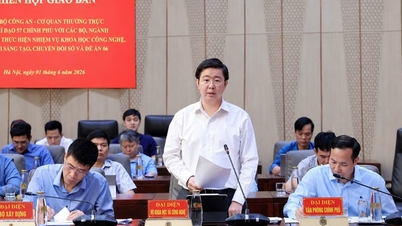
Minister of Public Security To Lam explains and clarifies some issues raised by National Assembly deputies. Photo: Doan Tan/TTXVN.
Speaking at the session, Minister of Public Security To Lam stated that the draft Law on Identity Cards is an important legal document in the management of population and identity cards, aiming to facilitate people's travel, administrative procedures, civil transactions, and many other conveniences, meeting the requirements of digital transformation in our country.
The Minister summarized the delegates' opinions, focusing on 10 main groups of issues including: the necessity of issuance; consistency and feasibility; naming convention; content of the identity card; regulations on issuing identity cards to those under 14 years old; integration of information into the identity card… The Government will take into account the delegates' opinions, continue to research, and provide explanations and reports to the National Assembly.
Regarding the necessity of enacting the law, Minister To Lam stated that all opinions agreed on the promulgation of the Identity Card Law and highly appreciated the Government's preparation of the dossier; affirming that the draft law dossier complies with legal regulations and has incorporated and addressed the opinions discussed in the working groups of National Assembly deputies.
"The majority of delegates believe that the regulations in the draft are similar to the laws of many countries around the world, especially developed countries, and are in accordance with the provisions of the Constitution, without conflicting with other laws," the Minister said.
Regarding the name of the draft law, the majority of delegates agreed on the name "Law on Identity Cards" to ensure comprehensiveness and suitability to the scope of regulation and the subjects to which the law applies. Some delegates suggested retaining the current name "Law on Citizen Identity Cards".
The Minister stated that he will continue to report to the Government and coordinate with relevant agencies of the National Assembly to incorporate feedback, provide explanations, and revise the draft Law accordingly, ensuring its completeness in both content and technical aspects before submitting it to the National Assembly at the 6th Session (November 2023).
According to VNA/News Agency
Source link






































































































Comment (0)