


TP - The regulation that does not prohibit tutoring at all educational levels is generating mixed opinions. Many agree and support it, but are concerned that the line between voluntary and compulsory tutoring is thin and makes it very difficult to manage the content of such tutoring.
TP - The regulation that does not prohibit tutoring at all educational levels is generating mixed opinions. Many agree and support it, but are concerned that the line between voluntary and compulsory tutoring is thin and makes it very difficult to manage the content of such tutoring.
In a recent explanation regarding the issue of tutoring to National Assembly representatives, Minister of Education and Training Nguyen Kim Son stated that the Ministry's policy is not to ban tutoring but to prohibit tutoring practices that violate the ethics of teachers.
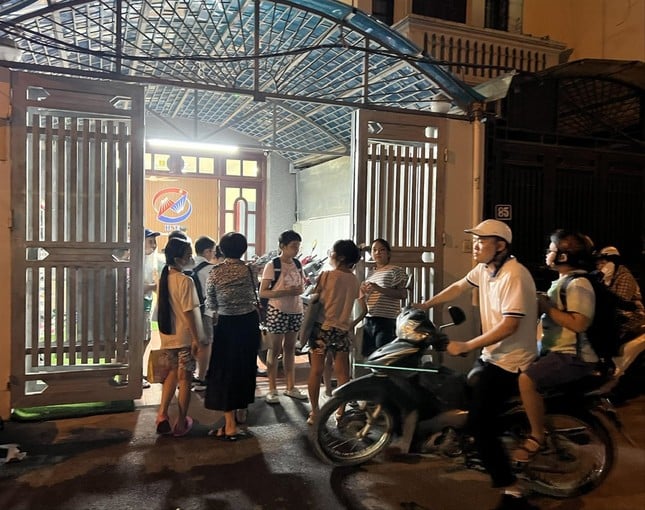 |
After a long day at school, students are then taken by their parents to an English tutoring center. (Photo: Ha Linh) |
This is specifically reflected in the draft Law on Teachers, which stipulates prohibited behaviors for teachers, including: "Forcing students to participate in extra classes in any form, or paying fees beyond those stipulated by law." The draft law also allows for extra classes under the following conditions: They must be organized when students have a need for extra classes, they must voluntarily participate, and their parents must consent. The content of the school's curriculum must not be reduced to include extra classes; and examples, questions, and exercises from extra classes must not be used for testing or evaluating students. The draft allows teachers to provide extra classes for their own students outside of school, provided they compile a list and report it to the school principal.
"Taking extra classes just for exams"
Ms. Van Thuy Duong, Deputy Principal of Luong The Vinh Secondary and High School in Cau Giay District ( Hanoi ), said that, in reality, parents have a need for extra tutoring for their children and teachers have a need to provide extra tutoring, so it is difficult to prohibit it. However, education authorities need to issue specific regulations to ensure that weak students can receive extra tutoring to improve, and that gifted students can develop their abilities further, avoiding the widespread practice of extra tutoring. Among the solutions, teachers should not be allowed to tutor their own students outside of class because this easily creates inequality for all students in the class.
"Nowadays, many people criticize and hate extra classes, but in the end, everyone has to fork out money to send their children to them because of exams and the fear of their children getting low grades. Many parents go without food and clothing so their children can attend extra classes, even though they already have two school sessions a day and are exhausted from extra classes."
Dr. Hoang Ngoc Vinh, former Director of the Department of Professional Education, Ministry of Education and Training
“Previously, the late Associate Professor Van Nhu Cuong issued a regulation that school teachers were not allowed to give extra tutoring to students in class because it would be difficult to assess the students' true progress. When students pay extra money to the teacher, they will receive some degree of preferential treatment in test scores. Students who don't attend extra tutoring with those teachers will also feel uneasy and worried about whether they will be treated fairly. Another issue is that when teachers give extra tutoring outside of class, no one can monitor whether they are teaching ahead of the curriculum or bringing in questions for in-class tests,” Ms. Duong said.
Dr. Hoang Ngoc Vinh, former Director of the Department of Professional Education (Ministry of Education and Training), shared that managing extracurricular tutoring is currently very difficult. The Ministry of Education and Training has regulations prohibiting coercion or only allowing tutoring when students volunteer, but "voluntary participation" is merely a facade. The line between voluntary and coercive is sometimes very thin. A simple reminder from a teacher can cause parents to worry and wonder if it's because the child isn't attending extra classes. The regulations on teachers' professional activities do not include any provisions regarding extracurricular tutoring. Teachers are only responsible for tutoring students with weak academic abilities within the school.
Extra tutoring is a problem in many countries, and it's particularly prevalent in Vietnam, often with the goal not necessarily being the holistic development of students. Preschool children take extra classes to learn to read and write before entering first grade; elementary school children take extra classes to pass the entrance exam for high-quality sixth grade; and middle and high school students take extra classes to pass exams and university entrance exams. "It's clear that students take extra classes solely for exams, memorizing and forgetting what they've learned immediately after the test. To solve this problem, clear and transparent regulations on extra tutoring are needed, along with a reduction in the emphasis on exams," said Dr. Vinh.
Obsessed with extra classes
The Ministry of Education and Training's new draft regulations on tutoring do not prohibit tutoring at the primary school level, but instead provide a very general provision: "Tutoring is not permitted within schools that already offer two-session-per-day instruction." Parents and education administrators argue that this regulation is not strict enough, as it only prohibits tutoring within schools and could create loopholes for teachers to lure young students into private tutoring outside of school.
Ms. Tran Thi Thuy from Hoang Mai (Hanoi), who has two children in elementary school, shared her joy that this year her children have found a "caring teacher who doesn't force them to take extra classes." Ms. Thuy recalled that last year, when her daughter had just entered third grade, the teacher repeatedly called both her and her husband to complain that their child was struggling academically, slow, and didn't understand the lessons, and suggested that the family find a solution.
"Unable to handle the pressure, I finally canceled my child's English and art classes and enrolled her in extra lessons with a teacher outside of school twice a week, at 150,000 VND per session. Since then, everything has been fine, and the teacher hasn't called to criticize her anymore," Ms. Thuy recounted.
Many parents share the reality that their elementary school children have to "reluctantly attend extra classes." While not explicitly stating the need for extra classes, announcements are made through the parent-teacher association that teachers are opening classes, and lists are sent to the group chat, making it very difficult for parents to decide what to do.
Based on her experience managing schools, Ms. Nguyen Thi Kim Chi, Principal of Kim Lien Primary School in Dong Da District (Hanoi), believes that students who already attend school for two sessions a day will inevitably suffer health consequences if they continue with extra classes outside of school. After a day of studying, children need rest and sports activities to regenerate energy for the next day. However, in reality, some parents still feel the need for their children to attend extra classes, believing that those who are already good will excel further, or that those who are weak will improve.
“The regulation prohibiting extra tutoring at the primary school level is appropriate. With this regulation, right from the beginning of the school year, the school requires teachers to sign a commitment not to provide extra tutoring outside of school, and also cooperates with the management agency to conduct on-site inspections. In addition, through surveys of parents' opinions, the school collects information about cases of teachers providing extra tutoring in order to remind and handle them,” Ms. Chi said.
Source: https://tienphong.vn/ep-buoc-hay-tu-nguyen-hoc-them-ranh-gioi-mong-manh-kho-kiem-soat-post1694029.tpo























































































Comment (0)