Streamlining the administrative apparatus, merging provinces, and finalizing the implementation of numerous "mega-projects"... these are issues that have garnered significant attention from people nationwide, raising new expectations.
Creating room and expanding the space for development.
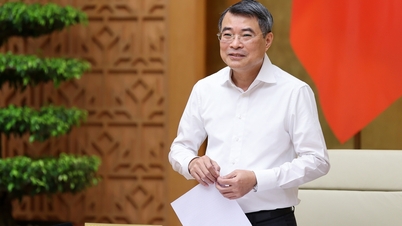
The proposed plan, after reorganization, will reduce the number of provincial-level administrative units by approximately 50%, and the number of grassroots-level administrative units by 60-70% compared to the current situation... Information from the March 11th meeting of the Standing Committee of the Government Party Committee, chaired by Prime Minister Pham Minh Chinh, has received attention from people nationwide.
The phrase "provincial merger" has been a frequently searched keyword and a topic of much discussion recently. Particularly after the Politburo issued Conclusion 127-KL/TW on February 28, 2025, regarding the implementation of research and proposals for further restructuring of the political system's organizational apparatus, Conclusion 127 clearly outlined the objectives, requirements, timeline, and procedures for researching provincial mergers and the organization of administrative units. This has instilled great confidence in the people regarding the policy, its systematic and scientific approach, and the decisions of the Central Party Committee and the Politburo concerning streamlining and mergers.
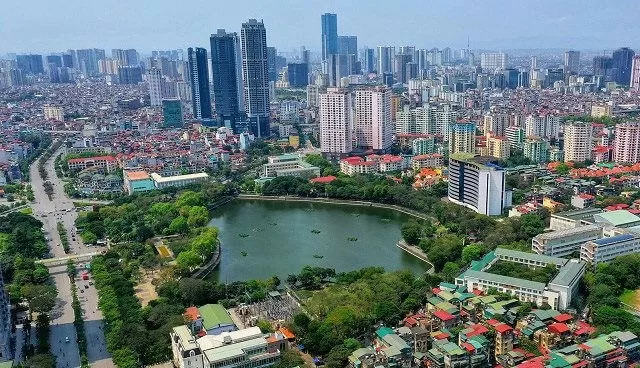 |
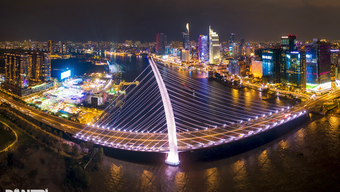
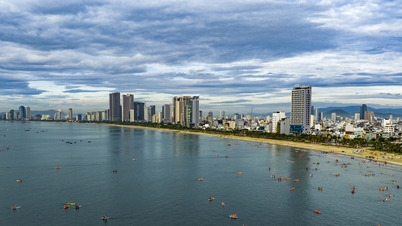
| Merging provinces will help localities expand their development space. (Illustrative image: VTH) |
Regarding provincial mergers, perhaps every citizen, especially those of middle age and older, still remembers and cherishes the names of former provinces and cities such as Binh Tri Thien, Phu Khanh, Ha Son Binh, Vinh Phu, Hoang Le Son, Song Be… After several mergers and divisions, Vietnam has 63 provinces and cities as it is today, since 2004. It must be recognized that the division or merger of provinces, cities, localities, and administrative units is a crucial matter for the country, and the decision depends on historical factors.
With the policy of merging provinces and its implementation in the near future, as stated in the concluding remarks of Prime Minister Pham Minh Chinh at the meeting on March 11th, the merger is to adapt to the new situation and current management capabilities when transportation and digital infrastructure are significantly improved, while also creating new development spaces and maximizing the unique potential, outstanding opportunities, and competitive advantages of each locality.
The management capabilities associated with the strong development of science and technology in the new context are clearly evident. Vietnam has made significant strides in science and technology, innovation, and digital transformation. Science and technology and innovation are gradually becoming crucial and decisive factors, making practical and comprehensive contributions in all fields, such as healthcare, agriculture, industry, information technology, national defense and security, and including governance and management capabilities.
Merging provinces to create new development spaces is a factor and content that many people, especially economic experts, agree with and highly appreciate. As a journalist who has had the good fortune to travel to many regions and almost all localities across the country, I can see that each locality has its own economic strengths and unique cultural characteristics.
However, it is not difficult to see that neighboring and bordering localities, especially provinces in the same region such as the Red River Delta, the Central provinces, or the Northwest, Central Highlands, and Southwest regions, share similarities in climate, soil, economic advantages, and cultural practices. For example, in the mountainous areas of the North, although the proportions vary, the communities are mainly composed of Hmong, Dao, Nung, and Thai people; besides border provinces with border trade, they generally have advantages in mineral resources, hydropower potential, tea, medicinal plants, and agricultural and forestry products. The Central Highlands also mainly consists of communities living alongside ethnic minorities, with advantages in industrial crops such as coffee, rubber, and pepper, and basaltic red soil. Localities in the North and South also share many similarities in advantages as well as challenges that need to be addressed.

Perhaps that is why, over the years, the issue of regional linkages has always been raised in numerous conferences, seminars, and on the agenda… The goal of regional linkages is to leverage the common strengths of localities, avoid conflicts of interest between provinces and cities that could limit or lead to the loss of shared advantages.
It is unclear what the merger plan for provinces and cities will be like in the future, but with a plan to reduce the number of provincial-level administrative units by 50%, many adjacent provinces with similarities will merge. This will create a new, more open space, allowing economic and social advantages to synergistically develop, while disadvantages and limitations will be addressed and overcome through a shared vision. In a "narrower space," reorganizing and merging communes can achieve similar goals.
Revolutions and "mega-projects" pave the way for the future.
The streamlining of the administrative apparatus, the merger of provinces, and the consolidation of localities have been implemented synchronously and decisively in recent times, with the spirit of "running while queuing." Directives from the Central Government, through resolutions and conclusions such as Conclusion No. 121-KL/TW, Conclusion No. 126-KL/TW, Conclusion No. 127-KL/TW, Conclusion No. 128-KL/TW… These documents address many issues related to personnel work, organizational structure, and even the study of constitutional amendments… demonstrating the political determination of the Party and State in implementing the revolution to streamline the political system's apparatus. Streamlining the political system's apparatus is identified as a key, urgent task of vital importance to the country's development in the new era. This is an essential requirement to improve the efficiency, effectiveness, and effectiveness of the system, meeting the demands of building a modern, transparent political system for the rapid and sustainable development of Vietnam in the new era.
Alongside the implementation of the revolution to streamline the political system, in what can be considered a historic period for the country, the people are witnessing and creating momentum and confidence in the future with "mega-projects" that have been, and are being, finalized for implementation by the Party, the State, the Government, and central ministries and agencies, including the Ministry of Industry and Trade.
First, there is the Ninh Thuan Nuclear Power Project, with Resolution No. 189/2025/QH15 on some special mechanisms and policies for investment and construction of the Ninh Thuan Nuclear Power Project, passed by the National Assembly on February 19, 2025. It can be said that, in the current context, restarting the Ninh Thuan Nuclear Power Project is not only a solution to the national energy security problem but also contributes to the transition to a sustainable green economy, bringing the country's science and technology to a new level of development…
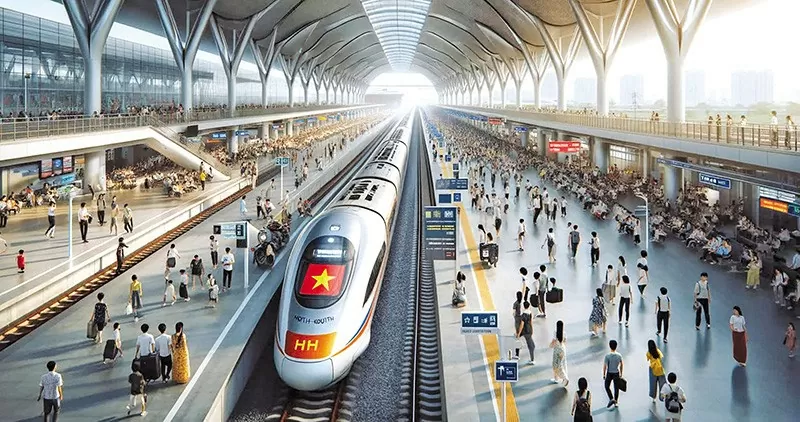 |
Perspective view of the high-speed railway on the North-South axis. Photo: baodautu |
The North-South high-speed railway project, whose investment plan was approved by the National Assembly in November 2024, has a preliminary total capital of approximately 1.7 trillion VND, equivalent to 67 billion USD. The route is 1,541 km long, starting at Ngoc Hoi station (Hanoi) and ending at Thu Thiem station (Ho Chi Minh City), passing through 20 provinces and cities. The project is expected to be implemented and completed within 10 years… With this plan, it can be said that high-speed rail with comfortable trains running at "the speed of wind," a dream for every Vietnamese citizen, will soon become a reality.
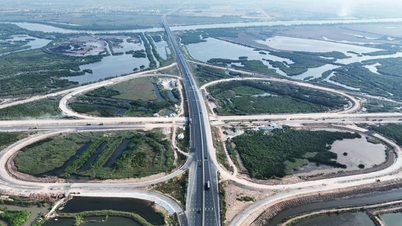
Regarding transportation, it's evident that the country's road infrastructure has never undergone such significant transformation and change as it has today. Recently, people have been receiving a series of announcements about the opening of expressways on many routes, most recently the Ha Tinh - Quang Tri route before June 30th (thus creating a direct expressway connecting Hanoi and Quang Tri). In particular, with high determination and numerous solutions being implemented, the Government, ministries, and localities are striving to open the North-South expressway by the end of 2025, aiming for a total of 3,000 km of expressways nationwide by the end of 2025…



To become wealthy, you must build roads; this has been proven in many countries. Not only in the transportation sector, but many large-scale projects in energy, logistics, industry, and commerce have been and are paving the way and connecting development…
|
Source: https://congthuong.vn/sap-nhap-tinh-tinh-gon-bo-may-mo-duong-lon-377930.html