

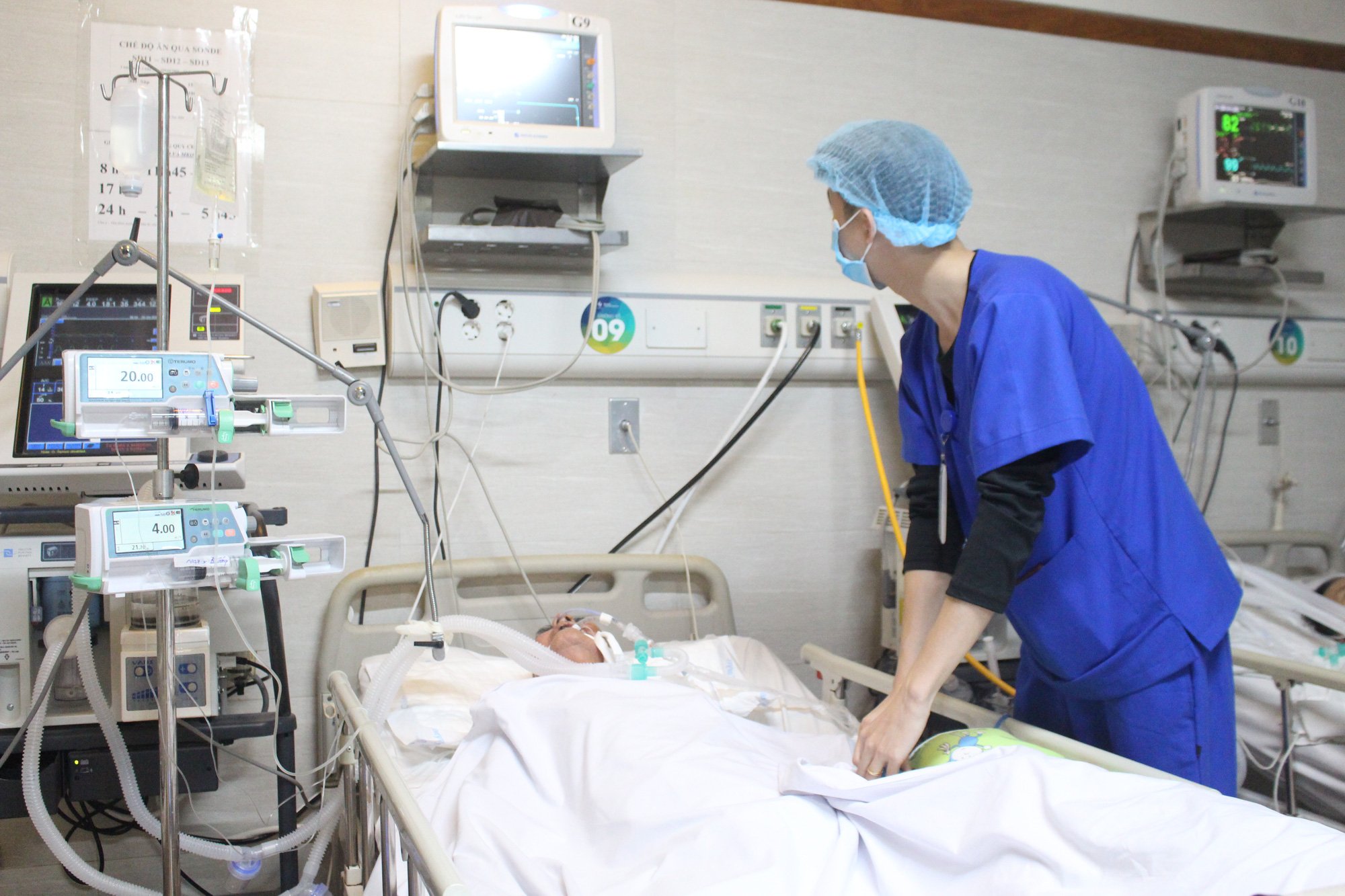
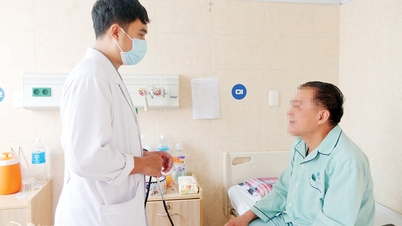
Elderly stroke patients receive care at the Central Geriatric Hospital - Photo: DUONG LIEU
During the 7-day Tet holiday (February 8-15), the stroke department of the hospital received 68 emergency stroke patients and referred patients for treatment, a very large number.
The peak day was the fourth day of Tet (Lunar New Year), when the hospital received 15 stroke patients, a 20-30% increase compared to normal days.
The majority of patients requiring emergency care and those with severe conditions were transferred from lower-level hospitals in the northern region.
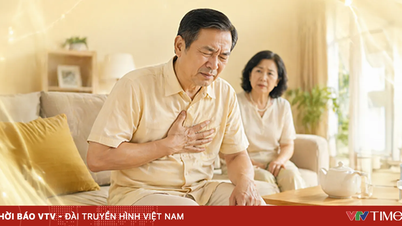
Stroke cases increase during Tet holiday.
Similarly, several hospitals have also reported an increase in stroke cases. Hospital E ( Hanoi ) has also seen a rise in emergency admissions due to stroke.
According to Dr. Pham Xuan Hieu, head of the emergency department at E Hospital, during the Tet holiday, the hospital receives approximately 10 stroke patients per day, a 20-30% increase compared to normal days.
"During the Lunar New Year holiday, many people arrive at the hospital late, leading to difficulties in treatment and missing the golden time for intervention," Dr. Hieu informed.
At the Central Geriatric Hospital, during the Lunar New Year holiday of the Year of the Dragon, 30-40 patients were admitted each day, including about 15 emergency cases, mainly cardiovascular, respiratory, and stroke-related illnesses.
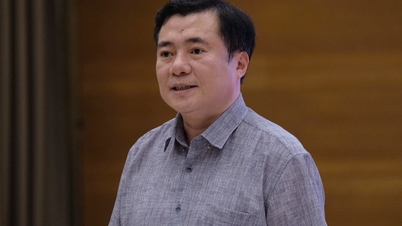
Dr. Nguyen Van Tuyen, head of the stroke department and deputy director of the Neurology Institute at Military Central Hospital 108, said that during holidays and Tet (Lunar New Year), the number of stroke patients coming to the emergency room is usually very high due to more referrals from lower-level hospitals.
"However, there has never been such a sudden surge as this year, with overcrowding occurring right from the first days of Tet," Dr. Tuyen commented.
Be cautious about underlying health conditions to avoid stroke.
Regarding the reasons for the increase in stroke cases, Dr. Tuyen said that before the Lunar New Year holiday of the Year of the Dragon, the North experienced a period of intense cold. Afterward, the climate warmed up during the Tet holiday. This erratic climate change is one of the causes of strokes.
Doctor Tuyen also warned that not only during Tet (Lunar New Year), but also during other festivals at the beginning of the year, people need to pay attention to and prevent strokes.
The New Year's festivities involve many parties and outings, leading to changes in lifestyle habits and increased alcohol consumption. This is especially concerning for those with chronic diseases such as diabetes and hypertension, as these are risk factors for stroke.
"Some patients stop taking their blood pressure medication (especially younger patients) or do not adhere to their usual medication regimen, leading to strokes."
Therefore, even young people with underlying health conditions should adopt a healthy lifestyle and, in particular, adhere to their medication regimen when treating underlying conditions such as hypertension, to avoid the risk of stroke," Dr. Tuyen advised.
He also advised that when traveling during the Lunar New Year festival, people with chronic diseases should remember to bring their medication, limit alcohol consumption, maintain physical activity, and attend follow-up appointments as scheduled.
In addition, many festivals are crowded and congested, so people with underlying health conditions should avoid participating to prevent potential health risks.
How to recognize stroke signs in a fast way.
FACE: Facial stiffness, one side of the face is asymmetrical when smiling, crooked mouth, visual disturbances.
ARM: Numbness or inability to lift one arm or leg.
SPEECH: Speaking with slurred speech, unclear pronunciation, inability to express oneself.
TIME: It is necessary to call emergency services to a medical facility capable of providing emergency care and treatment for stroke as quickly as possible.
If you observe someone exhibiting at least one of the three symptoms above (facial asymmetry, weakness in the limbs, difficulty speaking), consider the possibility of a stroke and call emergency services immediately without delay.
The golden hour for the best treatment outcomes is the first 6 hours after a stroke.
Source
![[Image] Shipbuilders exposed to steel and record-breaking heat.](https://vphoto.vietnam.vn/thumb/1200x675/vietnam/resource/IMAGE/2026/06/04/1780545781745_ndo_br_img-5402-4683-jpg.webp)












































![[Video] Sunset at Lap An Lagoon – Where the sun sets over the fishing nets](https://vphoto.vietnam.vn/thumb/1200x675/vietnam/resource/IMAGE/2026/05/31/1780192137701_beach-landscape-sea-water-nature-grass-745871-pxhere-com.jpeg)




























Comment (0)