


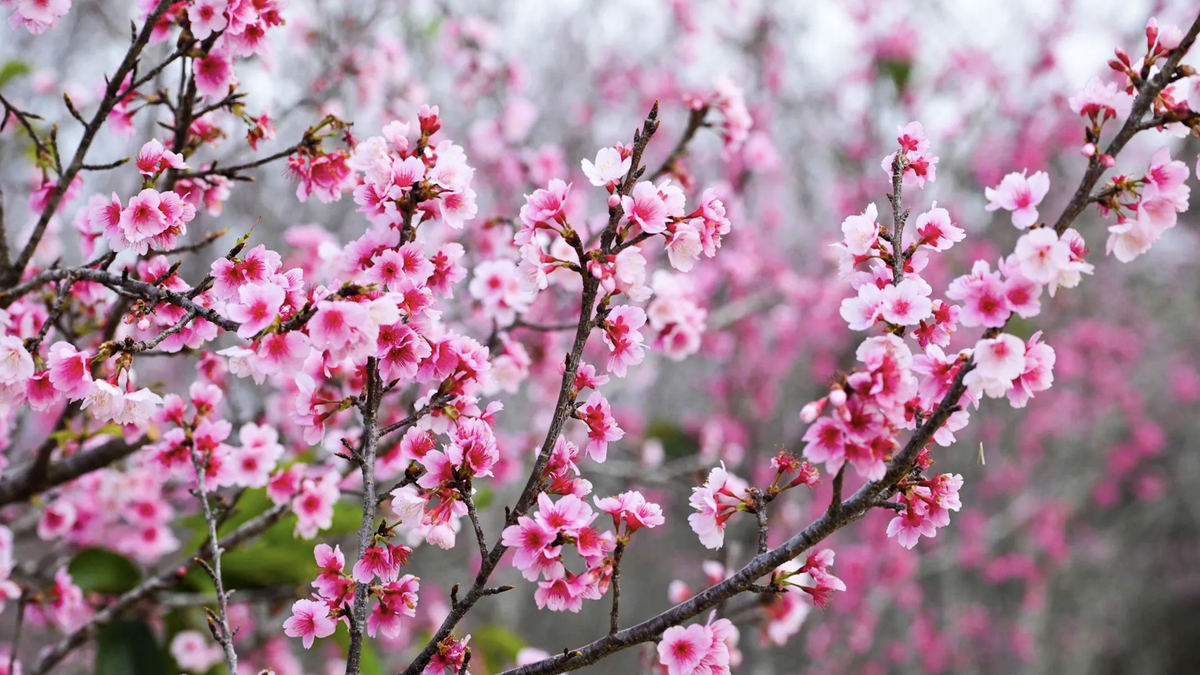
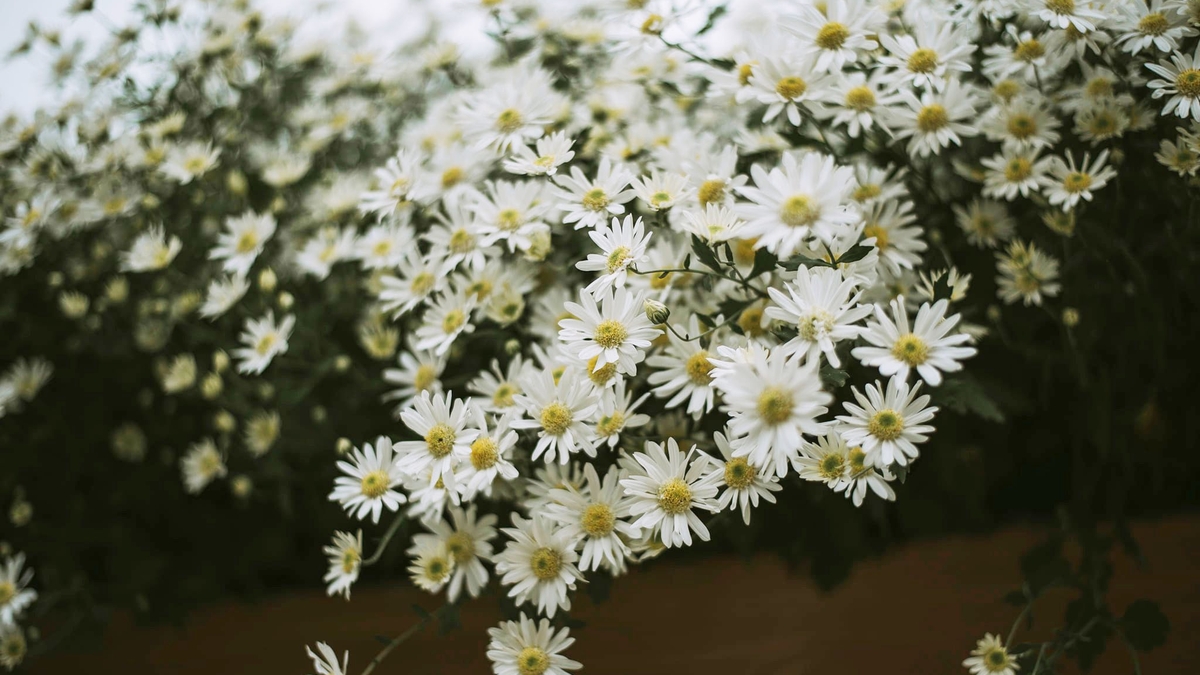
As Tet approaches, people go to the market to buy branches of apricot blossoms to display on the ancestral altar.
Young and old alike are happy.
The lively drumming of the lion dance outside the village hall urged those living far from home to hurry back to their hometowns to celebrate Tet. No matter how busy their work was, everyone put it aside to return home for the holiday. Recalling my childhood, living in the countryside, I easily felt the eager atmosphere of the days leading up to Tet. Having grown up and established myself in the city, on the 29th day of the lunar month, my family eagerly returned to our hometown. Every afternoon, standing behind the house and looking out at the river, everything was quiet and peaceful, welcoming the moment the old year gave way to the new. As the sun set over the river, every house excitedly lit up its lights, illuminating the country roads. People played cheerful spring songs, creating a lively atmosphere.
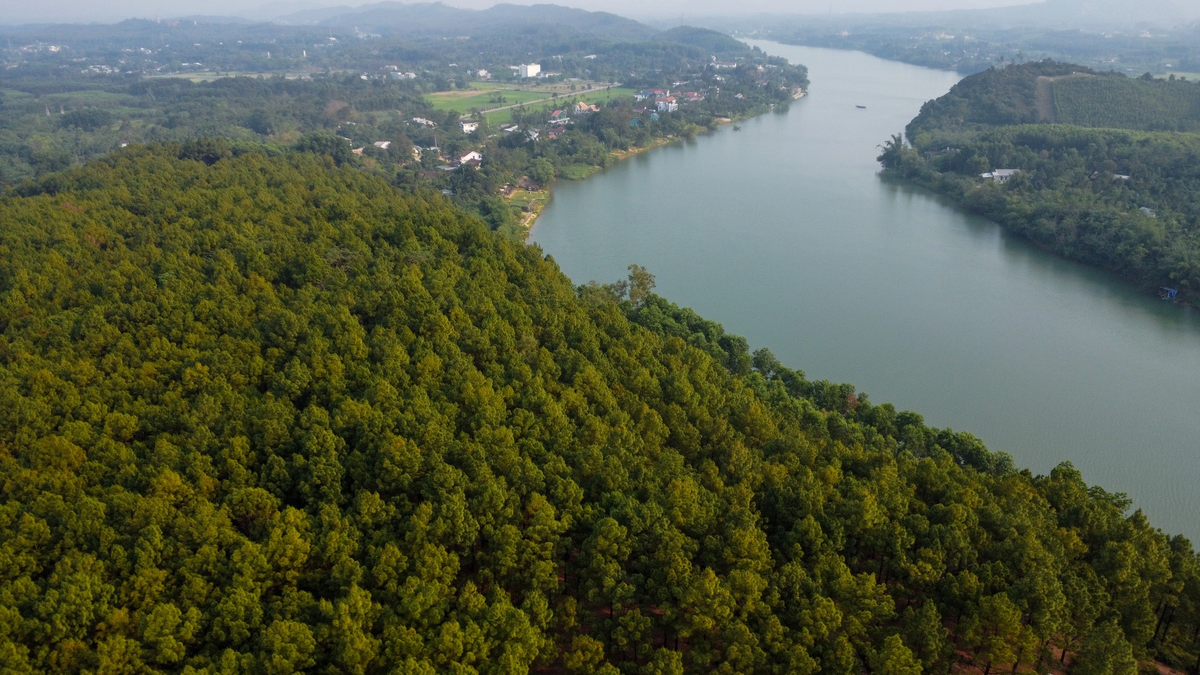
My hometown is situated beside the gentle Hau River, with year-round breezes, vast rice paddies, ponds teeming with fish, and generous, optimistic people. There was a period when life changed, and many young men left home to seek a better life in the city. As a result, the rural workforce was sparsely populated by young people, leaving the elderly to shoulder the burden of farming and fishkeeping. If the rice and fish harvests were good and prices were high, farmers prospered. But if prices were volatile, life became difficult. Whether we were well-off or just had enough to eat, the family remained the open door, where grandparents and parents would welcome us back with open arms.
I remember, back then, around Tet (Lunar New Year), many people from far away were returning to their hometowns to celebrate. Then, I met Mr. Le Van Can (48 years old), who was also bringing his wife and children back to his family. His father had passed away, and his mother was old and frail. In the past, his family had many siblings and little land for farming, so Mr. Can decided to move to Ho Chi Minh City to make a living, doing various jobs from barbering to small-scale trading. We were very happy to meet Mr. Can in Ho Chi Minh City. He boasted that he was now diligently working and his family life was stable. Remembering our younger days, we sat and chatted, reminiscing about the beautiful memories of the past. Mr. Can recounted that 20 years ago he left his hometown to find work, hoping to change his life. In his early days in Ho Chi Minh City, he rented a place to live. Initially, he made a living as a barber. However, the rent was very high, and he could only barely cover the expenses, so he had to give up the profession.
Mr. Can switched to selling fried fish balls. More than 10 years ago, selling fried fish balls in Ho Chi Minh City was very popular, and some families made a fortune from it. After about 5 years in that business, seeing the increasingly fierce competition, Mr. Can switched to supplying fish balls to restaurants and eateries, a business he continues to this day. Mr. Can said that every day he sources his supplies from the Mekong Delta provinces, then distributes them to restaurants, eateries, and fish ball vendors to make a profit. Thanks to this, Mr. Can has a stable income and has been able to stay in this bustling city until now.
Usually on the 29th or 30th of the Lunar New Year, Mr. Can takes his wife and children back to his hometown to visit his paternal and maternal families, staying for five days before returning to Ho Chi Minh City to continue earning a living. For Mr. Can, Tet (Lunar New Year) is a time for reunion, a time to meet family and relatives. "After a year of working hard to earn money to support my family, no matter how busy I am, I must go home for Tet and pay respects to my ancestors. Firstly, it's to remember the gratitude I owe to my parents for giving me life and raising me, and secondly, to educate my children about their family roots," Mr. Can expressed.

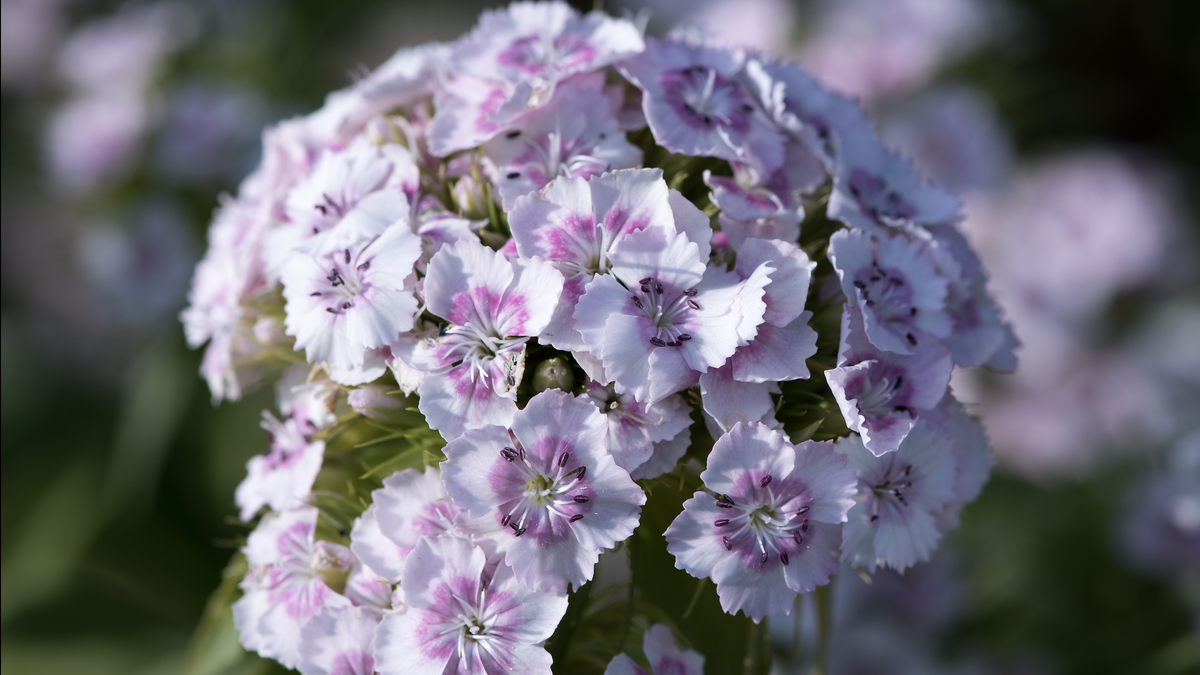
Rural farmers grow flowers to sell during Tet (Vietnamese Lunar New Year).
NEW YEAR'S WISHES
The Tet atmosphere in my village over 30 years ago was very simple. Back then, when floods came, the roads in my village were submerged, making travel difficult. When the floodwaters receded, they left behind a layer of soft, muddy water, but after a few days of the east wind blowing, the roads would dry up, and people could happily ride their bikes and walk through the flooded stilt houses. On the morning of the first day of Tet, children in their new clothes would gather around, laughing and chatting. Tet in the countryside was simple, but very joyful! At that time, the only food available in the countryside was fish and shrimp caught from ponds and lakes. During the three days of Tet, having a pot of braised pork with eggs was considered a luxury. But no matter how difficult things were, the villagers remained optimistic and generous, making banh tet (traditional rice cakes) or braising pork to offer to their ancestors.
I vividly remember that on the early morning of the 28th day of the Lunar New Year, a family in the village was exchanging a pig for rice. Each kilogram of pork was exchanged for one bushel of rice. Upon hearing the news, the men, carrying oil lamps, trudged along the dirt road to the village to share a few kilograms of pork for their wives to stew and prepare a feast to offer to their ancestors for the New Year celebration. In the past, people raised pigs using traditional methods, mainly feeding them bran, water spinach, and mixed fish. Yet, the pork and fat were firm, clean, and of high quality. When stewed to perfection, the aroma of the pork spread throughout the village.
On the night of the 30th of Tet (Lunar New Year's Eve), my father woke us up to light incense sticks as a respectful offering to our ancestors. In the tranquil night, the white smoke of the incense drifted gently through the air, creating a sacred and warm atmosphere on New Year's Eve. This tradition seems to be deeply ingrained in the hearts of every child in our family. Today, on the night of the 30th of Tet (sometimes the 29th), my family still maintains this tradition precisely at the moment of transition into the New Year.
Mr. Truong Chi Hung, a writer and lecturer at An Giang University, said that the Lunar New Year has a very long history. Currently, although the cultural and spiritual life of society has been significantly impacted, and we have access to world civilizations, Tet (Lunar New Year) cannot change. The cultural and spiritual imprint of family and loved ones is the breath of life from birth, through growth, and until we return to dust. There is no reason why the image of Tet should be erased from community life and from each individual's life. Over time, there have been certain changes in rituals and offerings to ancestors during Tet, but Tet remains enduring, following the rhythm of time.
Writer Truong Chi Hung expressed that recently, during the end of the year, people often use the phrases "spring reunion" and "Tet reunion" to describe the activities of celebrating Tet. These phrases quite accurately reflect the characteristics of Tet celebrations in Vietnam. It was the same in the past; during Tet, people would gather together, enjoy slices of banh tet (sticky rice cake), sweet candied fruits, and chat over tea. Afterwards, they would exchange New Year's greetings, share stories about their business ventures and good fortune during the year, hoping for a prosperous and auspicious new year.

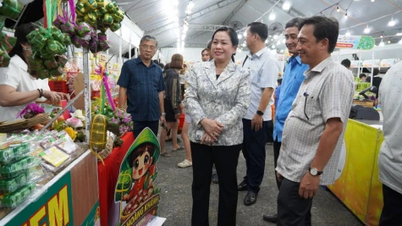
As Tet approaches, people sell flowers and fruits in rural markets.
"Nowadays, we see that young people no longer gather in their villages or families; many go far away to work and seek opportunities for advancement. Therefore, family reunion meals are very rare in the current context. That's why the best time for families to get together is during the Lunar New Year," writer Truong Chi Hung explained.
Tet (Vietnamese Lunar New Year) comes and goes, but it always remains in everyone's hearts. No matter where they are, everyone hurries home for Tet to fully enjoy the joy and warm moments with their family.
Source: https://baoangiang.com.vn/tet-trong-long-moi-nguoi-a476715.html


























![[Infographic] Vietnam's Economic Situation Report, Q1 2026: Strong Growth Momentum](https://vphoto.vietnam.vn/thumb/402x226/vietnam/resource/IMAGE/2026/04/04/1775298512042_tang-truong-kinh-te-viet-nam.jpeg)
![[Image] Close-up view of the 10-lane road connecting to Long Thanh Airport](https://vphoto.vietnam.vn/thumb/402x226/vietnam/resource/IMAGE/2026/04/04/1775291871988_ndo_br_1-resize-5690-jpg.webp)













Comment (0)