

Sports are not only a simple exercise activity, but also an environment to connect the community, help reduce social evils, build a cultural lifestyle and create favorable conditions for family economic development. With such comprehensive impacts, community sports increasingly affirm their role as an important element in sustainable poverty reduction.
Community sports – "spiritual vaccine" for people in disadvantaged areas
In many poor areas, living conditions are still limited, people have to face the pressure of making a living, lack of playgrounds and training grounds, leading to the spiritual life being affected. When sports activities are organized regularly, people have the opportunity to relax, socialize and improve their health. This is the "mental vaccine", helping to dispel fatigue and create motivation in labor production.
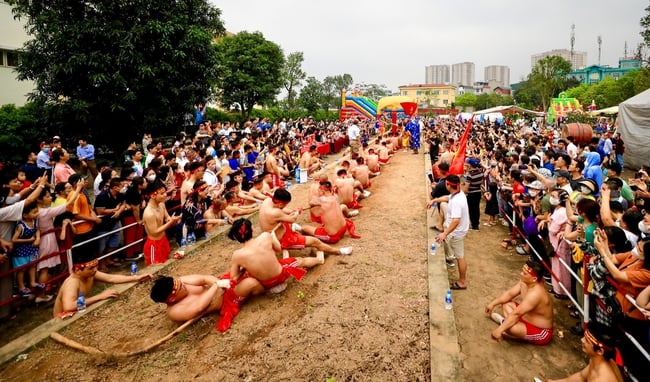
Many traditional sports are maintained and preserved.
In some mountainous communes, organizing football, volleyball, tug of war, cross-country running has become a habit every afternoon. Young people, women, and even the elderly can participate. This not only creates a joyful atmosphere but also helps build a healthy lifestyle, reducing alcoholism and gambling - the causes that cause many families to fall into difficulties.
In many localities, grassroots cultural and sports facilities such as village cultural houses, mini stadiums, volleyball courts, badminton courts, etc. have been built or upgraded. These facilities not only serve meetings and cultural activities but also serve as venues for community sports activities.
In the Central Highlands, many villages have taken advantage of the open space in front of the communal house to organize volleyball and gong-playing exchanges combining sports and culture. In coastal areas, mini football fields have been built with socialized resources to help young people have a place to exercise after going to the beach.
Thanks to healthy sports spaces, people are more connected, building solidarity - an important factor in business association, production cooperation or community tourism development.
Health is the most valuable asset of every person, especially for people in difficult areas - where income depends on heavy labor and agricultural production. When health is improved, labor productivity increases significantly. Regular sports activities help increase endurance, reduce illness, improve the ability to work outdoors, reduce occupational diseases caused by heavy labor, help people recover their health after work...
Sports improve labor capacity - a premise for sustainable poverty reduction
In some mountainous districts, agricultural production teams have established morning walking clubs to help people improve their health before the harvest season. Thanks to this, the rate of illness has decreased, working hours have increased, and incomes have become more stable.
Each region has its own unique cultural sports. Maintaining and developing traditional sports helps preserve identity and attract tourists to visit – thereby indirectly supporting local people to do tourism and sell local products.
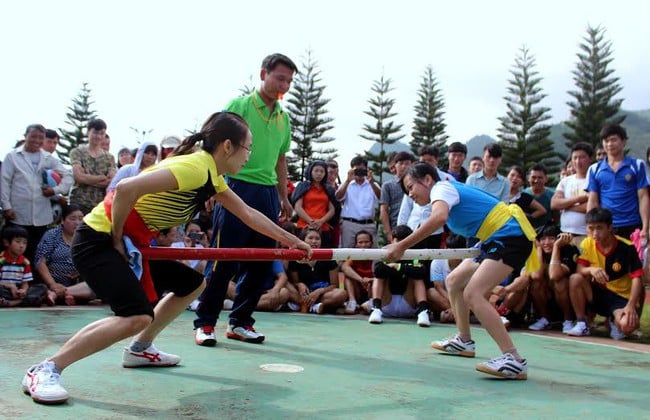
When sports are linked to culture, people not only exercise but also preserve the heritage of their community.
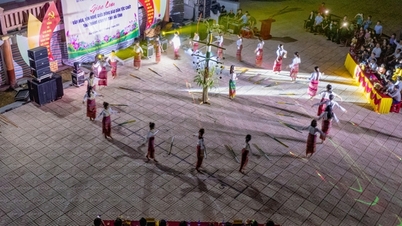
In the Northwest, the Mong, Tay, and Thai people have sports such as pao throwing, top spinning, crossbow shooting, stick pushing, etc. organized during the spring festival. Some localities have integrated traditional sports activities into community tours.
In the Central Highlands, gongs are associated with xoang dance, stilt running, and elephant racing (in Buon Don). These are activities that attract a large number of tourists, creating a direct source of income for the community.
In the South, many fishing villages maintain traditional boat racing and swimming. This is not only a sporting activity but also a cultural festival, enriching the spiritual life of coastal people.
When sports are linked to culture, people not only exercise but also preserve the heritage of their community.
One of the most obvious effects of community sports is to limit the situation of young people gathering to drink alcohol, gamble, drop out of school early or engage in negative behavior. Many mountainous communes shared that when the village football team played regularly, the situation of young people getting drunk and causing disorder decreased significantly.
Thanks to a healthy living environment, children are also guided to participate in sports instead of playing too many games. This contributes to forming a positive lifestyle, raising personal and community awareness.
The development of sports tourism not only attracts tourists but also generates income from food services, accommodation and the sale of handicrafts. This is a new form of livelihood development, suitable for many poor households.
Source: https://bvhttdl.gov.vn/the-thao-cong-dong-chia-khoa-nang-cao-suc-khoe-tinh-than-va-nang-luc-san-xuat-cua-nguoi-dan-ngheo-20251201113341271.htm


![[Photo] Prime Minister Pham Minh Chinh receives President of Cuba's Latin American News Agency](/_next/image?url=https%3A%2F%2Fvphoto.vietnam.vn%2Fthumb%2F1200x675%2Fvietnam%2Fresource%2FIMAGE%2F2025%2F12%2F01%2F1764569497815_dsc-2890-jpg.webp&w=3840&q=75)











































Comment (0)