

In many ethnic minority, mountainous, coastal and island areas, building a healthy cultural environment not only helps promote good identity but also opens up new directions for household economic development. A community with a civilized lifestyle, a spirit of solidarity, knowing how to share and support each other will create a solid foundation for developing livelihoods, exploiting tourism, producing goods and expanding service activities.
Cultural environment – the foundation for changing perception
Over the years, national target programs, especially the sustainable poverty reduction program, have identified building a cultural environment as a key task. Because before people can develop their economy, they need to be equipped with knowledge, skills and especially a change in thinking.
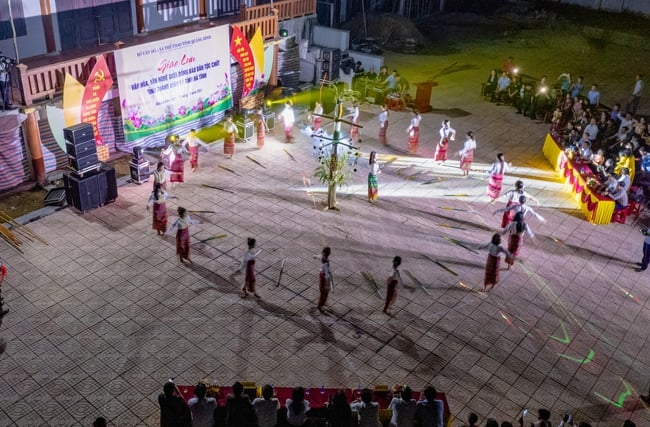
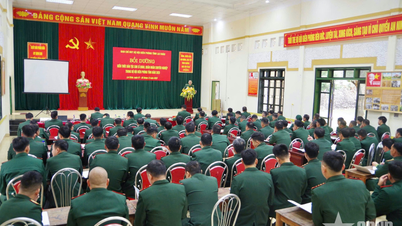
Organizing community activities, propagating laws, disseminating information on culture, gender equality, and eliminating bad customs have become regular activities.
In many remote communes, organizing community activities, propagating laws, disseminating information on culture, gender equality, and eliminating bad customs have become regular activities. Cultural activities seem simple but help people better understand their rights, obligations, and policies to support livelihood development.
Thanks to a healthy cultural environment, many old bad practices – such as early marriage, prolonged weddings, expensive funerals or incestuous marriages – have gradually been eliminated. Changing perceptions helps households reduce costs and focus resources on production, animal husbandry or service businesses.
The movement to build "Cultural families" and "Cultural villages, hamlets and residential groups" has been implemented for many years, but in the context of sustainable poverty reduction, this movement has even more profound meaning.
A cultured family is not only a harmonious family, living as an example, but also a family that knows how to organize its life scientifically, invest in education , apply scientific and technological advances, and actively participate in community activities. A cultured family is also a place to nurture the spirit of self-reliance and self-improvement - an important factor in escaping poverty and not falling back into poverty.
In many localities, the criteria for considering a cultural family have been linked to environmental sanitation, safe housing construction, preserving national identity, and not violating the law. These criteria have a strong impact on people's awareness, creating a clear change in daily life and behavior.
Cultural institutions – spaces to spread new lifestyles
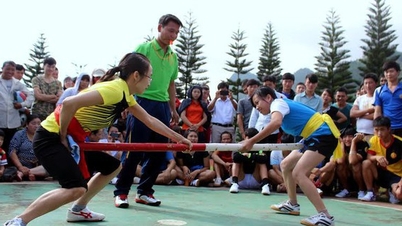
Where cultural and sports institutions operate effectively, the cultural environment often develops well.
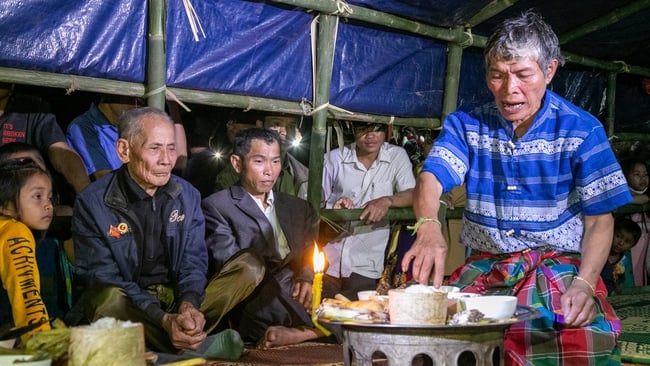
These activities help the community to be more connected and improve understanding.
At the village cultural house, many classes are organized such as handicraft classes, production technique instruction classes, law propaganda classes, cultural activities, sports training...
These activities help the community to be more connected and improve understanding. When people have a healthy place to live, social evils are easily eliminated, replaced by a spirit of construction and development.
In community tourism areas, cultural houses become places to welcome visitors, display handicrafts, and hold festivals recreating traditional culture. This both promotes national identity and creates income for local households.
A good cultural environment is not only the result of State investment but also comes from the active participation of the people. In many places, prestigious people, village elders, and village chiefs play an important role in mobilizing the community to maintain environmental hygiene, build a civilized life, and organize festival activities according to regulations.
Many models of “Self-managed cultural groups”, “Women’s groups that do not violate the law”, “Civilized Youth Unions” have been effective in remote areas. These models not only solve social problems but also spread the spirit of responsibility, encouraging each family to build a better life together.
When a community has a good cultural environment, each individual will have more motivation to strive, each family will have the opportunity to develop economically, and the locality can move towards the goal of sustainable poverty reduction.
Source: https://bvhttdl.gov.vn/xay-dung-moi-truong-van-hoa-lanh-manh-buoc-dem-quan-trong-cho-phat-tien-kinh-te-ho-gia-dinh-20251201085321559.htm
![[Photo] Prime Minister Pham Minh Chinh receives President of Cuba's Latin American News Agency](/_next/image?url=https%3A%2F%2Fvphoto.vietnam.vn%2Fthumb%2F1200x675%2Fvietnam%2Fresource%2FIMAGE%2F2025%2F12%2F01%2F1764569497815_dsc-2890-jpg.webp&w=3840&q=75)














































Comment (0)