

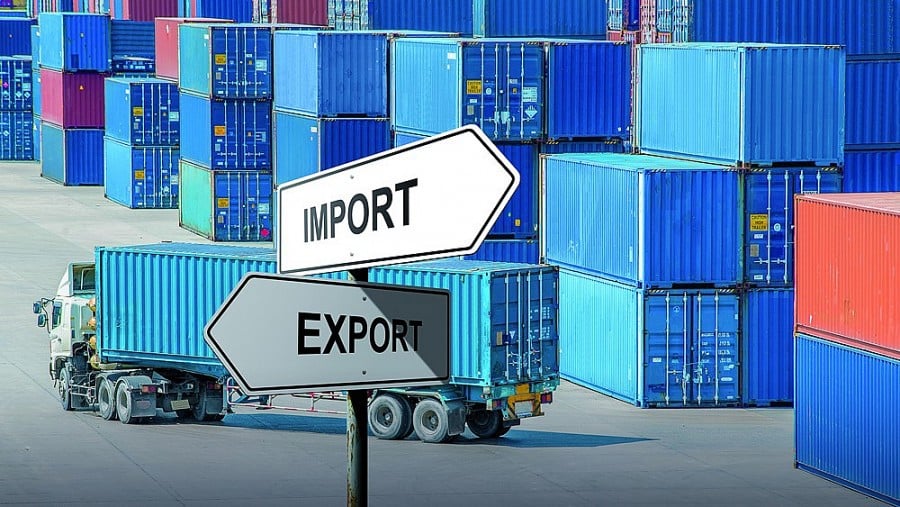
According to Nikkei Asia, this is the largest tariff increase under President Donald Trump's term to date, including tariffs exceeding 30% on Asian economies such as China, Taiwan, Vietnam, and Thailand. Vietnam alone is subject to a 46% tariff.
Why is it 46%?
According to documents released by the White House regarding the framework for these tariffs, the imposition of these taxes will be divided into two groups.
First, there is a basic tax rate of 10% applied to all countries.
In addition, some countries will have to bear a separately calculated "reciprocal" tax rate higher than that 10%. These are the countries that the US considers to be in "serious violations" of non-tariff barriers.
The reciprocal tariffs (which Trump called "discounted") would be equal to a percentage (for example, half for many countries) of the total value of the "taxes" that the U.S. government calculates that other countries have imposed on the U.S. These tariffs include both trade barriers and currency manipulation. Trade barriers also encompass items such as excessive value-added tax, export subsidies, and intellectual property theft.
For example, if China's total tariffs and trade barriers against the US are calculated at 67%, then the discounted reciprocal tariff rate the US applies to China is 34% (almost half of that).
Similarly, Vietnam was accused of imposing 90% tariffs and trade barriers on the US, and was therefore subject to a 46% tariff.
So where did that 90% figure come from? It's because they applied a formula released by the White House, which essentially means Trump wanted to balance trade between the two countries. A key component of this is the trade deficit between the two countries, adjusted for import elasticity and the level of tariffs affecting import prices.
The choice of parameters for this formula was made by Trump's team of experts to arrive at the 90% figure. Therefore, we need to pay attention to the story of elasticity and tariffs, which in reality relates to tariff and non-tariff barriers in Vietnam.
Which industries will be affected?
According to analysis from US investment firms, stocks in the footwear, furniture, and toy industries in the US are being heavily impacted, led by Nike.
CNBC noted that the 46% tariff on imports from Vietnam “could soon increase costs for large corporations in the apparel, furniture, and toy sectors, and some companies may pass these increased costs on to consumers in the form of price hikes. The tariffs on Vietnam will take effect from April 9, 2025.”
Meanwhile, some industries have temporarily remained unaffected by Trump's supposedly reciprocal tariffs. Examples include iron, steel, aluminum, copper, and gold.
However, these are only initial assessments and focus on the affected US import businesses. Sectors such as Vietnam's seafood industry could also be severely impacted because the current tariff rate is far below 46%.
What's next?
Clearly, the US President's imposition of these tariffs is just the beginning. They anticipated that countries would need to negotiate to reduce tariffs, and this would be a long game. On the other hand, the reciprocal trade tariff formula recently announced by the White House suggests they want to balance trade between the two countries, taking into account both tariff and non-tariff factors. This means that Vietnam will have to consider all tariff and non-tariff options in negotiations, including value-added tax, market entry conditions, fees, and even the exchange rate issue (as they mentioned currency manipulation).
It is important that Vietnam does not retaliate with tariffs, but instead chooses to negotiate.
The International Chamber of Commerce (ICC) has just issued a warning that this is a shock to the global trading system, but it will not necessarily lead to a systemic crisis. How other countries react to the new tariffs will determine the scale and extent of the economic impact from Trump's 'Liberation Day'.
The organization argues that governments need to de-escalate tensions as much as possible, because retaliatory tariffs only lead to a lose-lose situation.
Reciprocal tariffs for certain Asian countries and economies.
Nation | Countervailing duties |
China | 34% |
Vietnam | 46% |
Taiwan | 32% |
Japan | 24% |
India | 26% |
Korea | 25% |
Thailand | 36% |
Indonesia | 32% |
Malaysia | 24% |
Cambodia | 49% |
Bangladesh | 37% |
Singapore | 10% |
Philippines | 17% |
Australia | 10% |
Pakistan | 29% |
Sri Lanka | 44% |
Nepal | 10% |
Myanmar | 44% |
Laos | 48% |
New Zealand | 10% |
Brunei | 24% |
Source: White House, Nikkei Asia | |
The tax framework and tax formula were announced by the White House:
https://ustr.gov/issue-areas/reciprocal-tariff-calculations
https://www.whitehouse.gov/fact-sheets/2025/04/fact-sheet-president-donald-j-trump-declares-national-emergency-to-increase-our-competitive-edge-protect-our-sovereignty-and-strengthen-our-national-and-economic-security/
Source: https://baodautu.vn/thue-quan-doi-ung-46-va-90-d261789.html





















































































Comment (0)