

"Spring Festival travel" refers to the 40-day period of travel undertaken by people in China before and after the Lunar New Year. These journeys are two-way: before the New Year, people travel from major cities back to their hometowns for the festivities, and after the New Year, they return to the cities for work. Spring Festival travel is often considered the world's largest annual migration, with billions of trips made by road, rail, water, and air.
This year's Spring Festival travel rush officially began on January 26th (December 16th, 2023 according to the lunar calendar) and will last until March 5th (January 25th, 2024 according to the lunar calendar), according to Chinese state media. The Chinese government expects to see 9 billion trips during this year's Spring Festival travel rush, nearly double the 4.7 billion trips recorded last year, following the lifting of COVID-19 pandemic restrictions.
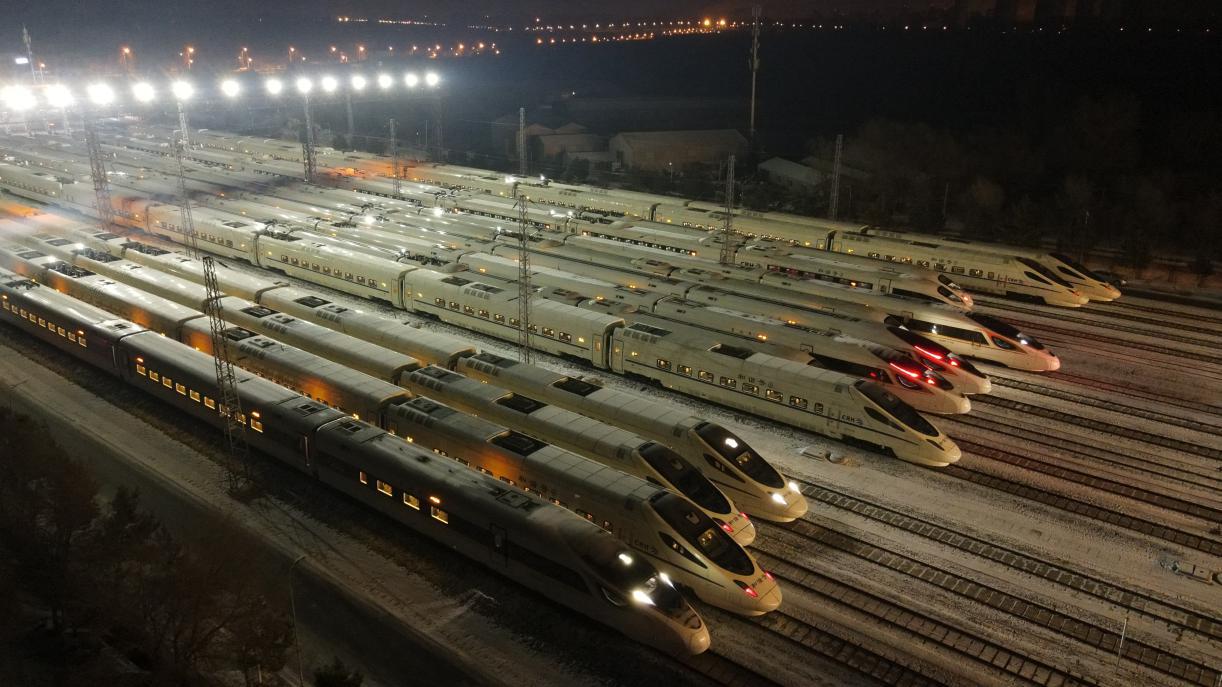
A train is parked at a station in Shenyang city, Liaoning province, China, on January 26.
According to CCTV, approximately 80% of the 9 billion trips are expected to be by private vehicles on roads, which is also a record.
On January 26th, nearly 11 million train journeys are expected, the primary mode of transportation in China. Between January 26th and March 5th, a total of 480 million train journeys are projected nationwide, a 38% increase compared to 2023 and a 17% increase compared to 2019, before the Covid-19 pandemic.
Rail and air traffic surged on the first day of this year's Spring Festival travel rush. Passengers still faced difficulties purchasing train tickets despite China having the world's largest high-speed rail network.
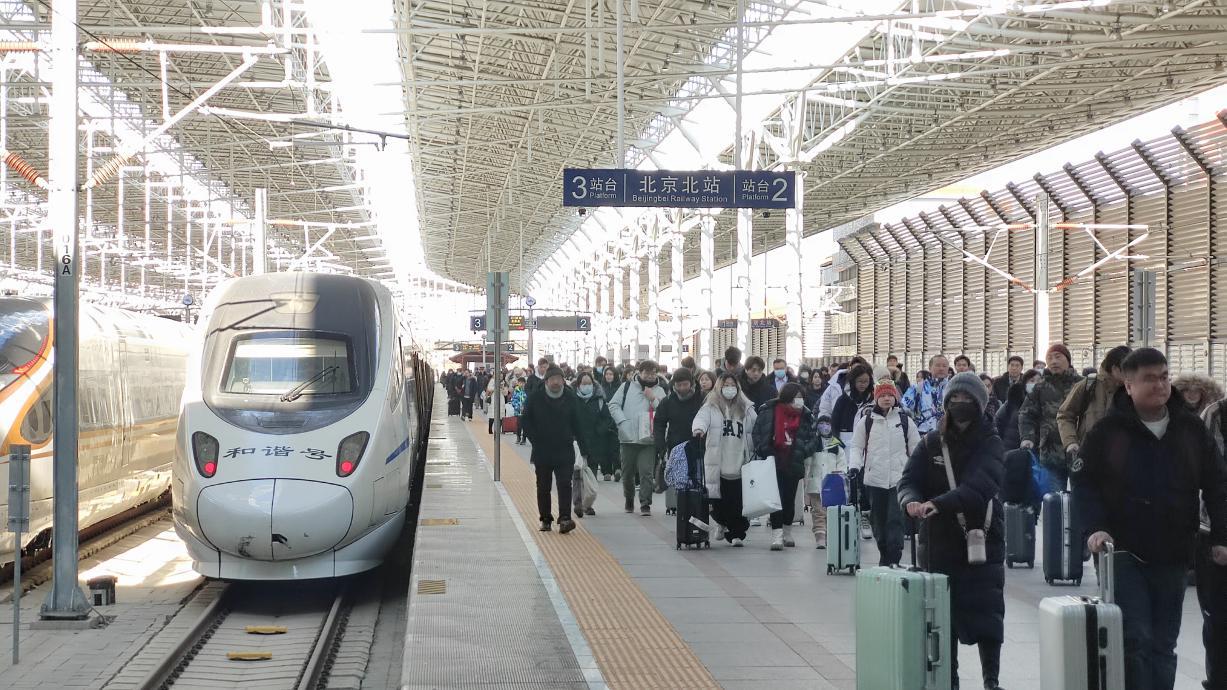
A railway station in Beijing on January 26.
CCTV reported that the number of air travelers was estimated at 2 million on January 26th. According to China's aviation authorities, the number of air trips during this year's peak travel season is expected to reach 80 million, a 9.8% increase compared to 2019.
Shanghai's Pudong and Hongqiao airports are expected to see a 57.6% year-on-year increase in passenger traffic, while Beijing's airports are forecasting a rise of over 60%.
China's aviation authorities have arranged an additional 2,500 flights to destinations in Asia, including Southeast Asia, Japan, and South Korea.
Additional train and flight services have also been arranged for popular domestic tourist destinations, including the city of Harbin in northeastern China and the city of Sanya on Hainan Island.
Source link



![[Photo] Closing Ceremony of the 10th Session of the 15th National Assembly](/_next/image?url=https%3A%2F%2Fvphoto.vietnam.vn%2Fthumb%2F1200x675%2Fvietnam%2Fresource%2FIMAGE%2F2025%2F12%2F11%2F1765448959967_image-1437-jpg.webp&w=3840&q=75)
![[Photo] Prime Minister Pham Minh Chinh holds a phone call with the CEO of Russia's Rosatom Corporation.](/_next/image?url=https%3A%2F%2Fvphoto.vietnam.vn%2Fthumb%2F1200x675%2Fvietnam%2Fresource%2FIMAGE%2F2025%2F12%2F11%2F1765464552365_dsc-5295-jpg.webp&w=3840&q=75)

















































![[OFFICIAL] MISA GROUP ANNOUNCES ITS PIONEERING BRAND POSITIONING IN BUILDING AGENTIC AI FOR BUSINESSES, HOUSEHOLDS, AND THE GOVERNMENT](https://vphoto.vietnam.vn/thumb/402x226/vietnam/resource/IMAGE/2025/12/11/1765444754256_agentic-ai_postfb-scaled.png)

















































Comment (0)