

In Vietnam, the application of artificial intelligence (AI) in healthcare is a new field, but it is playing an increasingly important role in disease diagnosis, thereby helping to make accurate, timely, and effective treatment decisions.
The effectiveness of AI in medical diagnosis and treatment.
The World Health Organization (WHO) predicts that by 2030, the world will face a shortage of approximately 18 million healthcare workers. Therefore, the application of artificial intelligence (AI) in medical examination, treatment, and diagnostic imaging not only provides accurate results and rapid data analysis but also helps doctors reduce many tasks in their work, contributing to solving the healthcare shortage.
 |
| In healthcare, diagnostic imaging is a leading field where AI can be applied to increase efficiency. |
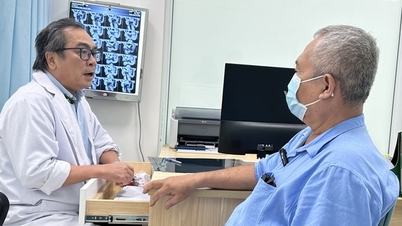
According to Professor Pham Minh Thong, President of the Vietnam Society of Radiology and Nuclear Medicine, in healthcare, diagnostic imaging is a leading field in the application of AI. The application of AI software helps to make diagnoses faster and more accurate.
In the near future, AI will be widely applied in diagnostic imaging, helping to reduce the workload for doctors and medical staff because with such a large number of patients, reading results would be very time-consuming for doctors. Thus, AI is a useful tool to support doctors in the field of diagnosis, capable of helping to detect very small lesions.
Currently, AI-assisted diagnostic imaging technologies are being developed as prognostic tools, helping doctors predict which diseases require treatment, even before symptoms appear. Earlier intervention can help patients live longer, enjoy a better quality of life, and reduce healthcare costs for families and society.
Dr. Ha Thuc Nhan, a member of the Society of Radiology and Nuclear Medicine, shared that with liver cancer, the application of AI in diagnosis can help predict the percentage risk of cancer for a person with fatty liver disease, hepatitis, etc.
This is achieved through a combination of methods such as clinical tests, magnetic resonance imaging, etc., from which doctors can provide proactive treatment to reduce that risk.
This is a crucial point that helps prevent cases from progressing to dangerous stages, especially liver cancer. According to Dr. Nhan, AI can also assist doctors in assessing whether fatty liver disease is improving or worsening after a period of intervention by quantifying the percentage of fat in cells.
According to a representative from GE Healthcare Vietnam, millions of printed diagnostic imaging results are produced daily in Vietnam. When applied, AI, with its ability to read and analyze data, will help doctors obtain the most selective results, instead of having to process large volumes of images for each individual case.
It is known that since 2023, many hospitals in Vietnam have been interested in applying AI to support medical examination and treatment, such as Hung Vuong Hospital, Cho Ray Hospital, K Hospital, and Hospital 199 ( Ministry of Public Security ).
Associate Professor Dr. Le Manh Cuong, Director of Tue Tinh Hospital (Vietnam Academy of Traditional Medicine), said that the hospital is also updating AI and robots in the treatment of musculoskeletal diseases and rehabilitation, in combination with traditional medicine solutions.
In the treatment of musculoskeletal disorders, rehabilitation is crucial. With the advancement of medicine, AI and robotics are being widely applied in the treatment of musculoskeletal diseases in particular, and rehabilitation in general, ranging from minor functions such as foot and hand problems, neck and shoulder pain, spinal problems, herniated discs, to post-stroke issues such as hemiplegia and limb weakness.
3D simulation to locate bleeding in the kidney.
Six months ago, Mrs. MTV (82 years old, Ho Chi Minh City) underwent laparoscopic surgery at a nearby hospital to remove part of her left kidney due to cancer. For the past month, she experienced blood in her urine and went to the hospital for examination.
According to Dr. Phan Huynh Tien Dat, Specialist I in Urology, Center for Urology - Nephrology - Andrology, Tam Anh General Hospital, Ho Chi Minh City, Ms. V. had symptoms of gross hematuria, meaning her urine was red or pink in color, noticeable to the naked eye.
Based on the patient's history of laparoscopic nephrectomy and after considering all possibilities, Dr. Dat suspected hematuria related to arteriovenous fistula.
However, since other facilities had been unable to identify the cause of the bleeding during previous examinations, Tam Anh General Hospital in Ho Chi Minh City decided to perform a 3D simulation to find the cause of the continuous bleeding in the kidney. The patient underwent a CT scan of the kidney using a 768-slice CT system.
Thanks to the high-resolution 768-slice CT scanner, the entire renal vascular structure and kidney are displayed as a clear 3D model on the computer.
Thanks to this model, doctors can visually observe the kidney and renal vascular system in detail, from large blood vessels to small ones. For a clearer view, doctors can zoom in on the model, getting close to the blood vessels to find and analyze small lesions.
As expected, after carefully reviewing the CT scan results, the doctor discovered three fistulas, each approximately 1mm in size, on the left renal artery and vein. This was the cause of Mrs. V.'s persistent hematuria.
According to Dr. Dat, renal arteriovenous fistula is a rare complication after laparoscopic nephrectomy (tumor removal) that is easily overlooked.
"The urologist must consider this cause before prescribing the appropriate imaging method to pinpoint the exact location of the disease. Otherwise, the disease cannot be detected," Dr. Dat said.
Furthermore, in cases of very small fistulas like Mrs. V.'s, it not only requires a high-resolution CT system (768 slices or more) to clearly visualize the lesions, but also a highly experienced radiologist capable of accurately interpreting the results.
After identifying the cause of Mrs. V.'s hematuria, Dr. Dat prescribed renal artery embolization to close the fistula.
A study by American scientists published in 2022 showed that the incidence of renal arteriovenous fistula was only 0.04%. Another study, also from the US in 2010, found that in 889 cases of kidney trauma, only 1 case (0.11%) had a renal arteriovenous fistula.
Renal arteriovenous fistulas can form due to various causes such as congenital defects, vascular damage from kidney tumors, kidney trauma, or kidney surgery, as in Mrs. V's case.
Renal arteriovenous fistulas can cause hematuria, which may be microscopic hematuria (blood mixed in the urine but not visible to the naked eye, only detectable by urine tests) or macroscopic hematuria.
If left untreated, renal arteriovenous fistula can cause dangerous complications such as hypertension, urinary tract obstruction, or congestive heart failure (the heart pumps blood inefficiently, failing to meet the body's oxygen needs, causing blood to pool in multiple organs).
Currently, renal arteriovenous fistulas can be controlled through surgery or embolization, as in Mrs. V's case.
Doctors advise that individuals with a history of kidney intervention (kidney biopsy, partial kidney surgery, etc.) or who have experienced kidney trauma and develop hematuria should seek medical attention promptly to determine the exact cause and receive appropriate treatment.
Concerns about younger gout patients.
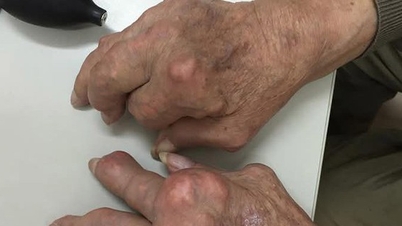
Previously, gout primarily affected people aged 40-60. However, nowadays, the disease is becoming increasingly common among younger people, with some cases even occurring in those in their 20s or 30s.
Globally, gout is common in both developed and developing countries, affecting approximately 0.02-0.2% of the population, with men being the predominant group (over 95%).
In Vietnam, gout accounts for approximately one-third of all people seeking treatment for musculoskeletal problems. It is also the fourth most common of the 15 most frequently encountered joint diseases.
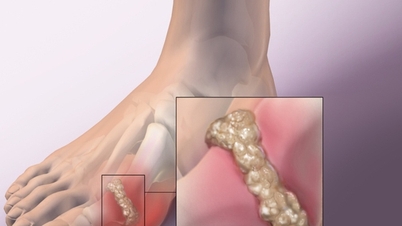
According to Dr. Ta Thi Huong Trang, from the Musculoskeletal Center at Bach Mai Hospital, gout is a joint disease caused by a disorder in purine metabolism, leading to increased uric acid in the blood, causing saturation and deposition of MSU (monosodium urate crystals) in tissues such as articular cartilage and bone ends. Approximately 25 out of 100 people with high levels of uric acid in their blood have been diagnosed with gout. The disease is eight times more common in men than in women.
According to Dr. Ta Thi Huong Trang, the complication rate of gout is 50%. Specifically, out of every 100 patients, 50 will experience complications.
Furthermore, the mortality rate among patients has not decreased over the past 20 years. Notably, the age of onset of the disease is becoming increasingly younger.
"Besides family history, being overweight or obese, a high-protein diet, lack of physical activity or exercise, and alcohol abuse are important factors contributing to the increase in gout cases and their younger age," explained Dr. Ta Thi Huong Trang.
Similarly, at Medlatec General Hospital, patients seeking treatment for gout account for approximately one-third of the total number of people seeking treatment for musculoskeletal problems.
The study also recorded cases of gout in individuals as young as 20-23 years old. Doctors say that gout often develops silently. Some people discover the disease incidentally during routine health checkups. After following their doctor's treatment instructions, many patients have not experienced a recurrence of the disease.
However, health experts are concerned that the majority of patients underestimate gout, believing it to be less dangerous than diabetes, cardiovascular disease, or hypertension, and therefore do not adhere to their doctor's treatment instructions. Furthermore, when acute gout attacks occur, causing joint pain, patients often buy medication from pharmacies or take painkillers instead of going to the hospital.
The indiscriminate use of painkillers by a significant portion of the population leads to dangerous complications such as: gastrointestinal bleeding, osteoporosis, fractures, diabetes, myocardial infarction, sudden death, etc. In addition, some people, after consulting a doctor and taking prescribed medication, stop taking their medication on their own when their symptoms improve.
Failure to follow the doctor's treatment instructions will worsen the condition. Patients may even experience joint deformities, reduced mobility, disability, and life-threatening complications.
For treatment to be effective, doctors advise patients to absolutely avoid using medications of unknown origin or those not prescribed by a doctor.
In addition, patients need to maintain a healthy diet and lifestyle. Specifically, they should avoid drinking beer and hard liquor or eating foods rich in purines such as: animal offal, veal, goat meat, smoked meat; limit seafood consumption, avoid sugary fruit juices, and eat plenty of green vegetables and drink plenty of water… Besides lifestyle changes, to control the disease, patients need to adhere to the treatment plan and have regular check-ups as instructed by their doctor.
Source: https://baodautu.vn/tin-moi-y-te-ngay-268-ung-dung-ai-trong-kham-chua-benh-d223275.html


![[Photo] General Secretary and President To Lam meets with National Assembly delegates from ethnic minorities.](https://vphoto.vietnam.vn/thumb/1200x675/vietnam/resource/IMAGE/2026/04/20/1776696701056_a1-bnd-8331-3342-jpg.webp)

![[Image] National Assembly discusses the implementation of the socio-economic development plan.](https://vphoto.vietnam.vn/thumb/1200x675/vietnam/resource/IMAGE/2026/04/20/1776696707422_ndo_br_img-20260420-185419-jpg.webp)




























































































Comment (0)