

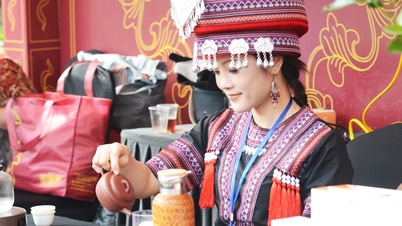
In the multi-ethnic landscape of Lao Cai province, the Cao Lan people stand out with their distinct characteristics and rich, unique cultural identity. While many traditional values face the risk of disappearing, the Cao Lan people steadfastly preserve and pass on their ethnic cultural heritage, which has been intertwined with their lives, spreading it amidst the flow of modernity and integration.
One summer afternoon, I visited Khuân La village in Yên Bình commune – a place where the Cao Lan people have lived for generations. Walking along the winding village paths, feeling the peace amidst the simple houses nestled under the trees, I felt as if I had entered another world . The fresh air carried the scent of the earth and plants.
From afar, familiar and captivating sounds began to permeate the space: the heartfelt, rhythmic singing of Sinh Ca folk songs, along with the lively dances of "Xuc Tep," "Chim Gau," and "Pang Loong"...
These are not just simple music and dances, but the soul and unique cultural identity of the Cao Lan people, diligently practiced by members of the Cao Lan Folk Song and Dance Club in Khuân La village. These melodies are like invisible threads, weaving a vibrant tapestry that tells the story of the life and spirit of the Cao Lan people here through generations.
The Cao Lan community has always preserved and maintained their ethnic culture as a matter of course, like breathing and the very source of life.
Ms. Ninh Thi Tu, head of the Cao Lan folk song and dance club in Khuan La village, greeted me with a gentle smile and eyes full of pride. Ms. Tu shared: “The club has been established for over 7 years. Every Saturday evening, 30 members arrange their schedules to come together, enthusiastically performing dances and songs with the hope of preserving our ethnic cultural identity.”
These shared experiences demonstrate the voluntary and unified spirit of the community in preserving culture. It's not just the effort of an individual or an organization, but a collective strength forged from a deep love for their roots. From club activities, folk songs, folk dances, and traditional crafts are kept alive and spread to every family.
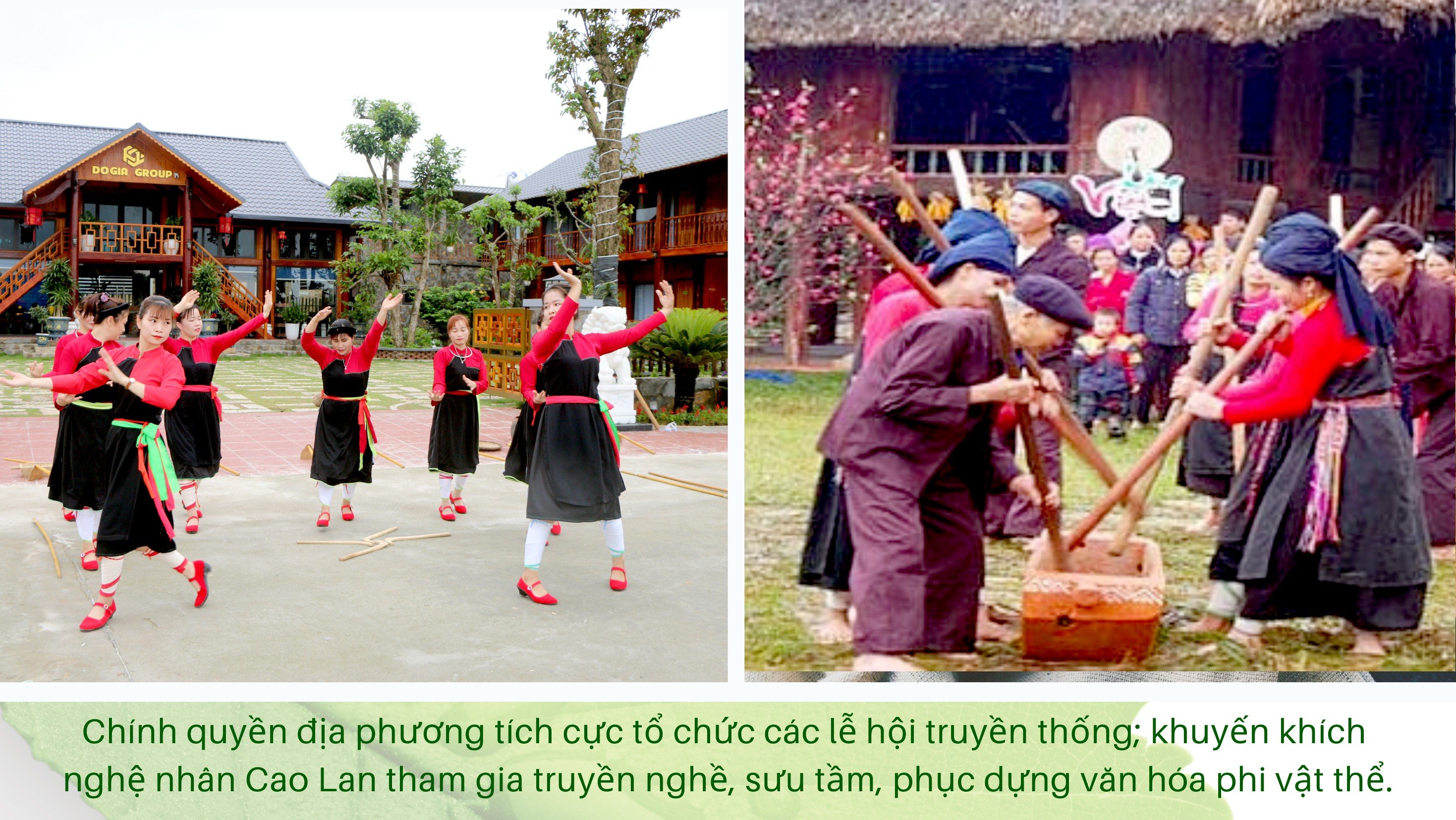
Even more encouragingly, the vitality of Cao Lan culture is not limited to the elderly but is being embraced and nurtured by the younger generation.
Thirteen-year-old Hoang Gia Bao Ngoc from Ngoi Vo village, Yen Binh commune, excitedly said: “Participating in the Cao Lan ethnic folk culture training class, I learned to dance and sing the melodies of my people. I am very proud and will continue to preserve and promote the beautiful culture of my people.”
Along with Yen Binh commune, the Cao Lan ethnic group in the province is most concentrated in Tran Yen, Thac Ba, Xuan Ai communes and partly in neighboring communes, with over 10,000 people living there. Wherever they live, the Cao Lan community always preserves and maintains their ethnic culture as a matter of course, like breathing and the source of life.
Deep within the Cao Lan people's souls, each dance and song tells a story of love for work, love between couples, aspirations for advancement, and a connection with the earth, sky, and nature.
It is the wellspring that nourishes emotions, the thread connecting the past and the present. Previous generations tirelessly pass on to their descendants not only the lyrics and melodies, but also the way to feel and express the "soul" of national culture.
For over 20 years, the distinguished artisan Au Thi Chinh from Thac Ba commune has been quietly teaching, restoring, and performing the folk art of the Cao Lan ethnic group in her locality. She has always been concerned about how to preserve, promote, and adapt Cao Lan culture to the modern context.
Ms. Chinh shared: “Together with the members of the Creative Club, I have created and staged many new performances, combining traditional dances with contemporary movements and melodies, while still preserving the unique characteristics of our ethnic group. These performances have been presented at many local festivals and events, both large and small, contributing to bringing Cao Lan culture closer to the public.”
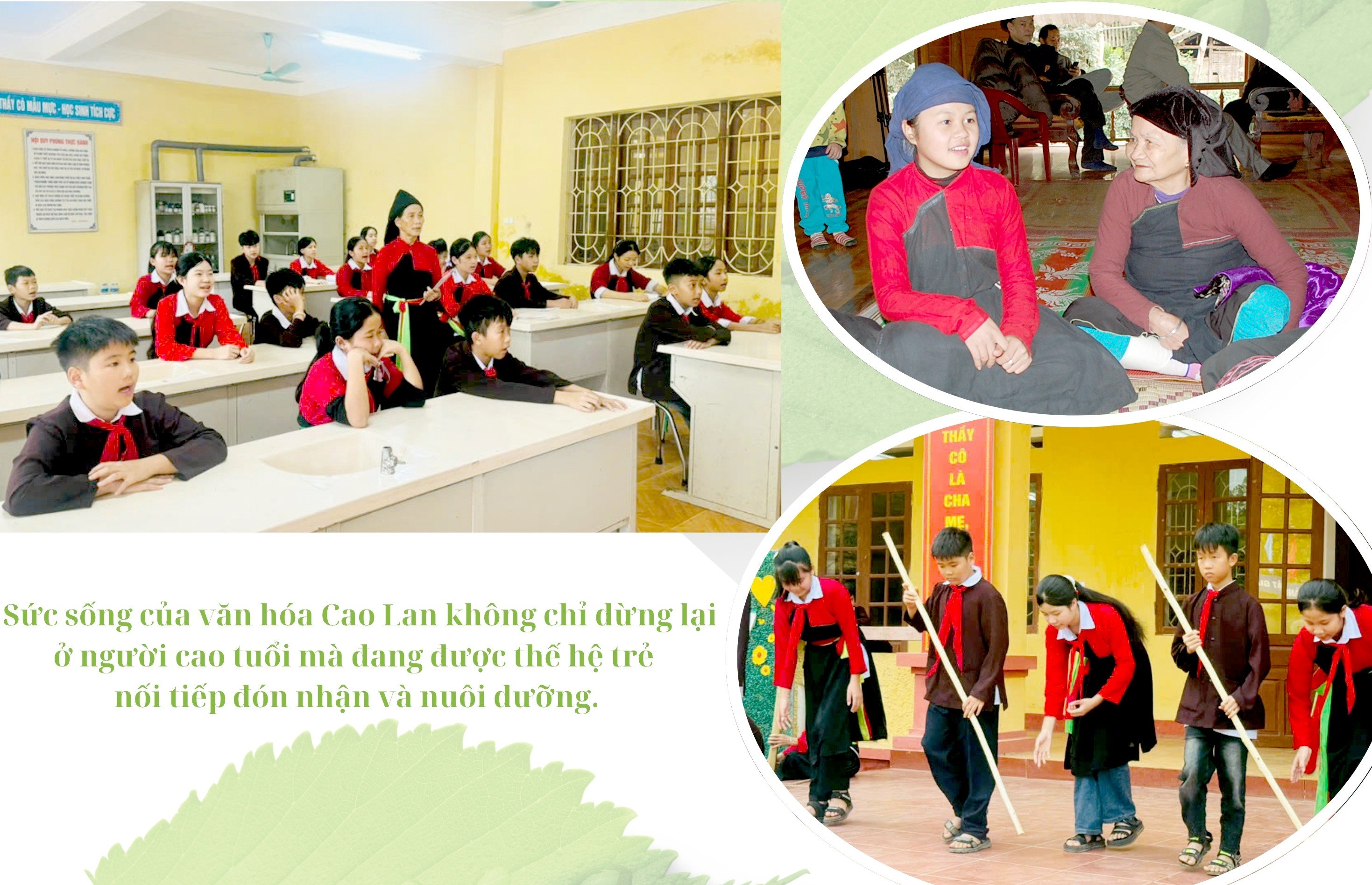
For Ms. Chinh's concerns and the community's dedication to become vibrant values that spread throughout today's life, the attention and support of the government at all levels play a crucial role. Local authorities have organized classes to teach the ethnic language and writing system; traditional festivals; and encouraged artisans to participate in passing on their skills, collecting, and restoring intangible cultural heritage. In particular, the development of community tourism in Cao Lan villages is a promising direction, simultaneously developing the economy and sustainably preserving and promoting culture.
In the powerful current of integration, preserving traditional cultural values is not an easy task. However, with the persistent efforts of the community, the attention of the government, and especially the deep love and pride of each Cao Lan person for their roots, we believe that the unique cultural identity of the Cao Lan people will continue to be preserved and developed, becoming a vibrant color in the diverse cultural landscape of Vietnam's ethnic groups.
Source: https://baolaocai.vn/van-hoa-cao-lan-trong-dong-chay-hoi-nhap-post878851.html


![[Photo] Prime Minister Pham Minh Chinh holds a phone call with the CEO of Russia's Rosatom Corporation.](/_next/image?url=https%3A%2F%2Fvphoto.vietnam.vn%2Fthumb%2F1200x675%2Fvietnam%2Fresource%2FIMAGE%2F2025%2F12%2F11%2F1765464552365_dsc-5295-jpg.webp&w=3840&q=75)


![[Photo] Closing Ceremony of the 10th Session of the 15th National Assembly](/_next/image?url=https%3A%2F%2Fvphoto.vietnam.vn%2Fthumb%2F1200x675%2Fvietnam%2Fresource%2FIMAGE%2F2025%2F12%2F11%2F1765448959967_image-1437-jpg.webp&w=3840&q=75)






























![[OFFICIAL] MISA GROUP ANNOUNCES ITS PIONEERING BRAND POSITIONING IN BUILDING AGENTIC AI FOR BUSINESSES, HOUSEHOLDS, AND THE GOVERNMENT](https://vphoto.vietnam.vn/thumb/402x226/vietnam/resource/IMAGE/2025/12/11/1765444754256_agentic-ai_postfb-scaled.png)













































Comment (0)