

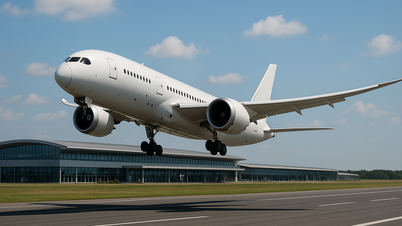
In early June, Bamboo Airways officially launched its first direct flight from Hanoi to Ca Mau. Similar to the previous direct flight from Hanoi to Con Dao, passengers will no longer have to spend time transferring from Hanoi to Ho Chi Minh City and then taking connecting flights or traveling by boat to Con Dao or Ca Mau. Although there are only 3 flights per week due to low demand, the distance and travel time have been significantly reduced, creating long-term boosts for tourism and socio-economic development in these localities.
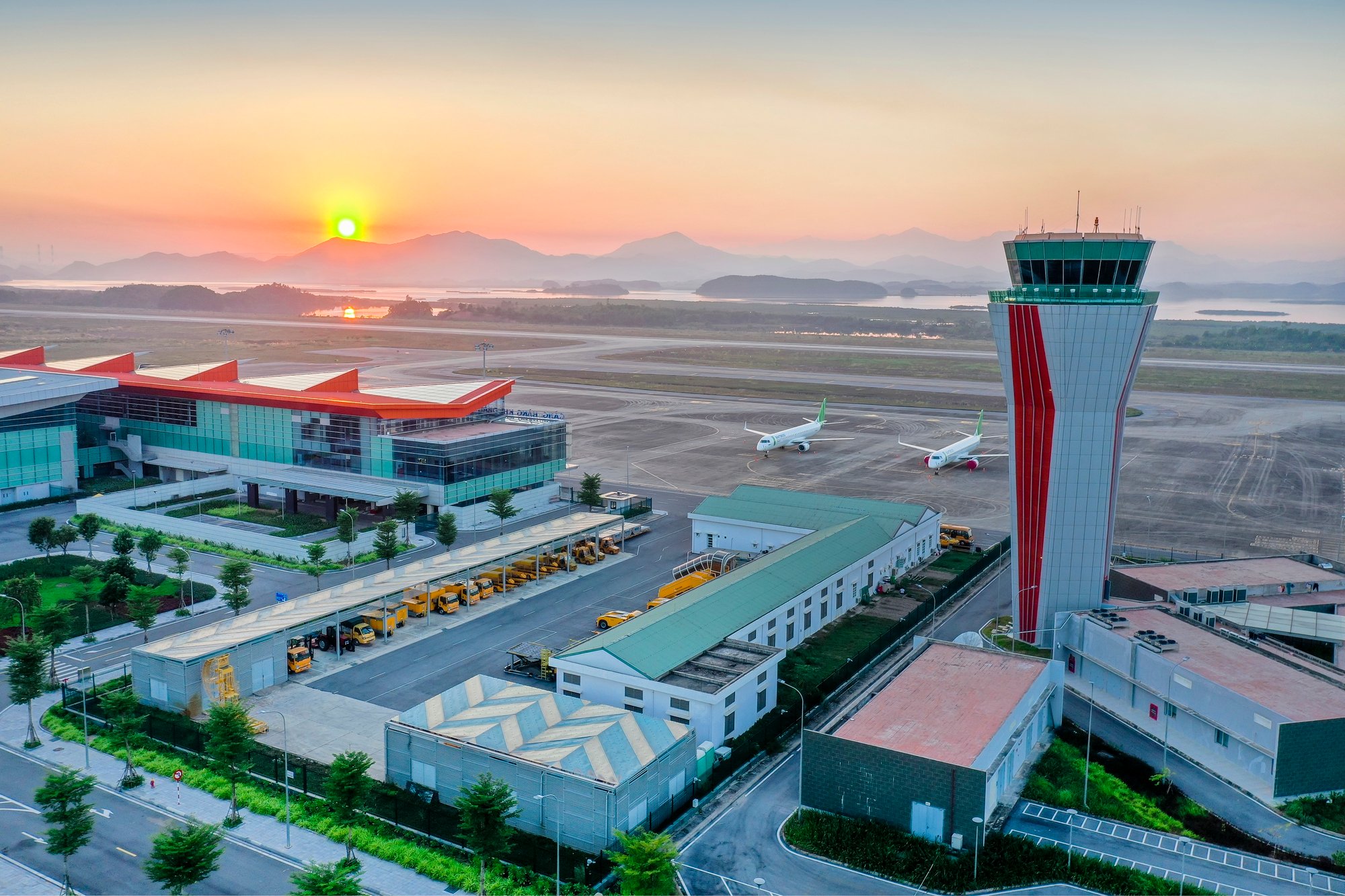
Van Don Airport is the first privately-invested "BOT airport" in Vietnam.
The bottleneck in PPP investment.
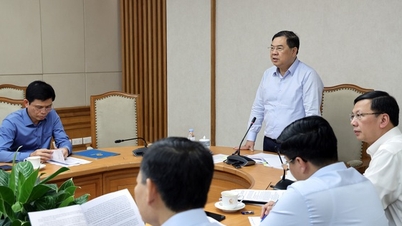
However, the biggest weakness is that the current Ca Mau airport is small in scale, limiting its capacity to handle large aircraft. During a meeting between the Ministry of Transport and the People's Committee of Ca Mau province last weekend, Vice Chairman of the People's Committee Lam Van Bi also requested the Ministry of Transport to propose to the Prime Minister the approval and implementation of investment in renovating and upgrading Ca Mau Airport to meet 4C standards.
In the event that the Vietnam Airports Corporation (ACV) has no plans to invest in upgrading the airport, it is proposed that the Ministry of Transport, in coordination with the State Capital Management Committee, report to the Prime Minister to agree on the policy of transferring Ca Mau Airport to the province for management and inviting investment for upgrading under a socialized approach. However, as National Assembly representative Nguyen Duy Thanh (from Ca Mau province) stated, if the current socialized investment mechanism and policy are followed, "Ca Mau airport could easily be abandoned because ACV would no longer be responsible for expansion and upgrading. Even if ACV were responsible for investing in Ca Mau airport, it would still take many more years. New investors are not yet attractive enough, making investment very difficult."
In reality, socializing investment in airports is not easy. Speaking with Thanh Nien newspaper, Mr. Pham Ngoc Sau, former Director of Van Don International Airport (Quang Ninh) and currently promoting aviation infrastructure projects for SOVICO Group, said that many airports such as Bien Hoa (Dong Nai), Phan Thiet (Binh Thuan), Vinh (Nghe An), and Thanh Son (Ninh Thuan) urgently need upgrading and expansion. Otherwise, it will be difficult to increase operating capacity, while land resources and potential are still very large, leading to a waste of resources.
According to Mr. Sau, for completely new airports like Van Don, investment through the BOT (Build-Operate-Transfer) model is simpler. However, for existing dual-use airports or those under ACV's management, cooperating with new investors is not straightforward. "The Ministry of Transport has a plan to attract private investment in airports with many fairly open mechanisms. However, given the unique characteristics of many dual-use airports operating jointly for military and civilian purposes, the military side is prohibited from upgrading. Meanwhile, according to ICAO civil aviation standards, they must meet certain standards before commercial aircraft can be operated. In other words, the mechanism is open, but the regulations need to be clearer and further adjusted," Mr. Sau said.
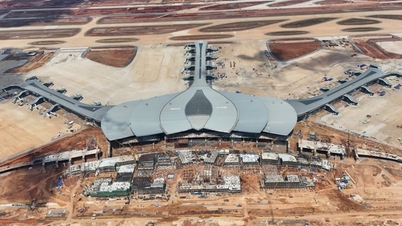
Lack of major international gateway airports.
Vietnam currently has 22 airports, while Thailand has 38, Malaysia has 66 (including 38 commercial airports), and the Philippines has 70 airports. In terms of transit passenger volume (data from 2019 before the Covid-19 pandemic), Thailand leads with 91.3 million passengers, followed by Malaysia with 76.3 million…
With the goal of developing Suvarnabhumi Airport into a Southeast Asian aviation hub, Thailand has planned a long-term, four-phase airport development plan, aiming to increase its capacity to 90 million passengers per year by 2025 and 105 million passengers by 2030. Prior to the Covid-19 pandemic, it was considered one of the largest international airports in the region, serving 115 airlines and nearly 65 million international passengers.
Despite having one of the fastest aviation growth rates in the region, Vietnam's airport network remains limited, particularly lacking regional-level airports and still a long way from becoming a regional and global hub. Even Noi Bai, one of Vietnam 's two largest airports, handled only 29 million passengers in 2019 despite exceeding its design capacity. Tan Son Nhat, with the highest operating capacity in the country, only reached 40.6 million passengers.
Both Tan Son Nhat and Noi Bai airports have plans to expand their operating capacity to 50 million passengers per year by 2030, but expansion at both of the country's largest international airports has been sluggish for many years. According to the national airport development plan recently approved by the Government, the vision is to establish two major international air transport hubs on par with the region in Hanoi and Ho Chi Minh City by 2050.
A former airline executive once stated that Vietnam's competitiveness would be severely limited without major international gateway airports. In reality, very few international airlines fly intercontinental routes to Noi Bai and Tan Son Nhat airports; instead, they operate at regional gateway airports such as Bangkok (Thailand) or Singapore. Instead of becoming major regional hubs, Noi Bai and Tan Son Nhat have become "bus stops"—points for collecting passengers en route to Singapore.
The absence of dedicated airports.
In the approved planning, the Government directs that to ensure socio-economic development needs are met, localities should proactively plan the location of specialized airports within their provincial planning after the Ministry of National Defense approves the location, and the localities should take the lead in mobilizing resources for implementation. At the same time, research and development of dual-use airports should be conducted at some military airports following a specialized model. Currently, the only project nationwide approved by the Ministry of National Defense as a specialized airport is the Ho Tram airport (Loc An, Ba Ria-Vung Tau).
The development of dedicated airports is suitable for investment and tourism development in remote areas or localities not included in civil aviation planning. However, the "fever" for airport investment has led many localities to compete in applying for investment in commercial airports while neglecting dedicated airports.
Sharing this view, Mr. Pham Ngoc Sau stated that to develop aviation, there must be transit hubs, with local airports acting as spokes (satellite airports). According to the flight network plan, Vietnam will have two main hubs: Hanoi and Ho Chi Minh City. "For the remaining airports, it's best for ACV to 'release' them to private investors. Most small local airports are not profitable, but the goal is not just profit; they will significantly change the face of the locality and create a very good ecosystem for the socio-economic development of the locality," Mr. Sau emphasized.
This expert argues that operating an airport requires a comprehensive and integrated approach to aviation and non-aviation services, encompassing everything from retail outlets and shops to other external services. Previously in Vietnam , even ACV's non-aviation services were not efficient, with revenue from these services only reaching 21%, compared to 60% for a similar company in South Korea. In other words, there is significant potential for increasing added value from non-aviation services if effectively exploited.
"South Korea's aviation development philosophy focuses not only on aviation but also on non-aviation services, creating 'airport cities' that generate significant economic value. Airport cities are not just commercial areas but also include hotels, medical facilities, golf courses, and entertainment venues right next to the airport. People can relax and enjoy themselves there, like a tourist destination, before their flight, providing all the services passengers need. Vietnam currently lacks a similar model; even Long Thanh is only a future development plan," Mr. Sau cited as an example.
Source link
![[Photo] Secretary of the National Assembly Party Committee, Chairman of the National Assembly presides over the meeting of the Standing Committee and Executive Committee of the National Assembly Party Committee.](https://vphoto.vietnam.vn/thumb/1200x675/vietnam/resource/IMAGE/2026/06/03/1780480353201_ndo_br_bnd-2585-jpg.webp)



![[Photo] General Secretary and President To Lam presides over a meeting with the Central Organizing Committee.](https://vphoto.vietnam.vn/thumb/1200x675/vietnam/resource/IMAGE/2026/06/03/1780482764658_a1-bnd-4741-3342-jpg.webp)
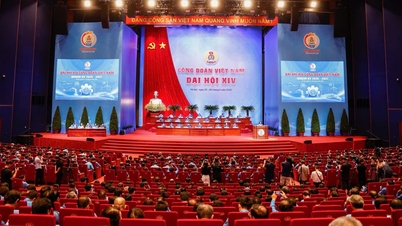
![[Photo] First session of the 14th Congress of the Vietnam Trade Union](https://vphoto.vietnam.vn/thumb/1200x675/vietnam/resource/IMAGE/2026/06/03/1780465947883_ndo_br_img-3852-jpg.webp)













































![[Video] Sunset at Lap An Lagoon – Where the sun sets over the fishing nets](https://vphoto.vietnam.vn/thumb/1200x675/vietnam/resource/IMAGE/2026/05/31/1780192137701_beach-landscape-sea-water-nature-grass-745871-pxhere-com.jpeg)

































Comment (0)