

Many overseas Vietnamese returning home are astonished by the country's new face. Transportation infrastructure is the most impressive and noticeable breakthrough. Large-scale projects are following one another. On December 19, 2025, 234 projects were simultaneously launched, inaugurated, and opened for technical traffic nationwide. The total investment capital reached 3.4 trillion VND, with private capital accounting for 2.79 trillion VND, or 82%. Impressively, the problem of delayed and slow-moving construction projects has been overcome. There have been major projects completed ahead of schedule or on time, proving effective, such as the 500kV Quang Trach-Pho Noi power line, the National Exhibition and Convention Center, and Long Thanh International Airport... Land clearance, which has always been a weakness and the most easily "understandable" reason for all kinds of project delays, has now been handled very quickly and smoothly with the construction of the Ring Road 1 section from Hoang Cau to Voi Phuc after several meetings and close guidance from the Secretary of the Hanoi Party Committee, Nguyen Duy Ngoc. Most importantly, it's the human factor. And with people, the role of the leader remains the decisive element. Hanoi has acted decisively and urgently, so other localities have no reason to hesitate.
Following the revolution in streamlining organizational structures, 34 provinces and cities are now operating with a different mindset and scale. They must surpass themselves. We must overcome weaknesses wherever they exist. We must transform difficulties into innovations, and strengths into concrete achievements.
One example is the groundbreaking institutional reforms. For a long time, institutions have been considered the bottleneck of bottlenecks. Regulations are slow to be implemented. There are still many regulations that hinder and create barriers. Now, the Party demands that institutions be transformed from bottlenecks into competitive advantages. From weaknesses to strengths, from difficulties to opportunities for breakthroughs. Laws do not stipulate too specifically but establish principles and major points like a solid, sustainable framework. The details are left to the Government to regulate and adjust to suit reality and flexibility. The Law on Government Organization in 2025 stipulates that in cases where it is absolutely necessary for the national interest, for disaster prevention and control, epidemic prevention, and to ensure the lives and property of the people, the Prime Minister may decide to apply other urgent measures as prescribed by current law, reporting to the competent authorities of the Party and the National Assembly in the shortest possible time.
Laws are made by people. Laws should facilitate progress, not hinder or restrict. Everyone understands that principle. But applying it to create fundamental change and transformation has gradually become a vibrant reality, a way of thinking and acting. The goal is for the country to develop, for the happiness of its people. The goal is that by 2030, the 100th anniversary of the founding of the Party, the country will be a developing nation with modern industry and a high-middle income; and by 2045, the 100th anniversary of the founding of the nation, it will become a developed nation with a high income.
General Secretary To Lam stated at the Standing Committee Meeting of the Central Steering Committee on Science , Technology, Innovation and Digital Transformation in October 2025: “Looking at the world, we are very anxious; other countries are moving very fast. We must see this as a competition, a contest, knowing what the world is doing and what we must do. Looking at the world and looking back at ourselves, there is still an immense amount of work to be done…”

Institutions have gradually been streamlined, thinking has been reformed, and understanding has been unified. What remains is action. The ultimate measure is practical effectiveness and the satisfaction of the people.
Having witnessed houses collapsing after the devastating floods, and seen the heart-wrenching tears of those who lost loved ones in the flood-stricken eastern part of Dak Lak, I understand the emotion felt by the families who received new homes built by the soldiers. The "Quang Trung Campaign" to rebuild homes for the people was launched with a very high sense of responsibility. Each house is valued at 170 million VND from the state budget, much higher than the current regulation of 60 million VND. What is particularly valuable is that this 170 million VND per house is only for materials; the construction labor is handled by the soldiers, police, and local authorities. These sturdy houses are strong enough to withstand the harshness of natural disasters. These single-story houses with an attic are taller than the traditional one-story houses, providing shelter for the people during floods. A huge dream has come true, accomplished swiftly with the spirit of Quang Trung and a humane heart, ensuring the people have homes in time for Tet (Lunar New Year). These policies not only warmed the hearts of the people in the flood-stricken areas but also fostered deep trust in the Party of the people and the army of the people among more than 100 million people nationwide.
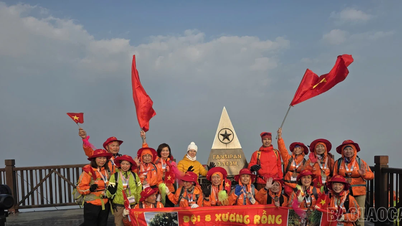
Hearts connect hearts. The tradition of helping each other in times of hardship, encouraging each other with the motto "as long as there is skin and hair, there will be sprouts and trees," has helped our nation overcome countless challenges. Seeing the charitable groups arriving in Eastern Dak Lak while the floodwaters were still receding; seeing the smiles, the sharing eyes, the bags of delicious rice, warm blankets, and small amounts of money handed directly to people we'd never met before... only then do we realize how wonderful the hearts of the Vietnamese people are. Ms. Huong, the leader of the Huong Thanh Nam charitable group from Ninh Binh, who came to help the flood-stricken areas of Hoa Thinh, Dong Hoa, Phu Hoa 1, Phu Hoa 2, and Tuy An Bac, told me: "Even at home, with warm blankets and comfortable mattresses, I sometimes can't sleep well. But today, after traveling all night by bus, lying on bags of rice, and carrying bags of school uniforms to help the people, I somehow slept very soundly." This was the eighth trip this year for the Huong Thanh Nam charitable group. They've been to Thai Nguyen, Lao Cai, Hue, and now Eastern Dak Lak. A year of storms, floods, and unusual natural disasters. A year of challenges from many sides. With timely acts of kindness and sharing, the pain will be lessened, and the damage will be repaired as quickly and effectively as possible.
The Party's will aligns with the people's aspirations. Policies focused on the people have quickly been implemented. I recall the working visit of the Vietnamese National Assembly delegation to the United States in early December 2025, as part of a cooperation program with the US Congress. When discussing our universal health insurance policy and our goal of universal free medical care, the US congressmen were very surprised and intrigued. "Every tree has its own flower, every house its own story." Each nation has its own problems and concerns. But what is deeply noteworthy is that the policy of caring for the people, especially the vulnerable in terms of education, healthcare, etc., has become a heartfelt concern, an unwavering principle in national policy planning.
Education has seen a successful year with the streamlining of institutions, thanks to the National Assembly's approval of three laws and two resolutions promoting development. General education now uses a unified set of textbooks. Public preschool and primary education are free of charge, with tuition subsidies provided to private institutions. This is a humane policy not found in every developed country. I know that some provincial Party Standing Committees have been grappling with the idea of free tuition for years but couldn't implement it due to limited local budgets. That lingering debt has now been repaid. Students in both poor and wealthy provinces receive the same support. "Education and training are a top national priority, determining the future of the nation," as stated in Resolution No. 71-NQ/TW of the Politburo, is clearly demonstrated in these concrete, vibrant, and practical policies.
The year 2025, marked by numerous events and milestones, is drawing to a close. 2026, the year of the 14th National Congress of the Communist Party of Vietnam, is unfolding before us. The path of innovation, groundbreaking thinking, high practicality, and the leveraging of scientific and technological resources will be the guiding principles for the country's progress in the context of the 100th anniversary of the Party's founding and the 100th anniversary of the nation's founding. The resolutions of the 14th National Congress of the Communist Party of Vietnam and seven important resolutions of the Politburo have shaped and will continue to shape the national development path in the long term. The recent storms and natural disasters have clearly demonstrated the unity of the Party's will and the people's aspirations, affirming the nation's resilience in overcoming all challenges. That foundation, along with the steady guidance of the Central Committee and the Politburo, will create firm confidence for the "ship" of Vietnam to reach its aspirational destination by 2045: becoming a developed, high-income, powerful, prosperous, and happy nation... This is inevitable in the development vision of a nation rich in compassion and resilience, under the wise leadership of the Communist Party of Vietnam.
Source: https://baolangson.vn/viet-nam-va-khat-vong-2045-5078141.html
![[Photo] Capturing each moment at the "People We Meet" photography exhibition.](https://vphoto.vietnam.vn/thumb/1200x675/vietnam/resource/IMAGE/2026/04/15/1776245695648_1-8944-jpg.webp)
![[Photo] General Secretary and President To Lam and his wife, along with General Secretary and President Xi Jinping and his wife, attending a tea party.](https://vphoto.vietnam.vn/thumb/1200x675/vietnam/resource/IMAGE/2026/04/15/1776245678527_vna-potal-tong-bi-thu-chu-tich-nuoc-to-lam-va-phu-nhan-cung-tong-bi-thu-chu-tich-nuoc-tap-can-binh-va-phu-nhan-du-tiec-tra-8702812-9829-jpg.webp)
![[Image] Current status of the land area of over 5.5 hectares that Ho Chi Minh City is considering reclaiming.](https://vphoto.vietnam.vn/thumb/1200x675/vietnam/resource/IMAGE/2026/04/15/1776245690095_1-3102-8409-jpg.webp)
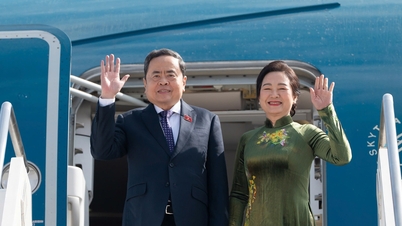
![[Photo] National Assembly Chairman Tran Thanh Man concludes official visit to Italy, departs for IPU-152](https://vphoto.vietnam.vn/thumb/1200x675/vietnam/resource/IMAGE/2026/04/15/1776253436109_vna-potal-chu-tich-quoc-hoi-ket-thuc-tham-chinh-thuc-italy-len-duong-du-ipu-152-tai-tho-nhi-ky-8702876-7969-jpg.webp)
![[Photo] General Secretary and President To Lam and General Secretary and President Xi Jinping meet with youth from both countries.](https://vphoto.vietnam.vn/thumb/1200x675/vietnam/resource/IMAGE/2026/04/15/1776245687540_vna-potal-tong-bi-thu-chu-tich-nuoc-to-lam-va-tong-bi-thu-chu-tich-nuoc-tap-can-binh-gap-go-thanh-nien-hai-nuoc-8702371-jpg.webp)
![[Image] Overview of the Tam Trinh-Giai Phong connecting road section after land clearance is completed.](https://vphoto.vietnam.vn/thumb/1200x675/vietnam/resource/IMAGE/2026/04/15/1776245679644_ndo_br_dji-0195-jpg.webp)










































Comment (0)