

The world faces many challenges.
According to a report by the Institute for Strategic and Policy Research in Industry and Trade, 2025 will see the global economy facing numerous headwinds, with slowing growth and escalating trade tensions. This bleak picture is clearly reflected in reports and forecasts from reputable organizations such as the International Monetary Fund (IMF), S&P Global Market Intelligence, and the Organization for Economic Cooperation and Development (OECD).
In its latest World Economic Outlook report, the IMF lowered its forecast for global GDP growth to just 2.8% for 2025, a 0.5% decrease from its previous forecast. Notably, major economies have not been immune to this trend.
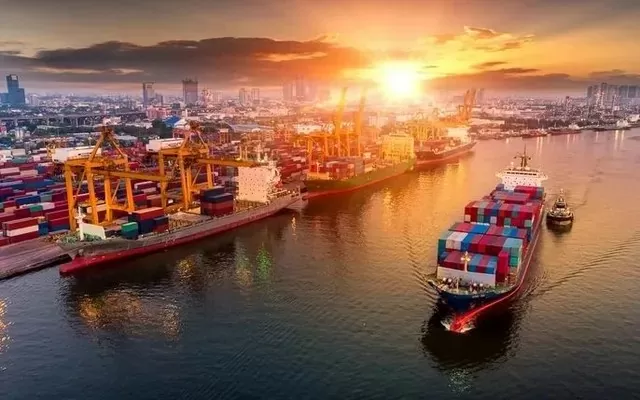 |
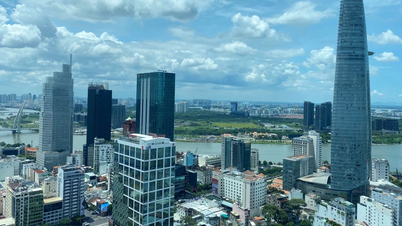
| The global economy faces a "storm" of slowing growth. Photo: Thuy An |
S&P Global Market Intelligence also released similar figures, forecasting global GDP growth at 2.2% in 2025 and 2.4% in 2026, both lower than previous forecasts.
The European Union (EU) is emerging as a stable and preferred trading partner for many countries. European Commission President Ursula von der Leyen stated that the EU is actively engaging in dialogue with countries such as Canada, India, the UAE, and New Zealand to promote multilateral trade. Despite facing tariffs from the US, the EU remains committed to multilateralism and is preparing for high-level trade negotiations with China.
Besides trade tensions, global commodity prices have also experienced significant fluctuations recently. International coffee prices have risen sharply due to extreme weather conditions in Brazil and Vietnam, two countries that account for more than 50% of the global supply.
In the current global economic landscape, Central Asia stands out as a bright spot. The European Bank for Reconstruction and Development (EBRD) forecasts Central Asia's economic growth to reach 5.7% in 2025, surpassing even China.
The strong rise of Central Asia, coupled with free trade agreements in the region, opens up many opportunities for Vietnam in areas such as the export of construction materials, machinery and equipment, and investment cooperation.
Vietnam's economic imprint
Contrary to the global economic picture, Vietnam's economy maintained a rather impressive growth momentum in the first quarter of 2025. GDP is estimated to have increased by 6.93% compared to the same period last year, reaching the highest growth rate for the first quarter of any year in the 2020-2025 period.
Industrial production continued to thrive, with the industrial production index (IIP) for the first quarter of 2025 estimated to increase by 7.8% compared to the same period last year. Total import and export turnover also increased by 13.7% compared to the same period last year, reaching US$202.52 billion.
The Consumer Price Index (CPI) for March 2025 decreased by 0.03% compared to the previous month, indicating that inflation is under relatively stable control. The average CPI for the first quarter of 2025 increased by 3.22% compared to the same period last year, remaining within the set target. Controlling inflation helps create a stable macroeconomic environment, supporting economic growth.
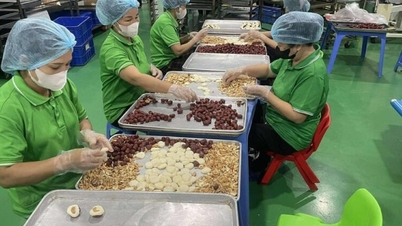
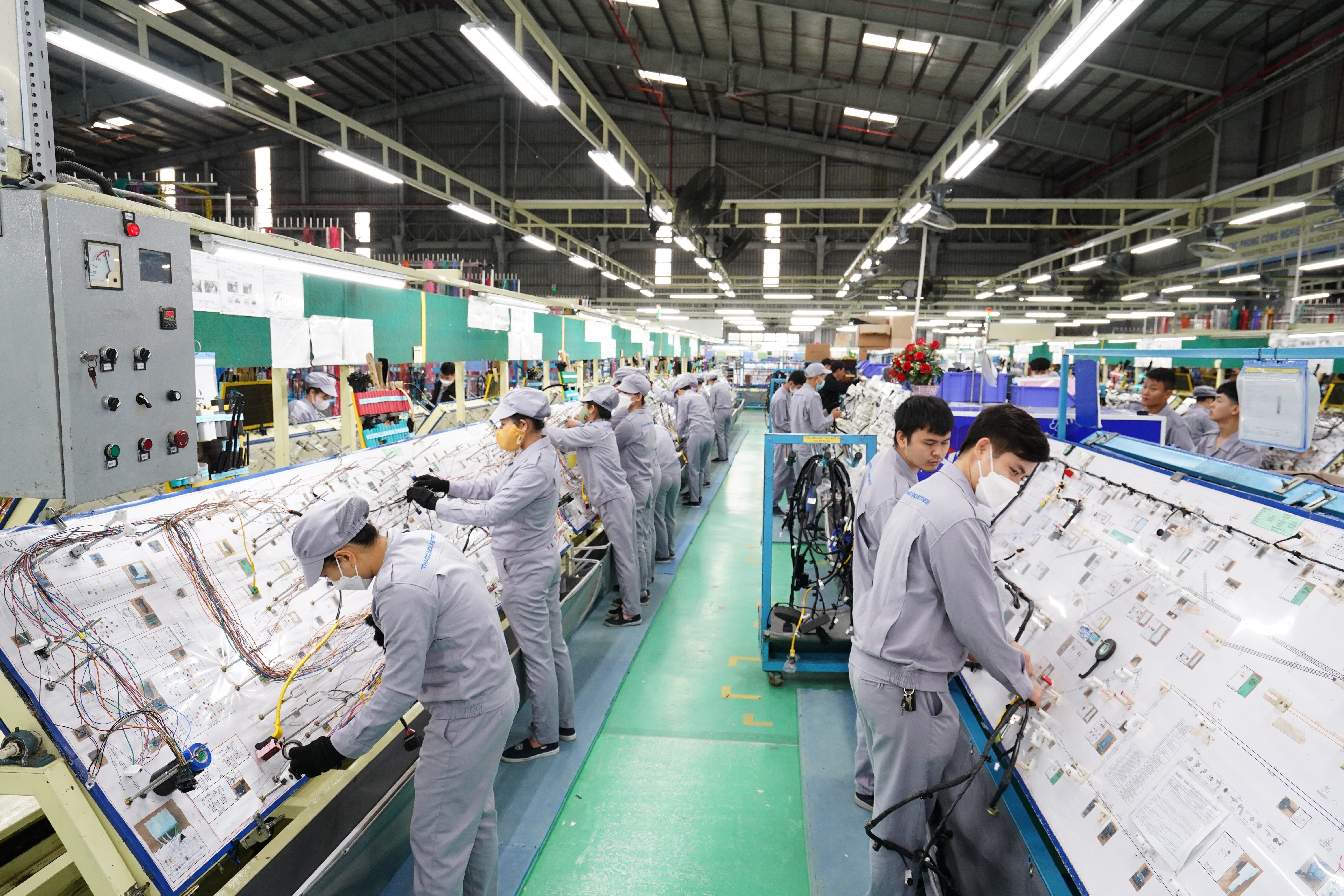 |
| Industrial production is experiencing positive growth. Photo: Can Dung |
Vietnam continues to be an attractive destination for foreign investors. Foreign direct investment (FDI) implemented in the first quarter of 2025 is estimated at US$4.96 billion, an increase of 7.2% compared to the same period last year. Total registered FDI in Vietnam as of March 31, 2025 reached US$10.98 billion, an impressive growth of 34.7% compared to the same period last year. This shows that foreign investors still place confidence in the growth prospects of the Vietnamese economy.
The domestic business development situation also shows many positive signs. In the first quarter of 2025, the whole country saw 36,400 newly registered businesses, with a total registered capital of nearly 356,800 billion VND.
The total number of newly established and reactivated businesses in the first quarter of 2025 reached over 72,900, an increase of 18.6% compared to the same period last year. The increase in the number of newly established and reactivated businesses demonstrates the recovery and development of the private sector, providing impetus for economic growth.
Although the Vietnamese economy has achieved many positive results, it also faces numerous challenges. The situation with counterfeit goods, imitation products, and origin fraud is becoming increasingly complex, significantly impacting consumer confidence and the business environment. Furthermore, new US tax policies and global trade tensions also pose potential risks to Vietnam's capital flows and international trade.
To maintain growth momentum and overcome challenges, Vietnam needs to continue improving the investment and business environment, creating favorable conditions for businesses to develop. At the same time, it is necessary to strengthen market management, strictly control counterfeit goods, imitation products, and origin fraud, protecting consumer rights and the reputation of Vietnamese goods.
| In the context of a volatile global economy, Vietnam also needs to proactively respond to external risks, especially the negative impacts of trade tensions and protectionist policies of major countries. Diversifying export markets, leveraging free trade agreements, and enhancing the competitiveness of domestic goods are crucial solutions for Vietnam to weather the storm and achieve breakthroughs in the coming period. |
Source: https://congthuong.vn/vuot-song-kinh-te-the-gioi-viet-nam-chu-dong-but-pha-384982.html
![[Photo] Prime Minister Pham Minh Chinh presides over a meeting on private sector economic development.](/_next/image?url=https%3A%2F%2Fvphoto.vietnam.vn%2Fthumb%2F1200x675%2Fvietnam%2Fresource%2FIMAGE%2F2025%2F12%2F20%2F1766237501876_thiet-ke-chua-co-ten-40-png.webp&w=3840&q=75)


















































































Comment (0)