

| Is the target of $17.5 billion in wood and forestry product exports for 2024 achievable? Vietnam increases exports of certified wood and wood products. |
According to statistics from the General Department of Customs, cited by the Import-Export Department ( Ministry of Industry and Trade ), the value of wood and wood product exports to the Canadian market in December 2023 reached US$22.2 million, an increase of 38.8% compared to December 2022.
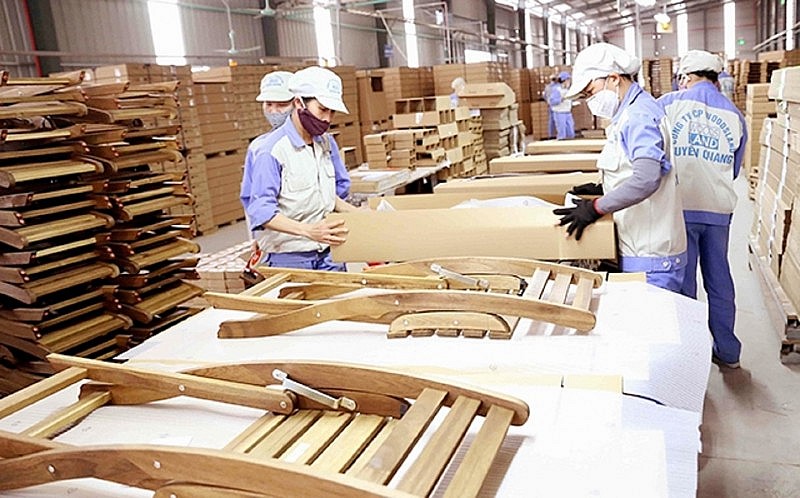 |
| Exporting timber to the Canadian market remains challenging. |
Overall in 2023, the value of exports of wood and wood products to the Canadian market reached US$205.5 million, a decrease of 13.1% compared to 2022.
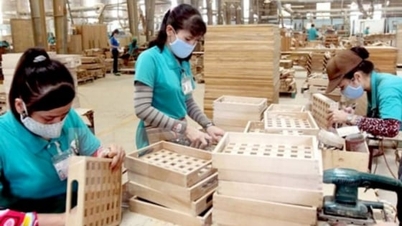
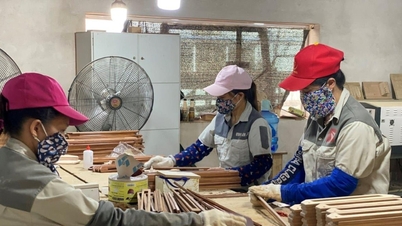
Wooden furniture is a key export item in the structure of wood and wood product exports to the Canadian market. In the first 11 months of 2023, the export value of this item to the Canadian market reached US$158.5 million, a decrease of 20.8% compared to the same period in 2022, accounting for 86.4% of the total export value.
Besides wooden furniture, other wood and wood products exported in the first 11 months of 2023 included: wood, boards and flooring reaching US$13.9 million, an increase of 10.6%; wooden doors reaching US$4.2 million, an increase of 182.8%; and fine wood handicrafts reaching US$289,000, a decrease of 56.4%.
Although exports of timber and wood products to the Canadian market showed continuous growth in the last months of the year, this did not offset the decline from the beginning of the year. Therefore, in 2023, the value of timber and wood product exports to this market still decreased significantly.
The decline in exports of timber and wood products to the Canadian market is due to the impact of high inflation, leading consumers to restrict spending, especially on non-essential items such as timber and wood products.
Although inflation has decreased in recent months, high interest rates continue to impact the economy , restricting spending, growth, and employment, and consequently, Canadian import demand tends to slow down.
Furthermore, wooden furniture, a major item in the structure of wood and wood products exported to the Canadian market, has yet to establish its own brand to enhance its competitiveness.
Domestic transportation and logistics issues, along with labor shortages, make Vietnam's export prices less competitive compared to South American countries. Canada's low exchange rate policy to boost exports is also a disadvantage for Vietnamese exports, as Vietnamese goods become more expensive.
With the CPTPP agreement, sustainable development standards such as environmental protection and emission reduction also pose obstacles for Vietnamese businesses, especially small and medium-sized enterprises.
Accordingly, the outlook for exporting timber and wood products to the Canadian market in the near future remains challenging.
Source link

![[Photo] General Secretary and President To Lam presides over a meeting on preparations for the review of one year of operation of the three-tiered government system.](https://vphoto.vietnam.vn/thumb/1200x675/vietnam/resource/IMAGE/2026/06/02/1780391821195_a1-bnd-4595-9717-jpg.webp)



































































































Comment (0)