Experts say watermelon seeds are safe for health and are a source of several nutrients such as magnesium and zinc, which are good for the immune system.
Watermelon is a healthy fruit, sweet and refreshing, rich in vitamin A, vitamin C, and other plant compounds such as citrulline and lycopene. However, some people believe that swallowing watermelon seeds is dangerous to health, while others argue that white seeds are safer than black ones.
Experts say this is completely untrue. In fact, watermelon seeds also have some benefits. Nutritionist Toby Amidor, author of the book Up Your Veggies: Flexitarian Recipes for the Whole Family , says black watermelon seeds are insoluble fiber, which is safe to pass through the digestive system. Other sources of insoluble fiber include black beans, Brussels sprouts, and avocados.
Watermelon seeds are an excellent source of magnesium. Nutritionist Ankita Ghoshal Bisht of Primus Super Hospital says this nutrient plays a crucial role in regulating blood pressure and supporting a healthy heart.
Watermelon seeds are rich in zinc, which is good for the immune system, helping to fight infections and metabolic disorders. They are also rich in protein and essential fatty acids, contributing to healthy skin and hair. These nutrients also help reduce inflammation and prevent acne.



In addition, watermelon seeds provide calcium, which helps strengthen bones and is essential for muscle function and nerve signal transmission.
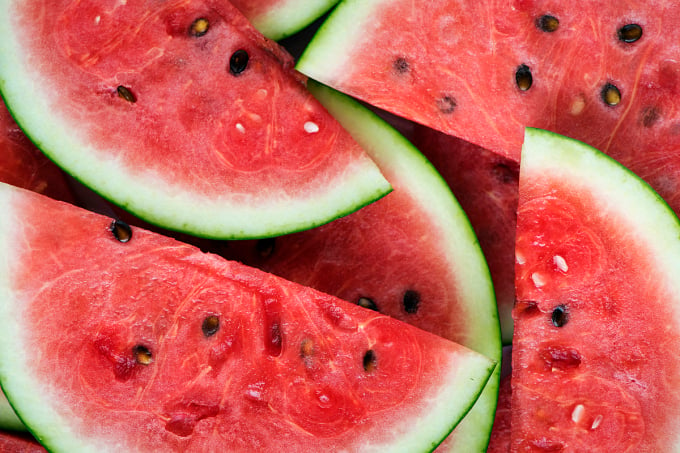
The red, seeded watermelon is a common fruit in everyday life. Photo: Freepik
According to the Food Data Center (FDC) in the US, watermelon seeds provide many natural nutrients such as iron, folate, and niacin. Nutrition expert Kacie Barnes says many people can make butter or flour from watermelon seeds, or roast them to eat.
However, Amidor warns that eating too many watermelon seeds can lead to constipation and digestive discomfort. The large amount of fiber consumed after eating watermelon seeds can sometimes overload the intestines.
Watermelon seeds are also high in calories and can easily lead to weight gain if consumed in excess. Dr. Bisht suggests consuming about 30g of watermelon seeds per day. Roasted or sprouted seeds are healthier because they are easier to digest and contain more nutrients.



Similar to watermelon seeds, experts say some seeds are safe to eat, including cucumber seeds, pomegranate seeds, and dragon fruit seeds. Seeds that can be toxic if consumed excessively include cherry seeds, apple seeds, and apricot seeds. These three types of seeds contain prussic acid, also known as cyanide – a potentially fatal toxin.
Thuc Linh (According to Very Well Health )
Source link









































































![[Photo] The search and rescue team of the Vietnamese Ministry of Public Security begins deploying search and rescue operations in Venezuela.](https://vphoto.vietnam.vn/thumb/402x226/vietnam/resource/IMAGE/2026/06/30/1782812458643_anh-man-hinh-2026-06-30-luc-16-40-09.png)