


Expanded safety net
The year 2025 marked many positive results in ensuring social security. By the end of the third quarter, both the labor force and the number of employed workers had increased compared to the same period last year, while the rate of informal employment decreased slightly.
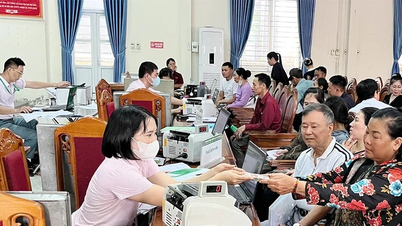
By the end of 2025, social insurance coverage nationwide is estimated to reach 45.1% of the working-age labor force, equivalent to nearly 22 million people. Of this, compulsory social insurance will reach 38.6%, and voluntary social insurance 6.5%. A positive sign is the 26.15% decrease in the number of people receiving lump-sum social insurance payments compared to the previous year. This indicates a change in the awareness and behavior of workers towards social insurance, with many choosing to remain within the social security system instead of withdrawing money in a lump sum. Notably, health insurance coverage reached 95.16% of the population with 195.5 million medical examinations and treatments, a 6.5% increase compared to 2024. However, out-of-pocket inpatient treatment costs remain high. Total revenue from social insurance, unemployment insurance, and health insurance exceeded the assigned target by 5.9%, an increase of 11.61% compared to 2024.
Social welfare benefits have been significantly increased by 35-40% (the basic allowance for war veterans is currently 2,789,000 VND/month; the standard social assistance allowance is currently 500,000 VND/month). The scale of social assistance has been expanded, currently serving approximately 4.5 million people.
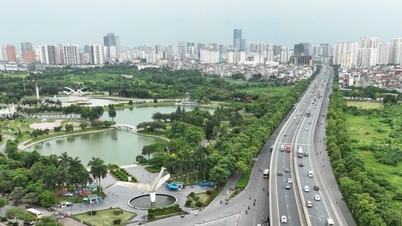
Vietnam continues to be recognized by the international community as a shining example in Asia for its multidimensional, inclusive, and sustainable poverty reduction efforts. The national multidimensional poverty rate is projected to reach only 1.93% by 2024, nearing the goal of eradicating poverty. Hanoi, the capital city, has made a particularly significant mark by becoming a model for sustainable poverty reduction nationwide. By the end of 2024, Hanoi will have no households classified as poor according to the city's multidimensional poverty standard, achieving this goal one year ahead of schedule.
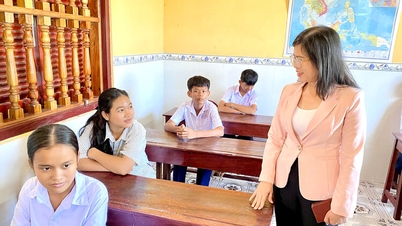
2025 marks a breakthrough in education as Vietnam officially waives tuition fees for preschool and primary/secondary school students in public educational institutions, directly impacting approximately 23.2 million children nationwide. This policy helps reduce the financial burden on families, especially those in difficult circumstances, while ensuring the right to education for all children.
Looking back at 2025, it is evident that the State has made efforts to standardize and institutionalize social policies, yielding measurable achievements in strengthening the social security system. However, the social security system still faces many challenges that need to be addressed.
Challenges from the labor market
The quality of human resources remains a major bottleneck as Vietnam enters the digital age. Currently, only over 29% of the workforce has received training and possesses degrees or certifications. The majority of the workforce lacks digital skills, foreign language proficiency, and soft skills. 60% of the workforce is employed outside their professional qualifications, meaning the link between training and labor market needs remains weak. Two-thirds of the workforce is still employed in the informal sector. This means tens of millions of workers lack access to social insurance, facing the risk of unemployment or old age without protection.
Along with this, the unemployment rate among young people (15-24 years old) has increased slightly, concentrated more in urban areas and somewhat skewed towards those with college or university degrees or higher. Nationwide, approximately 1.6 million young people are unemployed or not participating in education or training, accounting for 11.5% of the workforce in this age group. While this percentage is not very large compared to the overall workforce, the problem could become more serious under the impact of digital transformation and artificial intelligence.
2025 was also the year of the most severe natural disasters in decades in Vietnam. Total economic losses due to natural disasters reached 100 trillion VND – the largest figure ever recorded. The loss of life and property highlighted the urgent need for relief and recovery efforts, as well as preparation for responding to unusual weather patterns under the impact of climate change.
Labor productivity - the cornerstone of the new growth model.
From 2026, the Social Insurance Law will come into full effect, along with the new regional minimum wage, creating significant changes in the labor market. The period from 2026 to 2030 will see the integration of three national target programs (New Rural Development, Socio-economic Development of Ethnic Minority Areas, and Sustainable Poverty Reduction) into a single consolidated program. Approximately 360 trillion VND from the budget is expected to be allocated for this period. For Hanoi, the city's strategic vision for the 2026-2030 period will shift from absolute poverty reduction to relative poverty reduction and inequality mitigation, ensuring that 100% of poor and near-poor households have full access to high-quality basic social services.
The current challenges and difficulties present key tasks that need to be addressed in the coming period. Firstly, it is necessary to improve labor productivity coupled with improving labor quality, considering this a crucial pillar of the new growth model in the digital age. In addition, it is important to promote the shift of labor from the informal to the formal sector. A more thorough assessment of the multifaceted impacts of youth unemployment is needed in the future to develop comprehensive solutions ranging from vocational training to job placement. Secondly, it is necessary to actively expand the coverage of social insurance in both mandatory and voluntary forms, in order to protect workers and maintain the sustainability of the social security system. Furthermore, it is also necessary to develop public services, including vocational education, skills training tailored to market needs and adapting to digital transformation; and to expand preventive healthcare towards proactive health care for various population groups.
Source: https://hanoimoi.vn/an-sinh-xa-hoi-thanh-tuu-va-thach-thuc-733661.html























![[Video] Sunset at Lap An Lagoon – Where the sun sets over the fishing nets](https://vphoto.vietnam.vn/thumb/340x192/vietnam/resource/IMAGE/2026/05/31/1780192137701_beach-landscape-sea-water-nature-grass-745871-pxhere-com.jpeg)





![[Photo] The General Secretary, President and his wife lay flowers at the Ho Chi Minh Monument in Manila.](https://vphoto.vietnam.vn/thumb/1200x675/vietnam/resource/IMAGE/2026/05/31/1780219759477_anh-man-hinh-2026-05-31-luc-16-29-07.png)







































































Comment (0)