

Many people mistakenly believe that skin conditions are only minor when they cause discomfort and affect the patient's appearance, so they sometimes self-treat instead of seeking medical attention, leading to various health complications.
The U.S. National Library of Medicine also notes that acne commonly appears during puberty due to hormonal changes (increased androgen sex hormones), affecting approximately 95% of teenagers.
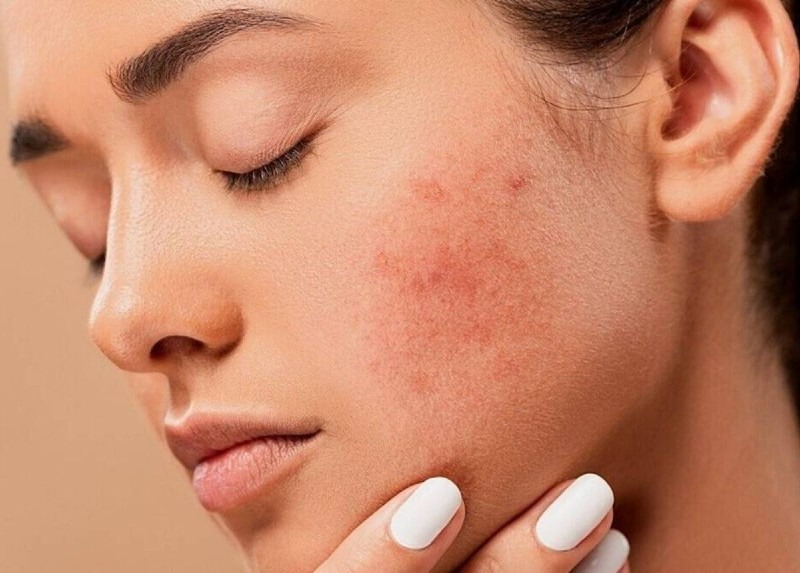 |
| Many people mistakenly believe that skin conditions are only minor when they cause discomfort and affect the patient's appearance, so they sometimes self-treat instead of seeking medical attention, leading to various health complications. |
Many people experience persistent acne into adulthood. The incidence is higher in women than in men due to pregnancy, menopause, and hormonal imbalances.
In just one month, a general hospital in Ho Chi Minh City received approximately 500 cases of acne treatment, mainly among high school and university students, with about 50% suffering from severe acne due to self-treatment.
The majority of patients are in the 12-35 age group, and they seek treatment when their acne is already severe, significantly affecting their appearance and quality of life.
Ms. PVH (22 years old, residing in Ho Chi Minh City) has suffered from acne all over her face since the age of 13. H. stated that she has tried many different acne treatments, spending a lot of money, time, and effort, but the acne has not improved.
She tried every tip she found online or heard from acquaintances, such as washing her face with rice water, lemon juice, diluted lime water, or green tea leaf water; dabbing pimples with toothpaste; applying apple cider vinegar… She maintained the habit of squeezing out pimples with her hands, using stainless steel pimple extractors, or going to a spa to have them extracted as soon as they appeared.
Last week, after experiencing irritation, swelling, and inflamed acne breakouts after undergoing a chemical peel at home, she went to the hospital for examination.
D.TA (16 years old, Vung Tau) also didn't know how to get rid of acne and frequently used the tip of a ballpoint pen to squeeze pimples, leaving dark scars.
At a dermatology clinic, TA was diagnosed with adolescent acne and prescribed oral hormone-regulating medication, a topical cream to dry out pimples, and a facial cleanser.
After more than a month of treatment, acne still covered her face, back, and chest. Impatient, TA bought an acne cream online, advertised as "clearing all acne in 1 week," to use alongside the treatment. On the third day, when TA developed a high fever, and the acne spots turned dark purple and oozed pus, her mother rushed her to the hospital.
Both patients were diagnosed with dermatitis and secondary infections on a background of severe acne due to hormonal imbalances and improper skincare. Ms. H.'s facial skin was also irritated from using a chemical peel with an excessively high acid concentration, resulting in numerous dark scars and mild pitted scars.
Currently, Ms. H. and TA are receiving treatment at the hospital with hormone-regulating medication, antibiotics, anti-inflammatory drugs, acne medication, and zinc supplements. To speed up improvement, TA has been prescribed acne extraction, chemical peels, and high-intensity pulsed light (ILP) treatment for the affected areas.
Ms. H. underwent electrophoresis with acne-treating essence and Cellum Pro biological LED light therapy to accelerate wound healing. Once the acne is under control, Ms. H. will continue to treat complications such as dark scars with pico laser, scar base excision, fractional CO2 laser to fill in scars, and RF microneedling technology to shrink pores and improve collagen structure for acne-prone skin.
Dr. Dang Thi Ngoc Bich, head of the Dermatology and Cosmetic Skin Department at Tam Anh General Hospital in Ho Chi Minh City, said that Ms. H. suffered from hormonal imbalance but was not properly diagnosed and treated, so her acne did not go away.
For acne, patients need to be persistent in following the treatment regimen, which may take 1-3 months for the acne to improve. Once the body's hormones are regulated, the acne will gradually subside and disappear.
Both patients also received advice from the doctor on how to properly care for acne-prone skin, tailored to their individual skin conditions. In addition, patients needed to change their diet and lifestyle, such as drinking at least 2 liters of water, going to bed early and getting 8 hours of sleep, eating plenty of green vegetables and fruits, and limiting carbohydrates and sugary drinks.
Acne is a disease of the sebaceous gland-follicle unit, comprising two types: non-inflammatory lesions (characterized by blackheads and whiteheads), or inflammatory lesions such as inflammatory papules, pustules, nodules, cysts, etc., mainly in areas with many sebaceous glands such as the face, chest, and back.
Untreated acne can cause severe, chronic damage, leading to unsightly scarring, hyperpigmentation (increase or decrease in pigmentation), and affecting the patient's appearance and self-confidence.
However, acne in particular, and dermatological diseases in general, are rarely life-threatening, so patients often take them lightly, self-treating, and only seeking medical attention when the condition becomes severe. This can lead to chronic acne, causing serious complications such as infections, secondary infections, acne scarring, and increased or decreased skin pigmentation.
The most common mistake patients make is trying to squeeze pimples themselves. Using unsterilized hands or tools to squeeze pimples can easily cause skin infections and abscesses.
More dangerously, if you squeeze pimples in the forbidden zone - the T-zone (forehead, nose, chin, mouth) where there are many blood vessels and nerves in the cranial region - it can cause swelling, eye swelling, facial distortion, and even cavernous sinus thrombosis leading to coma and life-threatening conditions.
Many patients also misuse cosmetics, medications, and acne treatment products of unknown origin, causing acne to erupt all over the body, accompanied by bacterial infections, scarring, and difficulty in healing.
According to Dr. Bich, it is difficult to verify the ingredients in these products. They may contain substances not permitted for use on facial skin, such as corticosteroids, high concentrations of acids, mercury, etc. Users may become "addicted" to applying the cream, as their skin condition will deteriorate rapidly if they stop using it.
Like Ms. H., many patients come for examination because they "suffered" after using skin peeling products or acne-removing creams with unknown ingredients and origins purchased online. Skin peeling is a procedure that must be prescribed by a doctor, with the appropriate type of medication and acid concentration.
Different types of chemicals have different uses; some peels treat melasma, others treat inflamed acne, etc. Furthermore, not all skin types are suitable for peeling; it depends on the condition and characteristics of the skin at each given time.
If you have thin, sensitive skin, severe acne, infections, or fungal infections, you should not undergo chemical peels. After a peel, you should also avoid sun exposure and apply skin-repairing and moisturizing products to protect your skin.
Folk remedies such as applying toothpaste, betel leaves, lemon juice, aloe vera, egg whites, or bathing in the sea to treat acne are also inaccurate. Currently, there is no scientific evidence to prove the effectiveness of these remedies.
These ingredients still contain many unrefined active substances, including bacteria and germs that can easily cause irritation, allergies, and secondary infections. Applying these ingredients for too long can also easily clog and keratinize hair follicles, promoting the formation and worsening of inflammatory acne.
Seawater contains salt but also many other impurities; therefore, it is not the same as antiseptic water. Swimming in the sea can worsen the condition.
Regarding mistakes in treating skin conditions, information from the Central Dermatology Hospital indicates that parents also lack proper care methods, resorting to folk remedies such as bathing with salt water, herbal water, or water that is too hot, which can harm the skin of young children.
Parents also tend to buy medications of unknown origin or those not prescribed correctly, which prevents the illness from healing and may even worsen it. By the time parents take their children to the doctor, the initial diagnosis is no longer a skin condition, but possibly one or two other medical conditions.
According to Dr. Nguyen Thi Ha Vinh from the Central Dermatology Hospital, some parents, upon seeing their children with hives, will bathe them with starfruit leaves, eucalyptus leaves, mahogany leaves, or other similar leaves. These types of leaves are ineffective for the disease because the pathogenesis is not related to treatment with plant leaves.
While plant leaves may have antiseptic properties, excessive use can dry out the skin and strip away its protective lipid layer. Furthermore, some plant leaves and saltwater solutions may contain incorrect ingredients, potentially worsening skin conditions.
Another common mistake is that parents buy herbal remedies and creams with unknown ingredients, which may contain corticosteroids unsuitable for treating skin conditions.
With traditional Vietnamese medicine, tobacco can similarly worsen atopic dermatitis by causing more oozing and thick crusting, creating entry points for bacteria and viruses after the skin has already been damaged.
"We have encountered cases of atopic dermatitis accompanied by other bacterial or viral infections, severe conditions requiring long-term treatment…," Dr. Vinh shared.
For uncomplicated atopic dermatitis, doctors may prescribe home treatment. In severe cases with secondary infections, intensive inpatient treatment with oral and topical antibiotics may be necessary, and treatment may take 1-2 weeks to show improvement. However, chronic diseases cannot be cured completely in 1-2 days, so patients need to persistently follow their doctor's treatment plan.
Doctors at the Central Dermatology Hospital note that for people with atopic dermatitis, humid weather worsens the condition. This is especially true for young children who run and jump a lot, causing sweating in skin folds and dampness, which can worsen the inflammation or lead to secondary bacterial or viral infections. Parents should take their children for timely examination and treatment, and avoid self-treating.
Source: https://baodautu.vn/bac-sy-chi-ra-sai-lam-khi-dieu-tri-cac-benh-ve-da-d222473.html

![[Image] Hanoi Police officially crowned champions of V-League 2025/2026](https://vphoto.vietnam.vn/thumb/1200x675/vietnam/resource/IMAGE/2026/05/31/1780244769054_ndo_br_039d561b692be875b13a-jpg.webp)
![[Photo] The General Secretary, President and his wife begin their state visit to the Philippines.](https://vphoto.vietnam.vn/thumb/1200x675/vietnam/resource/IMAGE/2026/05/31/1780230559452_anh-man-hinh-2026-05-31-luc-19-28-11.png)
![[Photo] Admire the coral "masterpiece" amidst the million-year-old heritage of Dak Lak province.](https://vphoto.vietnam.vn/thumb/1200x675/vietnam/resource/IMAGE/2026/05/31/1780221235105_anh-man-hinh-2026-05-31-luc-16-53-27.png)
![[Photo] Solemn bathing ceremony and Buddha procession in Hue](https://vphoto.vietnam.vn/thumb/1200x675/vietnam/resource/IMAGE/2026/05/31/1780228263543_1-jpg.webp)














![[Video] Sunset at Lap An Lagoon – Where the sun sets over the fishing nets](https://vphoto.vietnam.vn/thumb/340x192/vietnam/resource/IMAGE/2026/05/31/1780192137701_beach-landscape-sea-water-nature-grass-745871-pxhere-com.jpeg)





































![[Photo] Admire the coral "masterpiece" amidst the million-year-old heritage of Dak Lak province.](https://vphoto.vietnam.vn/thumb/402x226/vietnam/resource/IMAGE/2026/05/31/1780221235105_anh-man-hinh-2026-05-31-luc-16-53-27.png)


































Comment (0)