

Condé Nast Traveler , a travel magazine, believes that Hanoi deserves to be a complete stopover, instead of just being a gateway to Ha Long, Sa Pa or Ninh Binh. The city bears the mark of more than a thousand years of history with moss-covered structures. The French planned avenues lined with tamarind trees and yellow villas, or slogans and monuments marking the revolutionary struggle period. All of these create a Hanoi that is "both ancient and modern" and cannot be found anywhere else.

Although there are no direct flights from the US to Hanoi, the number of international visitors is still increasing thanks to the attraction of the local lifestyle and culture. Tourists come here to hunt for the morning mist on Hoan Kiem Lake, listen to the sound of ladles pouring broth in pho restaurants that open from dawn, or feel the excitement on the train street, where the train runs so close that you can face death at a glance.
Scott Campbell, veteran travel reporter for Condé Nast Traveler , in his introduction to tourist attractions, asserted that almost no one comes to Hanoi without visiting the "train street".

The street is nestled between two rows of small houses, creating a rare scene in Asian cities. The section in the old quarter attracts many tourists where every train passing by makes visitors “hold their breath”, the other line near Hanoi station, keeping a more rustic character, is the ideal place to drink condensed milk coffee and observe local life.
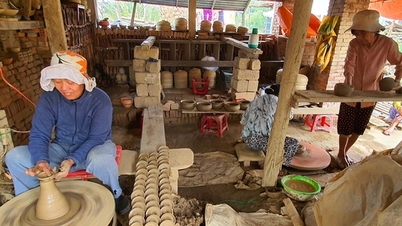
Besides, Campbell commented that Hanoi is a paradise of traditional craft villages. Silk, pottery, lacquer, incense making, and hat making all still exist like the breath of time in the suburban villages.
The author suggests that visitors should spend half a day visiting Quang Phu Cau incense village or Chuong village, where the old lifestyle is still maintained with families who have been doing the craft for many generations.
Hoan Kiem Lake acts as the heart of the city. Elderly people practice tai chi in the early morning, young couples stroll under the shade of the trees at night. The Huc Bridge leading to Ngoc Son Temple creates a unique image when the lake's surface is red.
The Old Quarter with 36 streets still retains the names of traditional occupations, creating a lively “maze”. To the west of the center, the Temple of Literature – Quoc Tu Giam becomes a Confucian space with stone steles engraved with the names of doctors dating back nearly a millennium. The Hoa Lo relic not far away recreates the historical period from the colonial period to the Vietnam War.
According to the American travel magazine, Hanoi has a rich street food scene with strong flavors, traditional cooking methods and constant innovation. Pho still holds the iconic role. Bun cha, banh cuon, bun thang, xoi xeo or egg coffee all create unforgettable experiences.
Young chefs in the capital have ushered in a new culinary wave, combining French techniques with Vietnamese ingredients. Speakeasy-style bars tucked away in small alleys offer a colorful nightlife, adding to the city’s diverse culinary landscape.
In terms of accommodation, the magazine suggests outstanding options such as Capella Hanoi – a boutique hotel designed by architect Bill Bensley and Sofitel Legend Metropole Hanoi, which has hosted many world celebrities. If you want to see the whole city from above, you can choose Lotte Hotel with an infinity pool on the 62nd floor. Condé Nast Traveler also mentioned Four Seasons Hanoi, scheduled to open in 2026, promising to become a new accommodation right next to Hoan Kiem Lake.

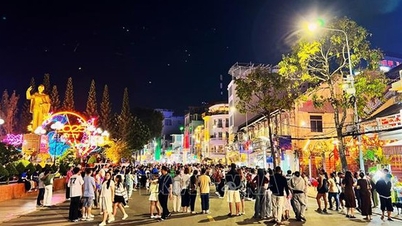
In the evening, the area around Hoan Kiem Lake and the pedestrian streets become a vibrant meeting place with street performances, free music and crowded shops. The Opera House regularly hosts concerts and ballets, while water puppetry and traditional art shows help visitors gain a deeper understanding of local culture. Outside the center, activities such as cycling around West Lake, visiting ancient pagodas or relaxing at cafes located in old villas bring a slow pace of life to those seeking relaxation.
Condé Nast Traveler is a famous American travel magazine, part of the Condé Nast media group. Launched in 1987, the magazine is known for its in-depth articles, based on surveys by experts and editors living around the world, to learn about interesting and worth-visiting neighborhoods before evaluating the destination.
Source: Vnexpress Newspaper
Source: http://sodulich.hanoi.gov.vn/bao-my-ca-ngoi-ha-noi-la-vien-ngoc-do-thi.html


![[Photo] Prime Minister Pham Minh Chinh receives President of Cuba's Latin American News Agency](/_next/image?url=https%3A%2F%2Fvphoto.vietnam.vn%2Fthumb%2F1200x675%2Fvietnam%2Fresource%2FIMAGE%2F2025%2F12%2F01%2F1764569497815_dsc-2890-jpg.webp&w=3840&q=75)




















































































Comment (0)