

Thị trường bất động sản (BĐS) cao cấp và hạng sang đang chứng kiến đà tăng giá mạnh mẽ và kéo dài.
The difference is obvious.
At a recent housing seminar, Mr. Vo Huynh Tuan Kiet, Director of Housing Market at CBRE Vietnam, stated that primary market apartment prices in Ho Chi Minh City and Hanoi have increased by 35%-45% over the past year. In the third quarter alone, apartment prices in Ho Chi Minh City continued to rise by another 15%-18%, bringing the average price to approximately 90 million VND/m². Notably, about 70% of the new supply this year belongs to the high-end and luxury segments, indicating a clear mismatch with the actual housing needs of the majority of the population.
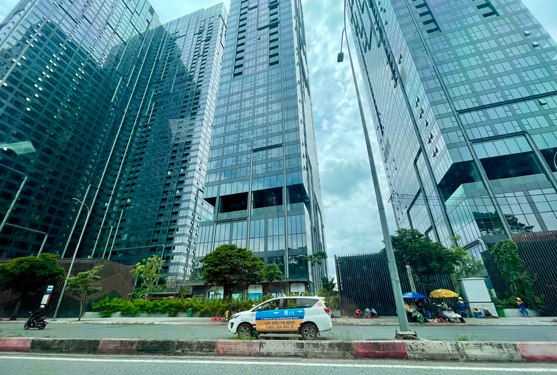
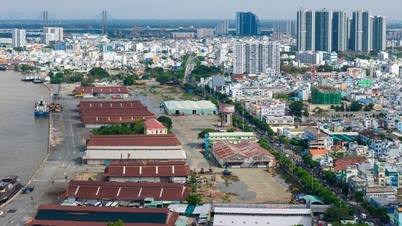
Một dự án căn hộ hạng sang dành cho giới siêu giàu ở trung tâm TP HCM
Data from Knight Frank Vietnam also shows a similar trend, with the average primary price of apartments in Ho Chi Minh City approaching VND 96 million/m², an increase of nearly 9% compared to the same period last year. Of these, nearly 60% of the apartments offered for sale were priced above VND 100 million/m², with the remainder mainly above VND 60 million/m². The oversupply of luxury apartments overshadowing the mid- and high-end segments is causing prices to continuously set new records in 2025.
Observations show that since the beginning of the year, many large developers have continuously launched high-end projects in the central area of Ho Chi Minh City. Within a 4-5 km radius of the Thu Thiem new urban area and the city center, there are almost no projects priced below 100 million VND/m². This further narrows the opportunities for middle-class customers to access housing.
In Hanoi, a report by One Mount Group indicates that in the first nine months of 2025, the market recorded approximately 20,000 new apartments with an average price of VND 86 million/m² (excluding VAT and maintenance fees). The high-end segment accounted for 62% of the supply, while the luxury segment accounted for 38%. Notably, five major developers – Masterise Homes, MIK Group, Mitsubishi, TSQ Vietnam, and Sun Group – accounted for 74% of the apartments offered for sale. The primary absorption rate for this group averaged 86%, reflecting that purchasing power remains concentrated on major brands.
In Ho Chi Minh City, the polarization is also evident, with over 80% of new supply belonging to Dat Xanh Group, Gamuda Land, and Masterise Homes. These three brands not only dominate the supply but also create significant liquidity, with an average absorption rate of approximately 84%. However, experts believe that good short-term liquidity is not enough to eliminate long-term risks if the market continues to heavily favor the high-end segment, while affordable housing remains scarce.
It's not a random occurrence.
Mr. Vo Huynh Tuan Kiet believes that a "real estate bubble" can absolutely appear even when the market lacks supply, if speculative capital flows in too heavily, investors hoard properties and set short-term profit expectations far exceeding the actual absorption capacity. He recalled the period from 2007-2011, when real estate prices surged, credit was tightened, and the market fell into a prolonged frozen state. "Currently, with the escalating trend of the high-end and luxury segments, the risk of saturation will be present if prices continue to be pushed to unreasonable levels, such as 200-250 million VND/m²," this expert warned.
According to Mr. Tran Minh Tien, Director of the Market Research and Customer Insights Center of One Mount Group, the increasing concentration of housing supply in the hands of large developers is not a coincidence. In the context of increasingly stringent legal regulations, high capital costs, and increasingly stringent project quality requirements, only businesses with strong financial resources, systematic project development experience, and good risk management capabilities are able to implement high-end and luxury projects.
Conversely, the supply of mid-range and affordable housing continues to be scarce. The majority of new projects launched fall into the high-end and luxury segments, leaving real buyers, especially those with middle incomes, with virtually no choice. This contributes to higher housing prices and widens the gap between demand and affordability.
In this context, economist Dr. Can Van Luc believes that for the real estate market to develop more stably, the Government and relevant ministries and agencies need to continue improving the institutions related to land, planning, and real estate. The strong implementation of solutions regarding social housing, including Decree 261/2025/ND-CP and Decree 302/2025/ND-CP on the establishment of the National Housing Fund, is an urgent requirement to cool down housing prices, especially for housing for middle and low-income earners.
Simultaneously, it is necessary to diversify capital sources for the real estate market, promptly establish a National Housing Fund and real estate investment trusts (REITs), and study a suitable real estate tax roadmap to curb speculation and create resources for sustainable housing development.
From the business perspective, Dr. Can Van Luc believes that investors need to continue restructuring their operations, tightly controlling cash flow risks, maturing debt, and costs. Businesses also need to proactively access government support programs, especially those for social housing development and infrastructure investment, to diversify their product portfolios and reduce dependence on the high-end segment. "The urgent issue is that businesses need to work together to bring housing prices to a more reasonable level. Currently, housing prices in Vietnam have increased by approximately 59% between 2019 and 2024. By 2025, Vietnamese people will need an average of 25.8 years of income to buy an apartment, ranking 9th among over 100 countries surveyed, showing that access to housing is becoming increasingly difficult," Dr. Can Van Luc emphasized.
Buyers have reduced their "speculative" spending.
According to a survey by One Mount Group, real estate investors are shifting from a short-term investment mindset to long-term asset accumulation. Instead of "speculating" for quick profits, buyers are increasingly prioritizing safe properties with stable value and minimal fluctuations over time. In this context, the developer's reputation becomes a key factor, assessed through three criteria: transparent legal procedures and the ability to fully implement the project; a reputable partner ecosystem, from contractors and consultants to guaranteeing banks; and operational capacity after handover. This means that a high selling price is only a necessary condition, while efficient operation is the decisive factor in the project's sustainable appeal.
Nguồn: https://nld.com.vn/bat-dong-san-cao-cap-chiem-the-ap-dao-196251215213643806.htm

![[Photo] Prime Minister Pham Minh Chinh receives the Governor of Tochigi Province (Japan)](/_next/image?url=https%3A%2F%2Fvphoto.vietnam.vn%2Fthumb%2F1200x675%2Fvietnam%2Fresource%2FIMAGE%2F2025%2F12%2F16%2F1765892133176_dsc-8082-6425-jpg.webp&w=3840&q=75)


![[Photo] Prime Minister Pham Minh Chinh receives Lao Minister of Education and Sports Thongsalith Mangnormek](/_next/image?url=https%3A%2F%2Fvphoto.vietnam.vn%2Fthumb%2F1200x675%2Fvietnam%2Fresource%2FIMAGE%2F2025%2F12%2F16%2F1765876834721_dsc-7519-jpg.webp&w=3840&q=75)
![[Image] Leaked images ahead of the 2025 Community Action Awards gala.](/_next/image?url=https%3A%2F%2Fvphoto.vietnam.vn%2Fthumb%2F1200x675%2Fvietnam%2Fresource%2FIMAGE%2F2025%2F12%2F16%2F1765882828720_ndo_br_thiet-ke-chua-co-ten-45-png.webp&w=3840&q=75)












































![[Photo] Prime Minister Pham Minh Chinh attends the Vietnam Economic Forum 2025](https://vphoto.vietnam.vn/thumb/402x226/vietnam/resource/IMAGE/2025/12/16/1765893035503_ndo_br_dsc-8043-jpg.webp)



























Comment (0)