

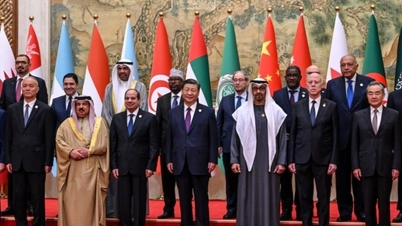
The conference adopted the Jeddah Declaration, which reaffirmed the AL's unified position on efforts to build security and stability throughout the Arab world .
Arab News reported on May 20th that the 2023 AL Summit is taking place at a time when many countries around the world are facing an economic crisis after three years of the pandemic, as well as suffering the effects of the war in Ukraine.
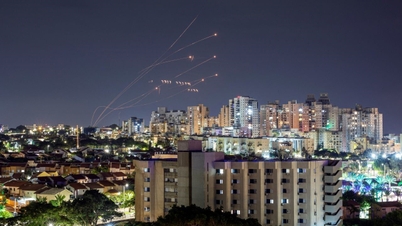
Within the Arab world, numerous geopolitical developments are directly impacting its members, such as the Palestinian-Israeli conflict, the fighting in Sudan, Yemen, Libya, and Syria, and the socio-economic crisis in Lebanon.
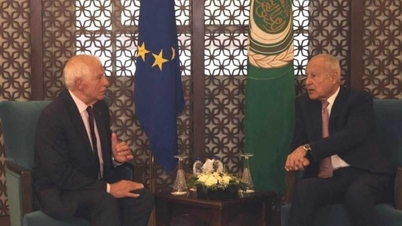
Speaking at a press conference after the summit, AL Secretary-General Ahmed Aboul Gheit affirmed that the results achieved at this conference could help resolve internal issues and strengthen unity in the Arab world, and that this would be the starting point for Arab countries to "determine their own destiny."
This conference welcomed an unexpected guest who appeared briefly: Ukrainian President Volodymyr Zelensky, with the aim of garnering Arab support for Kyiv in the Russia-Ukraine conflict. In another development, Russian President Vladimir Putin also sent a letter to the AL summit, stating that Moscow highly values developing partnerships with Arab nations.
In response, the rotating chairman of the Arab League—Saudi Arabian Crown Prince Mohammed bin Salman—expressed goodwill towards both sides, reaffirming his readiness to mediate in the Russia-Ukraine conflict. Thus, it can be seen that the Arab League's influence is no longer limited to the region. Gulf states have strived to maintain neutrality in the Russia-Ukraine conflict, despite Western pressure aimed at isolating Russia—a key member of the Organization of Petroleum Exporting Countries and its partners (OPEC+).
The fact that Syrian President Bashar al-Assad attended the Arab League summit for the first time in a 12-year hiatus also attracted public attention. According to analysts, Syria's rejoining the "Arab family" is part of a trend toward more open foreign policy in the Middle East, where former rivals are striving to mend strained relations after years of conflict and confrontation.
"We hope that Syria's return to the AL will mark the end of the crisis in that country... We are moving towards peace, goodness, cooperation and constructive action for the benefit of the people and to protect the rights of the member states," Al Arabiya quoted Crown Prince Mohammed bin Salman as saying.
The highlight of this conference was the adoption of the Jeddah Declaration by the Arab League, which rejected foreign interference in the internal affairs of Arab countries and emphasized that military conflict would only exacerbate the suffering of the people and hinder the development of countries in the region. The Jeddah Declaration also reiterated the implementation of the 2002 Arab Peace Initiative to resolve the Israeli-Palestinian conflict, called for de-escalation in Sudan, urged reforms to lift Lebanon out of crisis, and supported initiatives to promote security and stability in Yemen.
In addition, the Arab League affirmed its commitment to strengthening the implementation of initiatives and promoting joint action within the bloc in the cultural, economic, and social fields; maintaining the supply chains of essential food items, contributing to ensuring food security for Arab nations.
It can be said that the success of the 2023 Arab League Summit, led by regional power Saudi Arabia, contributed to strengthening the unity of the Arab world. Through this, the oil-rich nation – which was once influenced by the US in its foreign policies – is now turning the tide with an independent foreign policy and building global influence as a peace-building nation.
HA PHUONG
Source
![[Photo] Prime Minister Pham Minh Chinh holds a phone call with the CEO of Russia's Rosatom Corporation.](/_next/image?url=https%3A%2F%2Fvphoto.vietnam.vn%2Fthumb%2F1200x675%2Fvietnam%2Fresource%2FIMAGE%2F2025%2F12%2F11%2F1765464552365_dsc-5295-jpg.webp&w=3840&q=75)

![[Photo] Closing Ceremony of the 10th Session of the 15th National Assembly](/_next/image?url=https%3A%2F%2Fvphoto.vietnam.vn%2Fthumb%2F1200x675%2Fvietnam%2Fresource%2FIMAGE%2F2025%2F12%2F11%2F1765448959967_image-1437-jpg.webp&w=3840&q=75)

































![[OFFICIAL] MISA GROUP ANNOUNCES ITS PIONEERING BRAND POSITIONING IN BUILDING AGENTIC AI FOR BUSINESSES, HOUSEHOLDS, AND THE GOVERNMENT](https://vphoto.vietnam.vn/thumb/402x226/vietnam/resource/IMAGE/2025/12/11/1765444754256_agentic-ai_postfb-scaled.png)









































Comment (0)