

Opening up business opportunities
Mr. Vu Khanh Toan, Kobler's brand advisor in the Vietnamese market, stated that the Vietnamese market has been relatively challenging in recent years. However, many businesses have found alternative avenues for market expansion, especially in the context of the "greening" of building materials production and the global market trend towards minimizing pollution and being environmentally friendly.
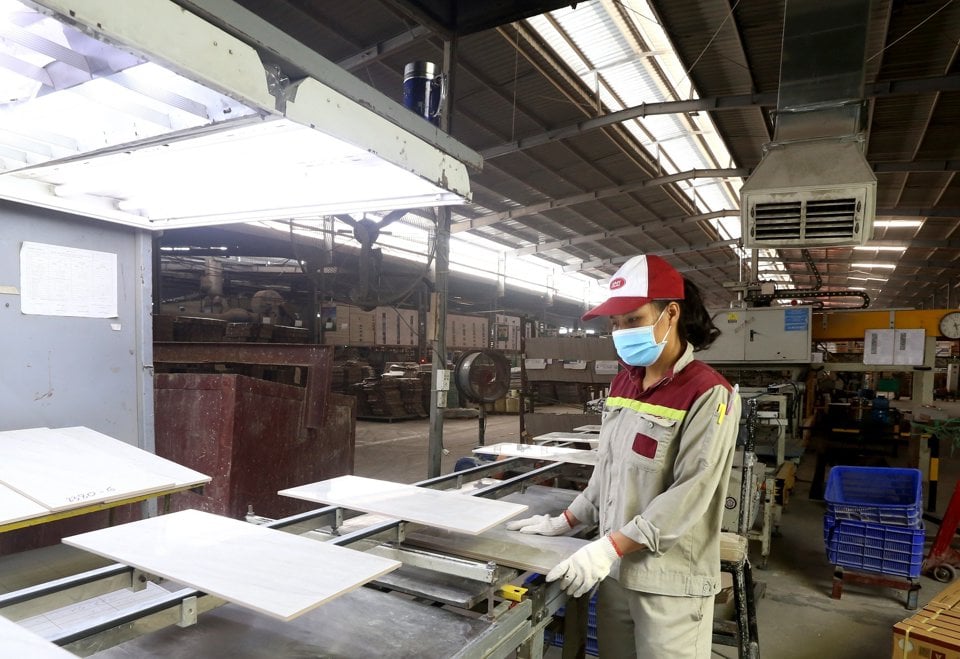
Kobler is a company specializing in quartz flooring materials, utilizing cutting-edge German technology combined with Eastern values to provide green and convenient construction solutions for contractors and workers alike. Kobler brand products offer customers practical benefits, with quartz materials believed to bring prosperity and strengthen family bonds.
To create such a product, Mr. Vu Khanh Toan believes that implementing ESG is a choice towards sustainable development and improved business efficiency. Specifically in management, the company has strived to streamline operations and apply technology to minimize risks and optimize cost savings. Many production lines utilize artificial intelligence (AI) technology and software that allows overseas partners to coordinate remotely.
Automated robotic systems enhance product quality management, ensuring consistent product quality and absolute safety, while also protecting worker health and the environment.
Meanwhile, Do Van Hai, Director of Module9 Joint Stock Company, believes that implementing ESG in construction materials businesses not only enhances the company's reputation and sustainable value but also contributes positively to environmental protection and community development. This is especially important for the environment, as the industry is one of the biggest emitters of greenhouse gases, primarily from the production of cement and other construction materials.
Businesses need to invest in environmentally friendly production technologies, such as using renewable energy, minimizing the use of fossil fuels, and optimizing production processes. This includes limiting waste from material production, recycling old building materials, and applying waste reduction technologies in the production process.
Furthermore, it is essential to enhance social responsibility by providing a safe working environment, ensuring good working conditions for employees, implementing reasonable compensation policies, and protecting the health of workers, especially in production processes that may pose health risks.
"Businesses need to develop a comprehensive ESG strategy, setting specific goals for environmental protection, employee rights, and sustainable development in their production and business processes. In addition, they need to build a clear, transparent governance system that complies with legal regulations, ensures quality control processes, and minimizes corruption," said Mr. Do Van Hai.
To successfully implement ESG, Mr. Do Van Hai also suggested that businesses need to assess their current environmental, social, and governance status. This includes evaluating CO2 emissions, issues related to employee rights, and current governance standards. They should also develop a specific strategy with short-term and long-term goals for environmental, social, and governance aspects.
For example, minimizing CO2 emissions in production, enhancing employee training and healthcare, or improving internal monitoring and reporting mechanisms. Integrating ESG values into the company culture, ensuring that all levels of employees understand and are committed to implementing these standards in their daily work.
It's not just about showing off.
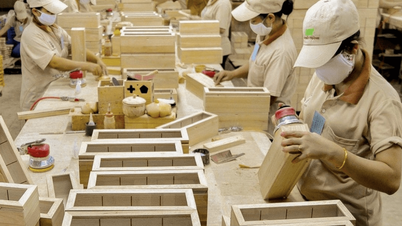
In the building materials industry, small and medium-sized enterprises (SMEs) account for an overwhelming proportion (approximately 80-90%), while large enterprises only make up about 10-15%. In recent years, many SMEs in the building materials industry have been striving to increase their scale and improve product quality to meet the demands of sustainable construction and reduce environmental impact. Some are shifting towards producing "green," environmentally friendly building materials to meet market requirements and government policies related to ESG.
Small and medium-sized enterprises (SMEs) primarily focus on producing and supplying building materials for small and medium-sized projects, or serving regional markets. These businesses may face numerous challenges related to finance, technology, and scale of production, but they are flexible and easily adaptable to market demands.
Industry experts believe that with the continued stability of the socio-economic situation and signs of recovery in the real estate market, the opportunity for building materials businesses to catch up with demand is excellent. However, to seize this opportunity, they need to strengthen production capacity and improve product quality to meet partner needs. Therefore, the products offered must be truly green, not just for show, if they don't want to be left behind by businesses that know how to seize the opportunity.
Furthermore, the legalization of product quality, specifically Circular 10/2024/TT-BXD, will control the quality of construction materials, reducing losses for the construction industry as businesses must strictly comply with regulations and provide complete information on product quality. All products on the market must clearly state their quality. In particular, products in Group 2 (cement, ceramic tiles, natural sand, concrete bricks, etc.) must have a certificate of conformity, ensuring they meet quality standards.
According to Bui Hoang Hai, Vice Chairman of the State Securities Commission, promoting ESG in businesses not only enhances reputation and creates long-term value for shareholders and stakeholders, but at the national level, good ESG practices are seen as a tool to support the Government in fulfilling its commitments to environmental protection for sustainable development, especially the net zero emissions target that the Prime Minister committed to at the COP26 conference.
Furthermore, Vietnam has integrated deeply into the global economy, requiring businesses to quickly meet ESG criteria to maintain competitiveness.
"Although initial results have been achieved in the implementation of ESG in Vietnam, many challenges remain, requiring the joint efforts of all stakeholders. This journey requires the collaboration of all parties involved, from regulatory bodies and stock exchanges to business organizations, investors, and the community as a whole," observed Bui Hoang Hai, Vice Chairman of the State Securities Commission.
In a recent report by PwC Vietnam, conducted in collaboration with various organizations and entities, a survey of 234 participants revealed that 80% of businesses in Vietnam are committed to or intend to commit to ESG within the next 2-4 years.
Source: https://kinhtedothi.vn/doanh-nghiep-vat-lieu-xay-dung-cai-thien-noi-luc-de-mo-rong-thi-truong.html

![[Image] Leaked images ahead of the 2025 Community Action Awards gala.](/_next/image?url=https%3A%2F%2Fvphoto.vietnam.vn%2Fthumb%2F1200x675%2Fvietnam%2Fresource%2FIMAGE%2F2025%2F12%2F16%2F1765882828720_ndo_br_thiet-ke-chua-co-ten-45-png.webp&w=3840&q=75)
![[Image] The tenacious fighting spirit of Vietnamese women's football](/_next/image?url=https%3A%2F%2Fvphoto.vietnam.vn%2Fthumb%2F1200x675%2Fvietnam%2Fresource%2FIMAGE%2F2025%2F12%2F17%2F1765990260956_ndo_br_4224760955870434771-copy-jpg.webp&w=3840&q=75)
![[Photo] Prime Minister Pham Minh Chinh receives the Governor of Tochigi Province (Japan)](/_next/image?url=https%3A%2F%2Fvphoto.vietnam.vn%2Fthumb%2F1200x675%2Fvietnam%2Fresource%2FIMAGE%2F2025%2F12%2F16%2F1765892133176_dsc-8082-6425-jpg.webp&w=3840&q=75)
![[Live] 2025 Community Action Awards Gala](/_next/image?url=https%3A%2F%2Fvphoto.vietnam.vn%2Fthumb%2F1200x675%2Fvietnam%2Fresource%2FIMAGE%2F2025%2F12%2F16%2F1765899631650_ndo_tr_z7334013144784-9f9fe10a6d63584c85aff40f2957c250-jpg.webp&w=3840&q=75)
![[Photo] Prime Minister Pham Minh Chinh receives Lao Minister of Education and Sports Thongsalith Mangnormek](/_next/image?url=https%3A%2F%2Fvphoto.vietnam.vn%2Fthumb%2F1200x675%2Fvietnam%2Fresource%2FIMAGE%2F2025%2F12%2F16%2F1765876834721_dsc-7519-jpg.webp&w=3840&q=75)






























































![[Live] Closing Ceremony and Award Presentation for the "Impressive Vietnam Tourism" Video/Clip Creation Contest 2025](https://vphoto.vietnam.vn/thumb/402x226/vietnam/resource/IMAGE/2025/12/17/1765974650260_z7273498850699-00d2fd6b0972cb39494cfa2559bf85ac-1765959338756946072104-627-0-1338-1138-crop-1765959347256801551121.jpeg)

















Comment (0)