

Muscle strain is a condition where muscle fibers are overstretched or damaged due to sudden movement, incorrect posture, or overexertion. In older adults, muscle strain commonly occurs in the back, neck, shoulders, thighs, and calves— areas that experience significant stress in daily life.
Due to the aging process, muscle recovery in older adults is slower than in younger people, so even minor muscle injuries can persist and cause chronic pain if not properly cared for.
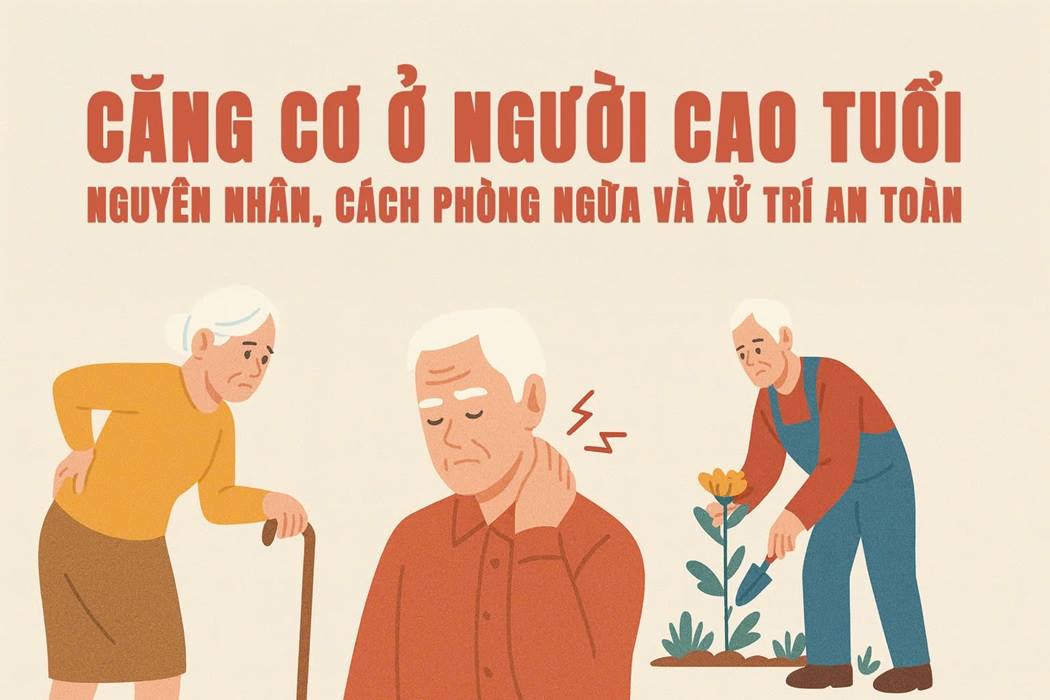
Common causes of muscle tension in older adults
There are many causes of muscle strain in the elderly, the most common of which are: the natural degeneration of the musculoskeletal system. As age increases, muscle mass gradually decreases, and the elasticity and flexibility of muscles decline, making them more susceptible to injury even with normal movements; improper or sudden movements. The elderly often have the habit of standing up, sitting down, bending over, and carrying heavy objects without warming up, leading to muscle groups not having time to adapt and becoming strained; overwork and excessive physical activity. Continuous work with little rest easily causes muscle fatigue and leads to muscle strain; the effects of cold weather. Cold, damp winter weather causes muscle stiffness and reduces blood circulation, thereby increasing the risk of muscle strain if exercise is inappropriate; underlying conditions such as spinal degeneration, osteoporosis, diabetes, and circulatory disorders also increase the risk of muscle injury and prolong recovery time.
Elderly people with muscle strains often experience symptoms such as: pain in the affected muscle area, a feeling of tightness, and increased pain with movement or changes in posture. In some cases, there may be mild swelling, muscle stiffness, and limited movement in the affected area. The pain usually subsides with rest but may recur when movement resumes.
Family members and caregivers should note that if the pain persists for several days, gradually increases, is accompanied by swelling, bruising, or weakness, the elderly person should be taken to a medical facility for examination to avoid overlooking more serious injuries.
When muscle strain is detected in elderly individuals, proper treatment is necessary to reduce pain and support recovery:
First, allow the patient to rest and limit movement in the injured muscle area. Avoid strenuous exercise or massage while in pain.
During the first 24-48 hours, gentle cold compresses can be applied to the painful area to reduce inflammation and pain. After the acute phase, when the pain subsides, warm compresses can be used to relax muscles and improve blood circulation.
Elderly people should not self-medicate with painkillers or anti-inflammatory drugs for extended periods without a prescription from a healthcare professional , as this can cause side effects, especially in those with underlying medical conditions.
Absolutely do not apply unproven folk remedies such as: applying hot leaves, forceful massage or excessive muscle stretching, as these can cause more serious muscle damage.
Preventing muscle strain in the elderly during daily activities.
Prevention plays a crucial role in limiting muscle tension in older adults. Some simple and effective measures include: Always warm up gently before any activity, even when walking, doing housework, or light labor. Simple stretching exercises help muscles adapt better to movement ; Maintain a regular exercise routine suitable for your physical condition, such as walking, practicing Tai Chi, or light yoga. Appropriate exercise helps increase muscle strength, improve flexibility, and reduce the risk of injury ; Keep your body warm, especially in cold weather. Older adults should dress warmly, paying attention to keeping the neck, back, and knee joints warm to prevent muscle stiffness ; Arrange for adequate rest time, avoiding continuous work for long periods. When feeling muscle fatigued, stop and rest to allow the muscles to recover ; Adequate and balanced nutrition also plays an important role in maintaining muscle health. Older adults need to supplement with sufficient protein, calcium, vitamin D, and other essential micronutrients as directed by healthcare professionals.
In most cases, mild muscle strains can improve after a few days of rest and proper care. However, elderly individuals should be taken to a medical facility if they experience symptoms such as severe pain, pain lasting more than 5-7 days without relief, significant swelling, widespread bruising, severe limitation of movement, or suspected underlying injury.
Early examinations help to accurately identify the condition, receive appropriate treatment advice, prevent complications, and contribute to improving the quality of healthcare for the elderly in the community.
Muscle strain in older adults is a common but entirely preventable and manageable condition with the right knowledge. Raising awareness among individuals, families, and communities about how to prevent and safely manage muscle strain not only helps older adults maintain mobility but also contributes to achieving the goal of primary healthcare, aiming for a healthy, proactive, and safe old age.
Department of Communication - GDSK
Source: https://yte.nghean.gov.vn/tin-chuyen-nganh/cang-co-o-nguoi-cao-tuoi-nguyen-nhan-cach-phong-ngua-va-xu-tri-an-toan-987827

![[Image] The tenacious fighting spirit of Vietnamese women's football](/_next/image?url=https%3A%2F%2Fvphoto.vietnam.vn%2Fthumb%2F1200x675%2Fvietnam%2Fresource%2FIMAGE%2F2025%2F12%2F17%2F1765990260956_ndo_br_4224760955870434771-copy-jpg.webp&w=3840&q=75)
![[Photo] Prime Minister Pham Minh Chinh receives the Governor of Tochigi Province (Japan)](/_next/image?url=https%3A%2F%2Fvphoto.vietnam.vn%2Fthumb%2F1200x675%2Fvietnam%2Fresource%2FIMAGE%2F2025%2F12%2F16%2F1765892133176_dsc-8082-6425-jpg.webp&w=3840&q=75)
![[Live] 2025 Community Action Awards Gala](/_next/image?url=https%3A%2F%2Fvphoto.vietnam.vn%2Fthumb%2F1200x675%2Fvietnam%2Fresource%2FIMAGE%2F2025%2F12%2F16%2F1765899631650_ndo_tr_z7334013144784-9f9fe10a6d63584c85aff40f2957c250-jpg.webp&w=3840&q=75)
![[Image] Leaked images ahead of the 2025 Community Action Awards gala.](/_next/image?url=https%3A%2F%2Fvphoto.vietnam.vn%2Fthumb%2F1200x675%2Fvietnam%2Fresource%2FIMAGE%2F2025%2F12%2F16%2F1765882828720_ndo_br_thiet-ke-chua-co-ten-45-png.webp&w=3840&q=75)
![[Photo] Prime Minister Pham Minh Chinh receives Lao Minister of Education and Sports Thongsalith Mangnormek](/_next/image?url=https%3A%2F%2Fvphoto.vietnam.vn%2Fthumb%2F1200x675%2Fvietnam%2Fresource%2FIMAGE%2F2025%2F12%2F16%2F1765876834721_dsc-7519-jpg.webp&w=3840&q=75)








































![[Live] Closing Ceremony and Award Presentation for the "Impressive Vietnam Tourism" Video/Clip Creation Contest 2025](https://vphoto.vietnam.vn/thumb/402x226/vietnam/resource/IMAGE/2025/12/17/1765974650260_z7273498850699-00d2fd6b0972cb39494cfa2559bf85ac-1765959338756946072104-627-0-1338-1138-crop-1765959347256801551121.jpeg)












Comment (0)