

After months of carrying and giving birth, every mother longs for the moment to hold her child in her arms, listen to the first cries, and begin the journey of breastfeeding – the sweetest milk, connecting mother and baby with instinctive love. But for many mothers, that happiness is mixed with anxiety when the longed-for milk supply is meager, the baby doesn't get enough to eat, and the mother feels guilty, blaming herself for "not having enough milk to feed her child."
The story of Ms. Minh (30 years old, Hanoi ) is similar to that of thousands of other mothers: a few weeks after giving birth, she struggled with feeding schedules, sleepless nights, and the fear of watching her milk bottle dwindle drop by drop. The more worried she became, the less milk she produced. The less milk she produced, the more stressed she became. A vicious cycle began to form – and stress itself was the reason her milk supply slowed down.
Understanding "low milk supply" and the role of hormones
In the first few days after childbirth, the mother's body undergoes significant physiological changes. Two main hormones govern the process of milk production: Prolactin and oxytocin. Prolactin helps the mammary glands produce milk, while oxytocin is responsible for contracting the milk ducts to release the milk. When a baby nurses or a mother expresses milk, the nipple is stimulated, sending signals to the pituitary gland, which then produces these two hormones.
However, stress and anxiety can disrupt this mechanism. When a mother is anxious, her body releases cortisol – the hormone of the "fight or flight" response. Cortisol causes blood vessels to constrict, reducing the milk let-down reflex and inhibiting oxytocin activity. The mother still produces milk, but it doesn't "flow." Many mothers mistakenly believe they have lost their milk supply, when in reality the milk is simply "blocked" due to stress.
Furthermore, prolonged insomnia, the stress of caring for a baby, postpartum hormonal changes (especially a sudden drop in estrogen and progesterone), along with feelings of loneliness or lack of family support, all contribute to increased stress in mothers. All these factors create a chain of psychophysiological reactions that directly affect the milk production process.
When parenting psychology and techniques "don't match"
One common mistake is infrequent or incorrect breastfeeding posture, which prevents the mammary glands from receiving sufficient stimulation signals. Infrequent breastfeeding, or mothers who are overly anxious and supplement with formula, can lead the mammary glands to believe that milk demand has decreased, thus producing less. Physiologically, breast milk production follows the "supply and demand" principle: the more a baby nurses, the more milk the mother produces.
On the other hand, many postpartum mothers restrict their diet excessively: fearing weight gain and losing their figure, they eat less and skip energy- and protein-rich food groups. As a result, their bodies lack the raw materials needed to produce milk. Added to this are sleepless nights, fatigue, and lack of sleep – further reducing milk production. Some medications (such as birth control pills with strong estrogen or vasoconstrictors) can also affect milk production, but this is often overlooked by mothers.
Furthermore, a common psychological issue is comparing oneself to others. Many mothers see their friends with "a refrigerator full of milk," while they only manage to express a few dozen milliliters, and they think, "I'm weak, I'm inadequate." This feeling of inferiority and invisible pressure increases stress, further inhibiting the milk let-down reflex.
Reduce stress – the first step to increasing milk production.
The most important way to break the "vicious cycle of low milk supply and stress" is to learn how to relax . Mothers should believe that breast milk is a natural flow; with the right conditions, the body will adjust itself.
When breastfeeding, mothers should choose a comfortable position, perhaps leaning back, using a pillow to support their arm, and holding the baby close to their chest. Before feeding, mothers can take deep breaths and gently massage the shoulders, neck, and chest to stimulate oxytocin. A quiet environment, soft lighting, gentle music, or simply watching the baby feed can also help milk flow more easily.
Skin-to-skin contact is a simple yet effective method: placing the baby on the mother's bare chest increases oxytocin production, warms the baby's body, stabilizes heart rate and breathing, and helps the baby feed better. This method is recommended by the World Health Organization (WHO) immediately after birth and during the first few weeks of life.
Family support is essential. When the husband and relatives share household chores and childcare, allowing the mother time to rest, her mental state will be much more relaxed. A hug, a word of encouragement like "you're doing great," can sometimes be more valuable than any lactation-boosting medication.
If stress persists, accompanied by symptoms such as sadness, insomnia, loss of appetite, and fatigue, the mother should consult a doctor. Early psychological counseling or treatment for postpartum depression not only helps the mother improve her health but also indirectly helps maintain her milk supply for her baby.
Nutrition – the foundation for an abundant milk supply.
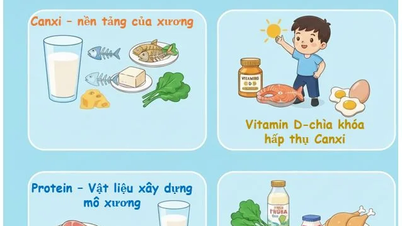
According to the National Institute of Nutrition's recommendations, breastfeeding women need approximately 500 kcal more per day than before pregnancy. Their diet should be diverse and balanced, including all four food groups: carbohydrates, protein, fats, and vitamins and minerals.

Illustrative image
Each day, mothers should have 5-6 small meals, including 3 main meals and 2-3 snacks. The menu should be varied: rice, porridge, lean meat, fish, eggs, beans, green vegetables, fresh fruit, and milk. Foods rich in omega-3s, such as salmon, herring, and walnuts, are excellent for the baby's brain development and help improve the mother's mood.
Drinking enough water is important, averaging 2 to 2.5 liters per day. Sip small amounts throughout the day, especially before and after breastfeeding. Avoid alcoholic beverages, strong coffee, or sugary sodas as these can affect milk production.
Regarding food, folk remedies offer many ways to increase milk production, such as pork trotters and green papaya porridge, carp soup with dill, roasted brown rice, and water infused with Centella asiatica leaves. Some recent studies show that these dishes contain high levels of protein, lipids, and substances that mildly stimulate milk gland contractions. However, they should be consumed in moderation, avoiding overuse as this can easily lead to weight gain or digestive disorders.
In addition, mothers should engage in gentle exercise: walking, postpartum yoga, stretching, or practicing meditation for 5–10 minutes each day. Physical activity helps improve blood circulation, relieve stress, and stimulate the endocrine system, allowing the hormones prolactin and oxytocin to function more effectively.
When needed, seek professional help.
Many mothers often suffer in silence, trying to cope with low milk supply on their own, unaware that breastfeeding counseling centers at hospitals and the National Institute of Nutrition can provide support. Experts can help mothers check breastfeeding positions, assess their baby's sucking reflexes, guide them on how to express and store milk, or suggest a suitable diet.
If a mother experiences health problems such as mastitis, blocked milk ducts, or hormonal imbalances, she should seek medical attention and treatment early. With proper medical support and advice, most cases of low milk supply can show significant improvement after 1-2 weeks.
A message for new mothers.
Breast milk is not only the most perfect source of nutrition for your baby, but also a symbol of bonding, patience, and unconditional love. Having low milk supply in the early stages is normal and not the mother's fault. Understanding the physiological mechanisms, providing adequate nutrition, getting enough rest, and maintaining a positive attitude are key to restoring a plentiful milk supply.
Trust your body. Because a mother not only gives her child milk, but also conveys warmth, love, and confidence.
And when the mother is calm, relaxed, and happy, the milk will naturally flow abundantly, like a gift of life.
Department of Communication and Health Education (Source: Institute of Nutrition)
Source: https://yte.nghean.gov.vn/tin-chuyen-nganh/cang-thang-sau-sinh-and-chuyen-it-sua-hieu-dung-de-me-bot-lo-987856
![[Photo] Prime Minister Pham Minh Chinh receives the Governor of Tochigi Province (Japan)](/_next/image?url=https%3A%2F%2Fvphoto.vietnam.vn%2Fthumb%2F1200x675%2Fvietnam%2Fresource%2FIMAGE%2F2025%2F12%2F16%2F1765892133176_dsc-8082-6425-jpg.webp&w=3840&q=75)
![[Photo] Prime Minister Pham Minh Chinh receives Lao Minister of Education and Sports Thongsalith Mangnormek](/_next/image?url=https%3A%2F%2Fvphoto.vietnam.vn%2Fthumb%2F1200x675%2Fvietnam%2Fresource%2FIMAGE%2F2025%2F12%2F16%2F1765876834721_dsc-7519-jpg.webp&w=3840&q=75)

![[Image] Leaked images ahead of the 2025 Community Action Awards gala.](/_next/image?url=https%3A%2F%2Fvphoto.vietnam.vn%2Fthumb%2F1200x675%2Fvietnam%2Fresource%2FIMAGE%2F2025%2F12%2F16%2F1765882828720_ndo_br_thiet-ke-chua-co-ten-45-png.webp&w=3840&q=75)
![[Live] 2025 Community Action Awards Gala](/_next/image?url=https%3A%2F%2Fvphoto.vietnam.vn%2Fthumb%2F1200x675%2Fvietnam%2Fresource%2FIMAGE%2F2025%2F12%2F16%2F1765899631650_ndo_tr_z7334013144784-9f9fe10a6d63584c85aff40f2957c250-jpg.webp&w=3840&q=75)




















































![[Photo] Prime Minister Pham Minh Chinh attends the Vietnam Economic Forum 2025](https://vphoto.vietnam.vn/thumb/402x226/vietnam/resource/IMAGE/2025/12/16/1765893035503_ndo_br_dsc-8043-jpg.webp)


































Comment (0)