

BAC GIANG - The Truong Son Road, the legendary road named after the beloved President Ho Chi Minh, is a symbol of Vietnamese revolutionary heroism in the resistance war against the US to save the country. In the history of human warfare, few roads hold as many "records" as the Truong Son Road - a strategic transport route providing support to the battlefields in the South and all three Indochinese countries. And uniquely, from this glorious, blood-soaked road, a literary and artistic tradition was born, becoming an invaluable cultural heritage of our nation. Among them, there is a body of Truong Son poetry associated with the names of many authors who are representative writers of modern Vietnamese literature.
Indeed, during the years when the entire nation "marched across the Truong Son Mountains to save the country," that path attracted a large and powerful group of poets who wrote about the Truong Son Mountains. From authors of the New Poetry movement to pre-revolutionary poets and the generation of poets who fought against the French, such as Che Lan Vien, Huy Can, Nguyen Dinh Thi, Nguyen Xuan Sanh, Xuan Sach, Chinh Huu, Nong Quoc Chan, Pham Ngoc Canh, Thanh Hai, Giang Nam... all were present in the Truong Son Mountains and wrote many poems about them.
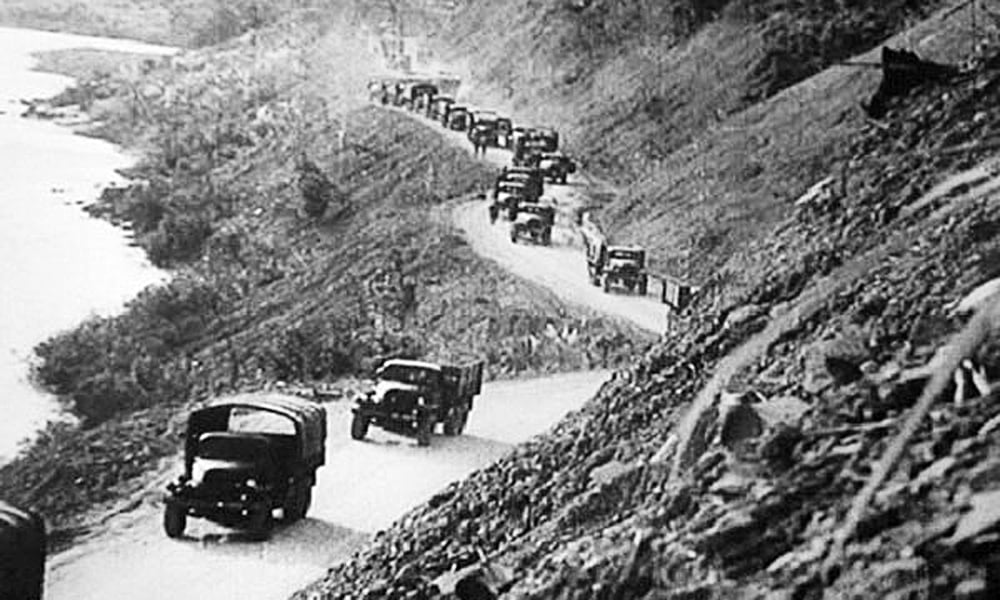 |
The Truong Son Road. Archival photo. |
In addition, there is a large group of poets who matured during the resistance war against the US, many of whom directly participated in fighting and serving in the Trường Sơn Mountains, or at least had profound experiences on the Trường Sơn routes. All of them left behind beautiful poems about Trường Sơn, such as: Hữu Thỉnh, Thu Bồn, Nguyễn Trọng Oánh, Nam Hà, Nguyễn Khoa Điềm, Hoàng Phủ Ngọc Tường, Nguyễn Mỹ, Trọng Khoát, Phạm Lê, Trịnh Quý, Hoàng Nhuận Cầm, Anh Ngọc, Nguyễn Đức Mậu, Vương Trọng, Dương Trọng Dật, Thanh Thảo, Nguyễn Thị Hồng Ngát, Phạm Hồ Thu…
In Quang Binh province alone, the "frontline" of the Trường Sơn Army, home to numerous locations chosen as command posts throughout various periods and also the site of many of the most fiercely contested battlegrounds on both the Eastern and Western Trường Sơn mountain ranges, a generation of poets writing about Trường Sơn emerged. These authors either grew up in Trường Sơn or had many successful works about the region, such as Xuân Hoàng, Trần Nhật Thu, Xích Bích, Lâm Thị Mỹ Dạ, Lê Thị Mây, Hoàng Vũ Thuật…
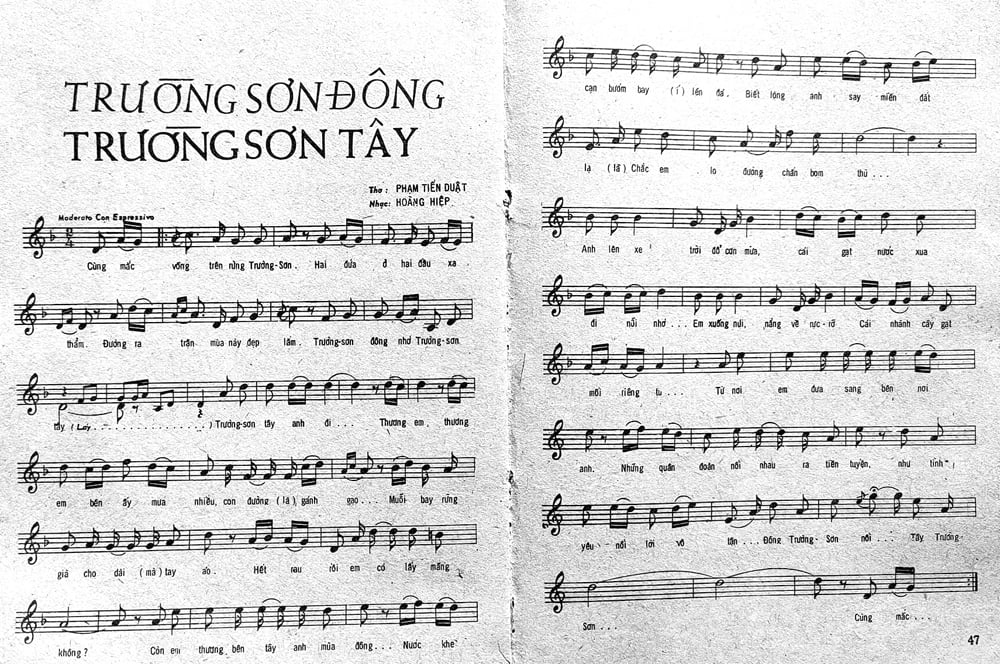
Among the poets of the Truong Son Mountains, Pham Tien Duat stands out. He was a poet who opened up a new, vibrant, youthful, and brimming wave of reality from the battlefield. He brought the entire Truong Son Mountains into his poetry. He is not only likened to "the eagle of Truong Son poetry" but is also honored as "the leading figure of anti-American war poetry." Pham Tien Duat's spirited, passionate poems, full of optimism amidst the bombs and bullets of the Truong Son Mountains, such as: "To You, Young Volunteer," "Truong Son East - Truong Son West," "Fire and Light," "The Squad of Vehicles Without Windshields," "Remembering," "The Sound of Bombs at Seng Phan"... still live on with generations of readers.
 |
There is something very special: The Trường Sơn mountain range has also been a source of poetic inspiration for many Party, State, and military leaders. Comrade Trường Chinh, during his visit to the Trường Sơn Command in early 1974, was moved to write the poem "To the Trường Sơn Soldiers": "Your vehicles are heavy with meaning and affection / You carry with you the victories / Trường Sơn West, Trường Sơn East / High passes, deep streams... we hope, we wait..." Around the same time, Comrade Lê Đức Thọ, during a visit to Trường Sơn, witnessed: "Who crosses the Trường Sơn pass / Without tasting the dust? / With each vehicle passing / Dust rises in clouds..."
Then Comrade Dang Tinh, Political Commissar of the Truong Son Army, humorously shared: "Greetings to the brave soldiers / Driving on Truong Son / Young heads turning gray / Because of layers of dust on the road... " And the poet To Huu, a high-ranking Party leader, wrote verses about Truong Son that have become classics: "Cutting through Truong Son to save the country / With hearts overflowing with hope for the future ." And: "East Truong Son, sunny, West rainy / Whoever hasn't been there, doesn't truly know themselves..."
There's another equally interesting point: Among the artists and writers who participated in the "marching across the Truong Son Mountains to save the country," alongside the "men" from various generations as described above, there were also very young "women," including female poets whose names remain stars in the literary world to this day. Poet Lam Thi My Da was born and raised in the war-torn land of Quang Binh. She was a dedicated reporter on the Truong Son trail right in her hometown.
Her poem "The Sky - Bomb Crater," written in 1972, is considered one of the best poems of the anti-American war era and continues to move generations of readers to this day: "The story goes that you, the girl who cleared the way / To save the road that night from being damaged / So that the convoy could reach the battlefield on time / You used your love for the Fatherland to light a fire / To distract the enemy and absorb the bomb blasts ..." This work won first prize in the 1973 poetry competition of the Literature and Arts newspaper. Poet Tran Thi Thang graduated from the Faculty of Literature - Hanoi University in 1970.
| The literature of the anti-American resistance movement in general, and poetry and prose about the Truong Son Mountains in particular, is a cultural heritage of multifaceted value, with many prominent figures who have been and continue to be pillars of contemporary Vietnamese literature. And the reality of contemporary Vietnamese literature also proves that the Truong Son Mountains of yesterday and today remain a rich and fascinating subject for writers to continue exploring and creating valuable works of literature and art. |
In 1971, she packed her backpack and traveled thousands of kilometers along the Truong Son mountain range to the battlefields of the Southeast region, working as a journalist and writer on the front lines. To date, she has published 15 collections of poetry, epic poems, short stories, and novels. Pham Ho Thu also chose the battlefield to live and write after graduating from university. To date, she has published 5 collections of poetry and won numerous literary awards. In 2017, her epic poem about the legendary Truong Son mountain range won the official award of the Vietnam Writers Association on the occasion of the 70th anniversary of the Day of War Invalids and Martyrs...
Among the female poets who emerged from the war-torn Trường Sơn Mountains, Nguyễn Thị Hồng Ngát and Lê Thị Mây are two rather special cases: They went to the battlefield right after graduating from high school, not to work in journalism or writing, but to... sing and repair roads, bridges, and fill bomb craters. Nguyễn Thị Hồng Ngát, when she was a young and vibrant Trường Sơn performing artist, won the Encouragement Prize in the Văn Nghệ (Literature and Arts) newspaper's poetry competition in 1973-1974. To date, she has published 7 solo collections and 2 joint collections.
Poet Le Thi May is a former Trường Sơn Youth Volunteer. Among her hundreds of poems and images of the Trường Sơn moon, one moon has become a signature image in Le Thi May's poetry: "My joy is pale / Like the moon rising in the daytime..." And here is the moon on her "Soldier's Backpack": "The wind on the mountain pass blows fiercely / We carry a heavy moon on our shoulders / A heavy moon on our shoulders / The crescent moon leans to support our silent steps... " All three female poets, Lam Thi My Da, Nguyen Thi Hong Ngat, and Le Thi May, have received the State Prize for Literature and Art.
The literature of the anti-American resistance movement in general, and poetry and prose about the Truong Son Mountains in particular, is a cultural heritage of multifaceted value, with many prominent figures who have been and continue to be pillars of contemporary Vietnamese literature. And the reality of contemporary Vietnamese literature also proves that the Truong Son Mountains of yesterday and today remain a rich and fascinating subject for writers to continue exploring and creating valuable works of literature and art, worthy of the stature and miracle of the Truong Son Road – the Ho Chi Minh Trail – the legendary road!
Source: https://baobacgiang.vn/co-mot-truong-son-thi-ca-postid416278.bbg

















































Comment (0)