

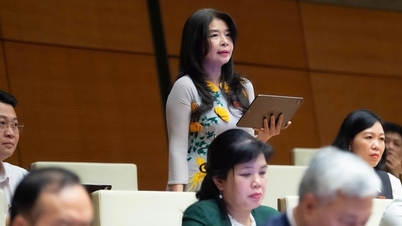
At the discussion session in the hall this morning, delegate Tran Thi Thu Dong ( Ca Mau ) expressed her opinion on the regulation allowing organizations and individuals to use legally published documents and data to research, train and develop artificial intelligence (AI) systems.
According to her, AI is an inevitable trend, playing an important role in the development of the digital economy and cultural industry.
The draft law addresses an issue that even today’s world has not reached a consensus on. The European Union has been debating for years to come up with two prudential mechanisms on data mining. Many countries are temporarily holding back on extending the exemption because of the risk of infringement and negative impact on the income of the creative community.
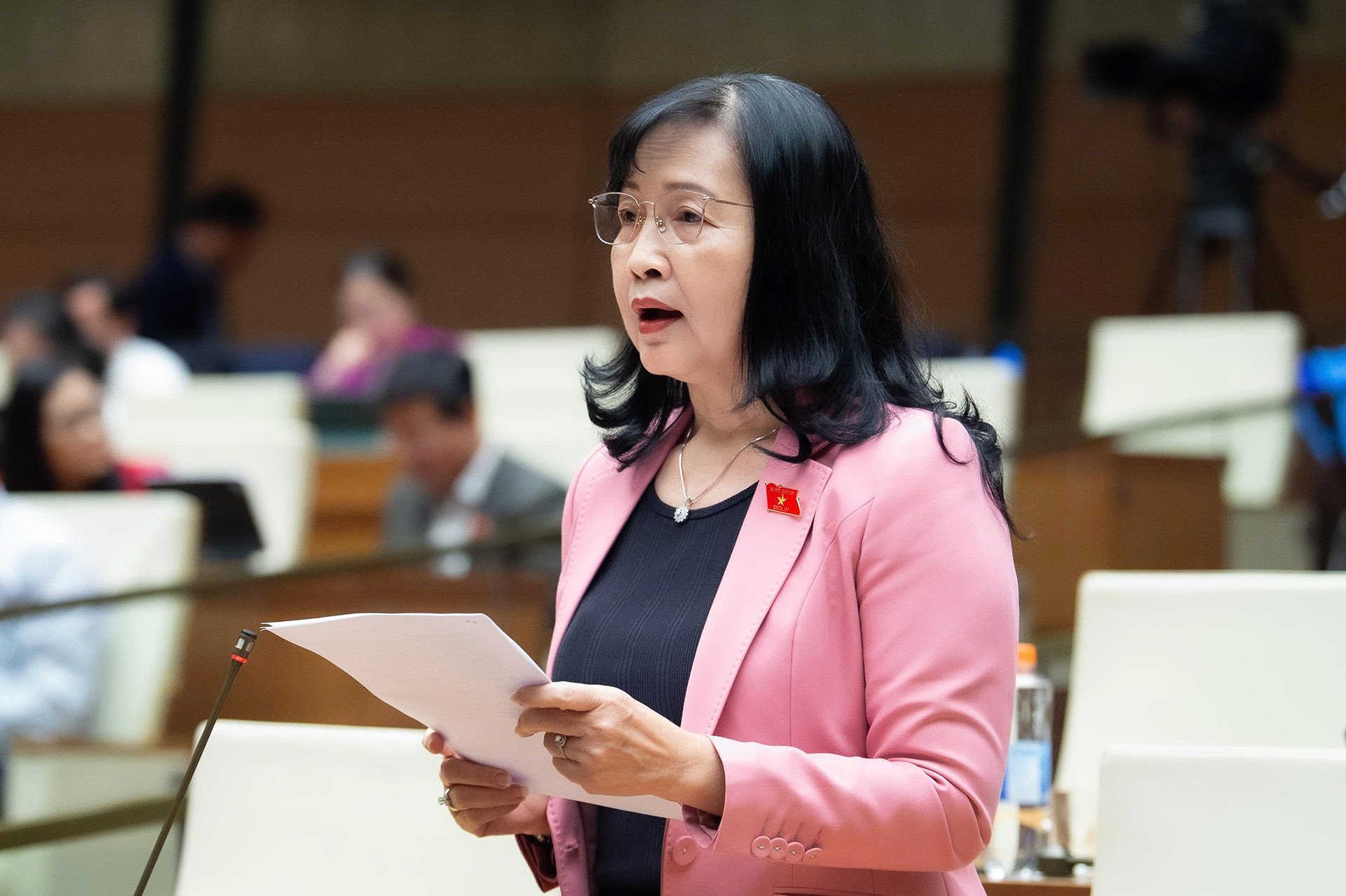
Delegate Tran Thi Thu Dong. Photo: National Assembly
Delegates believe that, in this general context, further research should be conducted. The scientific, artistic and creative communities, and those directly affected, are extremely concerned.
According to the delegate, AI support is needed but copyright cannot be exchanged. Delegate Tran Thi Thu Dong analyzed that if the regulations are not strict enough, artists' creative data will be faced with the risk of being widely collected and copied. AI products created from their own works will compete with them in the market, risking erasing their creative imprints and even distorting their works.
"We absolutely cannot let creative labor become a free resource for automated systems," Ms. Dong emphasized.
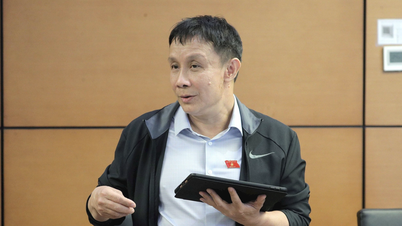
Delegate Pham Trong Nghia (Lang Son) commented that the world has many different approaches to intellectual property rights for AI-generated products, but they can be divided into three groups. With the cautious group, intellectual property rights are not recognized if the human element is missing or created by humans, the author element is a mandatory condition to establish intellectual property rights.
Another group of views argues that when a product is created by AI and has significant human creative intervention, it is protected. Protection is limited to the parts that are directly created by humans or significantly modified after the AI is created.
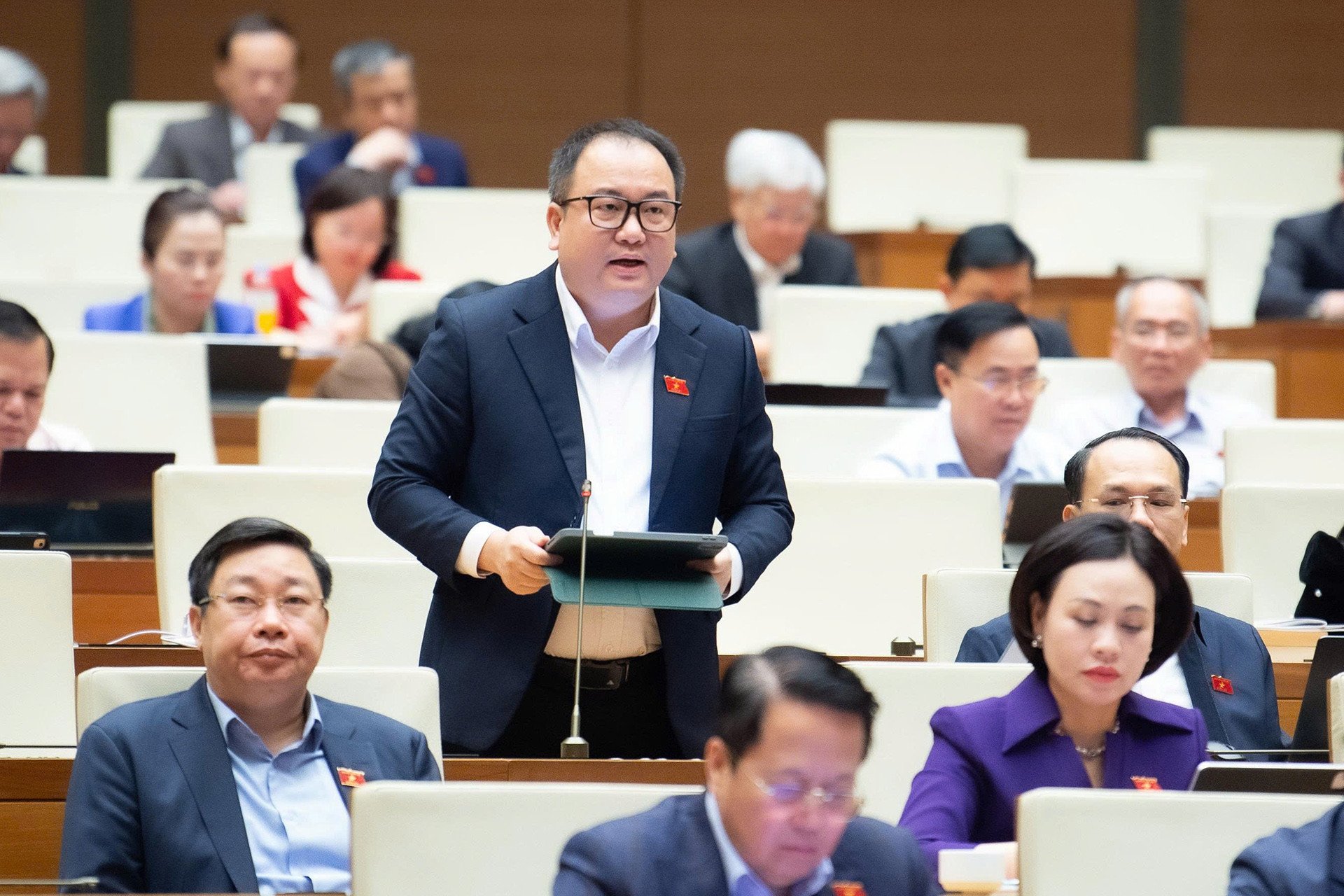
Delegate Pham Trong Nghia. Photo: National Assembly
Another view supports the recognition of products created by AI. In particular, there is a view that AI creates works without human intervention, AI must be recognized as an electronic author with rights, and ownership belongs to the owner.
The current draft law does not recognize the intellectual property rights of AI, nor does it protect works created by AI. However, according to Mr. Nghia, for developing countries like Vietnam, attracting investment capital in AI technology is very important.
Need to perfect specialized courts on intellectual property
Speaking at the end of the discussion session, Minister of Science and Technology Nguyen Manh Hung said that this draft law focuses on the principle that intellectual property must become the property of the enterprise, can be valued, bought and sold, and included in financial reports; can be collateral for borrowing capital, especially new technology assets, digital technology, and AI.
The most important shift in intellectual property is the shift from rights protection to the property, commercialization and marketization of research results.
The Minister said that for a developed country with intangible assets, intellectual property accounts for up to 80% of total national assets. Vietnam has reached the stage where it must prioritize the development and protection of intellectual property to develop into a high-income country.
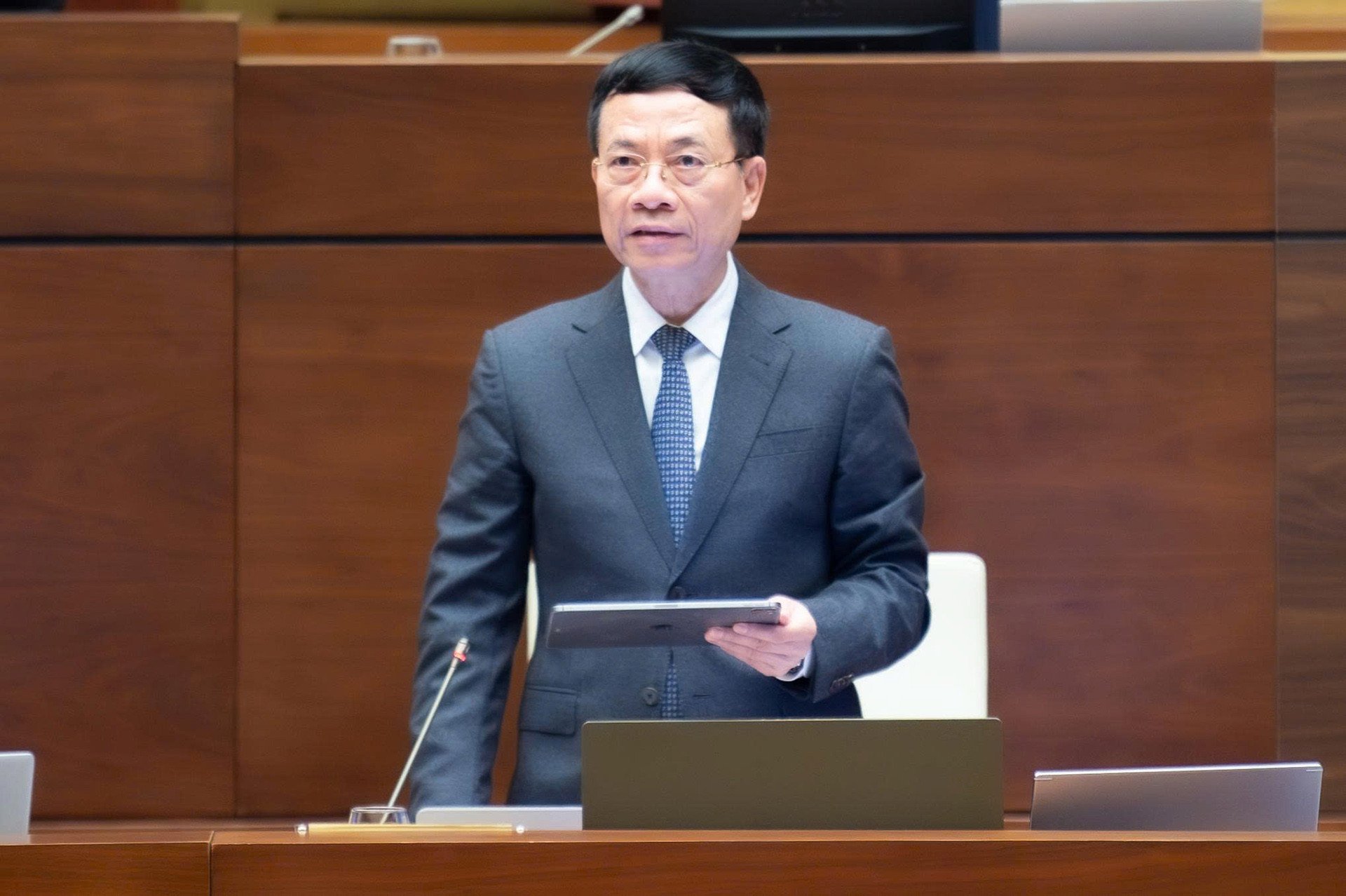
Minister of Science and Technology Nguyen Manh Hung gives an explanatory speech. Photo: National Assembly
Regarding products created by AI, the Minister affirmed that AI is not the subject of intellectual property rights. Products created automatically by AI, without human participation, are not protected by copyright like human works.
"Products created by humans using AI as a tool, like a pen or a camera, and humans have significant creative contributions such as ideas, direction, selection, and editing of AI results, can be recognized as authors and inventors. If humans contribute little, use AI as a colleague, for example, only make contextual requests, then they are not authors, but have the right to use and commercialize," the Minister analyzed.
The Minister said that basically, countries are approaching in this direction. The law will assign the Government to determine the level of user creativity to have appropriate protection mechanisms.
The Drafting Committee will continue to carefully consider comments on the use of information that is legally published, public, and accessible to the public for the purpose of training AI, provided that the AI output does not infringe copyright.
The Minister also said that it is necessary to perfect specialized courts on intellectual property; add deterrent penalties, and consider intellectual property infringement as "theft in the real world". Strict handling in the digital environment is also a breakthrough solution.
Source: https://vietnamnet.vn/coi-xam-pham-quyen-so-huu-tri-tue-nhu-an-cap-trong-the-gioi-thuc-2465792.html





















































![[Photo series] Panoramic view from above of Ring Road 3 - Ho Chi Minh City preparing for technical traffic opening](https://vphoto.vietnam.vn/thumb/402x226/vietnam/resource/IMAGE/2025/11/26/1764137432632_anh_1_20251126121320.jpeg)












Comment (0)