

Transparency and partnership
Visiting Dong Thai commune in the final days of the year, the story of poverty alleviation is no longer just dry statistics but a vibrant manifestation in every household. This is a typical locality in implementing the Production Development Support Project, where the "fishing rod" of the State has truly been effective thanks to its systematic approach.
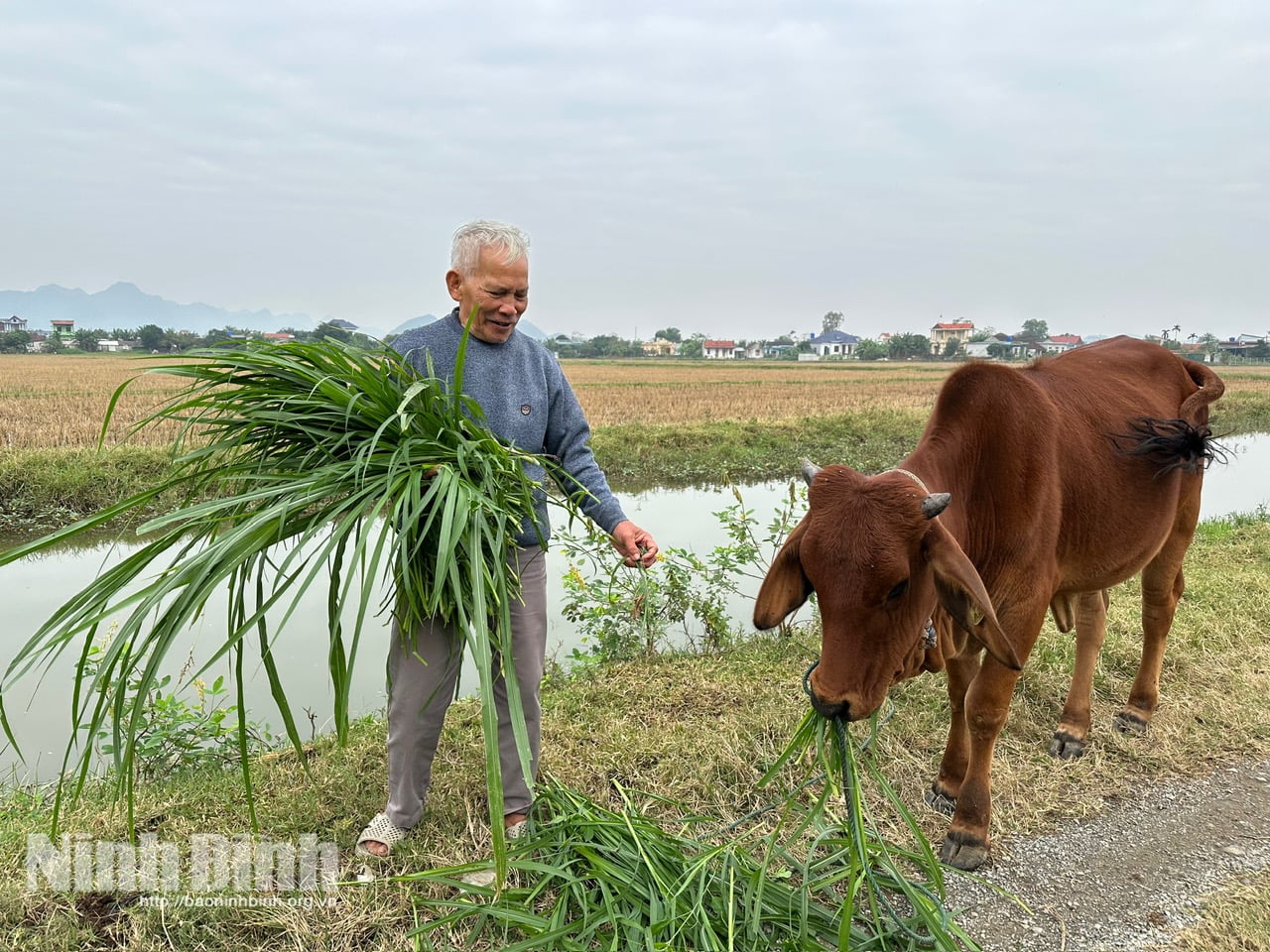
The story of Mr. Nguyen Ngoc Thuy in Thai Binh hamlet is the most touching example. He and his wife are both nearly 80 years old, have no pension, and his wife is blind and has been confined to a wheelchair for the past 30 years. Poverty has been a constant burden. However, last June, when he received a breeding cow as part of the support program, his life was given a new lease of life.
Mr. Thuy shared that the cow has become a source of joy and motivation for him to "spend time tending to it and caring for it" every day. In return for his care, the cow is now four months pregnant and is expected to give birth to a calf in early spring 2026. With faith in this new source of livelihood, Mr. Thuy made a dignified decision: He voluntarily requested to be removed from the list of impoverished households in the commune.
Beyond simply providing livestock, the technical support from local officials is the key factor in helping people feel secure in their production. The case of Mr. Pham Van Tu (Phong Lam Bac village), a near-poor household with poor health, is a typical example of this timely support.
Recalling the early days of receiving the cow, Mr. Tu couldn't hide his emotion: "For me, the cow was a huge asset, but I lacked experience in caring for it and preventing diseases. Fortunately, veterinary officers came and meticulously guided me, from how to feed it, what kinds of food to choose, to how to clean the barn. Thanks to them, the cow is now healthy, has a good appetite, and grows quickly."
To gain that trust from people like Mr. Tu, the local government had to solve the difficult problem of fairness and accountability. Speaking with reporters, Ms. Nguyen Thi Len, Vice Chairman of the People's Committee of Dong Thai commune, said: "Our biggest lesson is transparency. From the beginning, the commune did not impose a list from above, but allowed the villages and hamlets to self-assess based on the actual circumstances of each household. Thanks to the thorough review process in 21 villages and hamlets, when the list of 42 households receiving cows was posted, the people were very supportive and agreeable."
Ms. Len also shared more about risk management: “We adhere to the motto 'give a fishing rod, but also teach how to fish.' After the handover, the commune directs veterinary and agricultural extension staff to closely monitor the area to provide technical guidance. We believe that people must clearly see the benefits and be equipped with the knowledge to own the assets in order to have the motivation to escape poverty sustainably.”
Thanks to close supervision and proper methods, the cattle provided to the people are all thriving. These efforts have significantly contributed to Dong Thai's transformation, from a disadvantaged area to a shining example in rural development, with a significant reduction in poverty and an increasingly improved standard of living for its people.
Investing in the in-depth development of value chain linkage models.
Looking broadly across Ninh Binh province, during the 2021-2025 period, projects to diversify livelihoods and develop poverty reduction models were widely implemented. Avoiding rigid, standardized approaches, the models were designed to suit the specific soil conditions and farming practices of each region. In the former Nam Dinh area, livelihood support activities were vibrant with over 200 projects, covering everything from livestock and poultry farming to handicrafts such as sedge weaving and tree planting, helping more than 3,300 households increase their income. In the former Ha Nam area, there was also a focus on building and replicating poverty reduction models to support the development of production, business, services, tourism, and entrepreneurship, aiming to create sustainable jobs. Meanwhile, in the former Ninh Binh area, dozens of specialized livestock farming models such as cattle, sea crabs, and ornamental peach tree cultivation have been effectively implemented for nearly 1,000 poor and near-poor households... These figures show a strong shift from "free handouts" to "conditional support" and production linkages.
In 2025 alone, despite facing challenges from administrative reorganization and the impact of natural disasters, capital flows to support production, diversify livelihoods, and develop poverty reduction models will continue to flow, building on the solid foundation of all three localities before the merger.
Comrade Bui Van Tien, Head of the Social Policy Department, Rural Development Sub-Department (Ninh Binh Provincial Department of Agriculture and Environment), said: "Although the merger and operation of the new government model poses many management challenges, we have identified the Livelihood Diversification Project and the Poverty Reduction Model Development Project as a priority due to its practicality and rapid implementation at the grassroots level. During the restructuring phase, the flow of capital supporting production must not be obstructed to ensure social security. The timely disbursement of funds has empowered thousands of households, contributing to a projected reduction in the multidimensional poverty rate in the province to 2.87% (of which: the poverty rate is projected to decrease to 0.96%, and the near-poverty rate to 1.91%)."
Recognizing that poverty reduction is not a one-day or two-day process, Ninh Binh province's orientation for the 2026-2030 period sets ambitious goals: Striving to reduce the poverty rate to below 1% by 2030, equivalent to lifting more than 23,500 households out of poverty compared to the beginning of the period.
To realize this goal, investment resources will be strongly concentrated. Among the overall poverty reduction projects, the Livelihood Diversification and Poverty Reduction Model Development Project is proposed to receive the largest allocation of capital, amounting to 120 billion VND out of the total 400 billion VND projected for the entire period.
Sharing his thoughts on this strategy, Comrade Bui Van Tien, Head of the Social Policy Department of the Rural Development Sub-Department, emphasized the qualitative change: “We are strongly shifting our support mindset. Instead of fragmented support, in the coming period, the province will focus resources on developing value chain linkage models. The goal is inclusive and sustainable poverty reduction. Production support must be linked to regional planning, climate change adaptation, and most importantly, connecting farmers' products to markets.”
The journey from supporting livelihoods through cattle breeding in Dong Thai to the multi-billion dollar strategy of an entire large province demonstrates relentless effort. When policies are on the right track and the people are in agreement, the goal of "leaving no one behind" is no longer a slogan, but is becoming a reality in every warm meal, in the smiles of farmers who have just found a way out of poverty on their own land.
Source: https://baoninhbinh.org.vn/da-dang-hoa-sinh-ke-cho-nguoi-ngheo-khi-chiec-can-cau-duoc-trao-dung-cach-251216213036853.html
![[Image] Leaked images ahead of the 2025 Community Action Awards gala.](/_next/image?url=https%3A%2F%2Fvphoto.vietnam.vn%2Fthumb%2F1200x675%2Fvietnam%2Fresource%2FIMAGE%2F2025%2F12%2F16%2F1765882828720_ndo_br_thiet-ke-chua-co-ten-45-png.webp&w=3840&q=75)


![[Live] 2025 Community Action Awards Gala](/_next/image?url=https%3A%2F%2Fvphoto.vietnam.vn%2Fthumb%2F1200x675%2Fvietnam%2Fresource%2FIMAGE%2F2025%2F12%2F16%2F1765899631650_ndo_tr_z7334013144784-9f9fe10a6d63584c85aff40f2957c250-jpg.webp&w=3840&q=75)
![[Photo] Prime Minister Pham Minh Chinh receives the Governor of Tochigi Province (Japan)](/_next/image?url=https%3A%2F%2Fvphoto.vietnam.vn%2Fthumb%2F1200x675%2Fvietnam%2Fresource%2FIMAGE%2F2025%2F12%2F16%2F1765892133176_dsc-8082-6425-jpg.webp&w=3840&q=75)
![[Photo] Prime Minister Pham Minh Chinh receives Lao Minister of Education and Sports Thongsalith Mangnormek](/_next/image?url=https%3A%2F%2Fvphoto.vietnam.vn%2Fthumb%2F1200x675%2Fvietnam%2Fresource%2FIMAGE%2F2025%2F12%2F16%2F1765876834721_dsc-7519-jpg.webp&w=3840&q=75)





































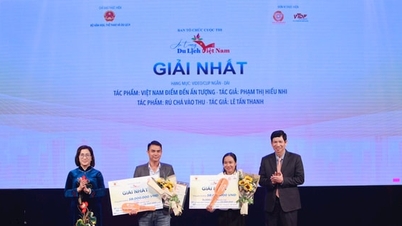
![[Live] Closing Ceremony and Award Presentation for the "Impressive Vietnam Tourism" Video/Clip Creation Contest 2025](https://vphoto.vietnam.vn/thumb/402x226/vietnam/resource/IMAGE/2025/12/17/1765974650260_z7273498850699-00d2fd6b0972cb39494cfa2559bf85ac-1765959338756946072104-627-0-1338-1138-crop-1765959347256801551121.jpeg)














Comment (0)