

Tutoring and extra classes are not inherently bad.
Le Hoang Ha, a 12th-grade student from Viet Yen, Bac Giang, does not object to extra tutoring. She believes that this activity is truly necessary and legitimate when students voluntarily attend.
Every week, in addition to her regular classes at school, Ha registers for extra classes every afternoon at school, and also takes six evening tutoring sessions in three subjects (Math, Physics, and Chemistry) at her tutor's house. Her schedule is packed all week, but the student doesn't complain, considering it her responsibility.
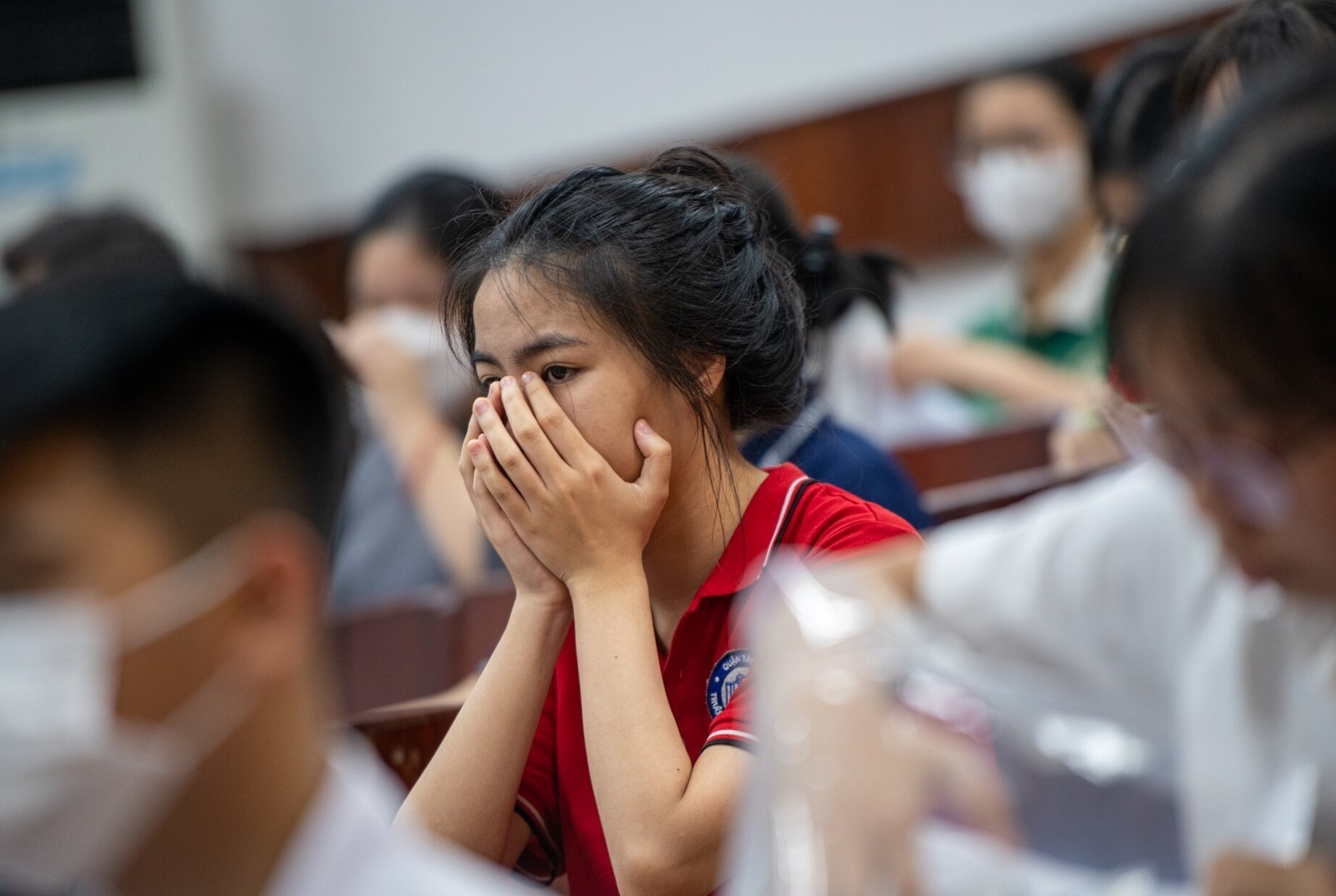
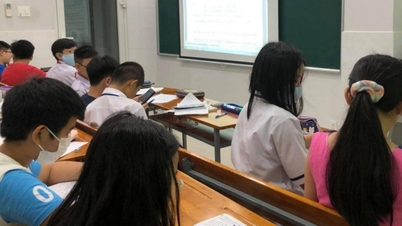
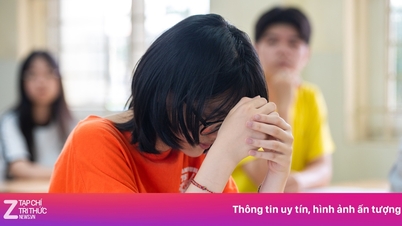
Many students agree that extra tutoring is necessary. (Illustrative image)
"To get into the National Economics University as I wish, intense studying and preparation are essential. Knowledge from class or textbooks alone isn't enough; I need to hone my question-solving skills and practice with exam questions... and that can only be achieved through extra tutoring," the female student said.
Each class session lasts only 45 minutes, covering an introduction to the material and a few small application-based exercises. To gain a deeper understanding and solve more related problems, further study is required.
Ha believes that extra tutoring stems from their own needs. If teachers simply assign homework for students to do on their own without extra tutoring, students will struggle to learn and solve these types of problems independently.
Ms. Bui Anh Ngoc (44 years old, Ha Dong, Hanoi ) travels over 40km around the city every day to take her two children to their tutor's house for extra lessons. Her older child is in 11th grade, and her younger child is in 6th grade, so their tutoring schedule is almost full every week. Despite the hardship of picking them up, taking care of them, and paying for the extra lessons, she still willingly does it because she understands that without extra lessons, her children's academic performance will suffer.
Ms. Ngoc and her husband both work as factory workers; their educational backgrounds are not high, as both only graduated from vocational colleges. Meanwhile, the education system is constantly changing, vastly different from the knowledge she was previously taught. If the family were to teach and tutor their child at home, it would be almost impossible.
"Last year, when my child was in 5th grade, he asked a difficult math problem. My husband and I spent the whole evening struggling with it, even searching all over the internet, but we couldn't solve it and had to give up. After each such experience, I realized that the curriculum is different now, and children are also burdened with a lot of homework. Without proper guidance and supervision, they will only get worse academically," she recalled. That's also why, as soon as her son entered 6th grade, the family decided to enroll him in extra tutoring at the teacher's home.
Since her children started attending tutoring at the teacher's house, she feels more at ease, especially with her eldest daughter in 11th grade, a crucial stepping stone for 12th grade. Each month, her family spends about 4 million VND on tutoring for both children, a considerable expense, but one they can easily manage.
Tutoring isn't inherently bad, so why is it condemned?
As a dedicated educator with many years of experience in the profession, Mr. Luu Ba Hoang (a high school teacher in Vinh Yen, Vinh Phuc) stated that the nature of tutoring is not inherently bad, stemming from the practical needs of parents and students.
The current general education curriculum is quite demanding, requiring students to study many subjects simultaneously and face numerous stressful exams such as entrance exams for selective classes, specialized schools, and universities. Meanwhile, with limited classroom time, teachers can only provide a basic level of knowledge.
There is a need for students and parents to seek out extra classes to supplement and enhance their knowledge. In this respect, tutoring helps students consolidate and expand their knowledge, meeting the requirements for participating in highly selective exams.

Many students believe that attending extra classes helps them improve their knowledge. (Illustrative image: Ngo Nhung)
With 18 years of experience teaching and preparing thousands of students for entrance exams to top universities in medicine, economics, information technology, etc., Mr. Hoang further analyzed that not every teacher has a large student base. Today's students are very intelligent and only seek out teachers who can impart knowledge in an easy-to-understand way, aligning with their personal goals and the success of previous generations of students. Teachers who force students to attend extra classes with poor quality will only keep them interested for a short time; later on, students will become bored and give up.
"Like any other profession, teachers also have the right to earn extra income through overtime work. Teachers are also diligently exchanging their knowledge for legitimate tuition fees outside of class hours," he said.
From an objective perspective, Ms. Huynh Thi Mai Hoa frankly stated that while tutoring itself isn't inherently bad, it always faces negative reactions from the public, and even boycotts and condemnations are justified.
Some teachers today neglect classroom teaching to attract students to extra classes in order to improve their income. At parent-teacher meetings at the beginning of the school year, teachers often require students to study and practice independently, then create overly difficult tests that result in low grades. With no other option, students are forced to attend these extra classes, and parents bear the burden of tuition fees.
Even more sadly, some teachers deliberately withhold assignments or offer practice questions to keep students in their extra classes. Discrimination between students who attend extra classes and those who don't is not uncommon.
Ms. Hoa believes that every profession has its "rotten apples," but that doesn't mean we should vehemently condemn and ban tutoring. A more multifaceted perspective is needed from society, especially from education administrators, instead of simply banning and condemning it as a social ill.
The paradox of 'if you can't manage it, ban it'
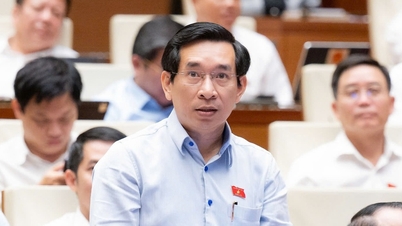
Representative Nguyen Cong Long (Dong Nai Delegation), Standing Member of the Judicial Committee, believes that the root causes of the problem of extra tutoring and supplementary classes need to be identified.
Until now, we have approached this issue as a problem, something to be avoided. Many places have set up "undercover" operations to catch and punish those involved in tutoring. This approach to teachers is inappropriate and requires a different management method, properly assessing the benefits and significance of tutoring in education and the practical needs of parents and students.
"Our children have grown up, passed exams, and found jobs partly thanks to extra tutoring," he cited as an example, and explained why the medical profession is allowed to have extra tutoring while the education sector is not. Therefore, solving the problem of extra tutoring requires understanding the root cause: it stems from the fact that teachers' living standards and income are too low.
National Assembly representatives from Dong Nai province hope the education sector will find fundamental solutions to this issue instead of resorting to the "if we can't manage it, then ban it" approach.
Minister of Education and Training Nguyen Kim Son also clarified the issue of extra tutoring before the 15th National Assembly. The Minister stated that extra tutoring outside of school hours, including by individuals not working in educational institutions, is a need that cannot be prohibited.
Previously, the Ministry of Education and Training issued Circular 17 regulating tutoring and supplementary classes, classifying it as a conditional business sector. However, the 2016 Investment Law removed tutoring from the list of conditional business sectors, rendering many provisions of Circular 17 invalid. Currently, the Ministry of Education and Training proposes that tutoring be included as a conditional business sector in the Investment Law.
However, tutoring or supplementary classes where teachers omit official teaching content or teach material in advance are prohibited. This violates teacher ethics and is forbidden. The Minister stated that only the existence of such tutoring by teachers should be condemned.
Source





![[Photo] General Secretary and President To Lam presides over the meeting to approve the draft report on the results of the second inspection by the Politburo of the Standing Committee of the Hanoi City Party Committee.](https://vphoto.vietnam.vn/thumb/1200x675/vietnam/resource/IMAGE/2026/05/26/1779789811432_a2-bnd-4430-9620-jpg.webp)











































































Comment (0)