

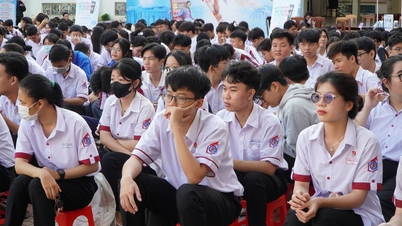
Yesterday morning (October 25th), the Vietnam Institute of Educational Sciences, Ministry of Education and Training, in collaboration with the Happy Lof Schools Foundation, organized a seminar titled "Happy Schools in Vietnam".
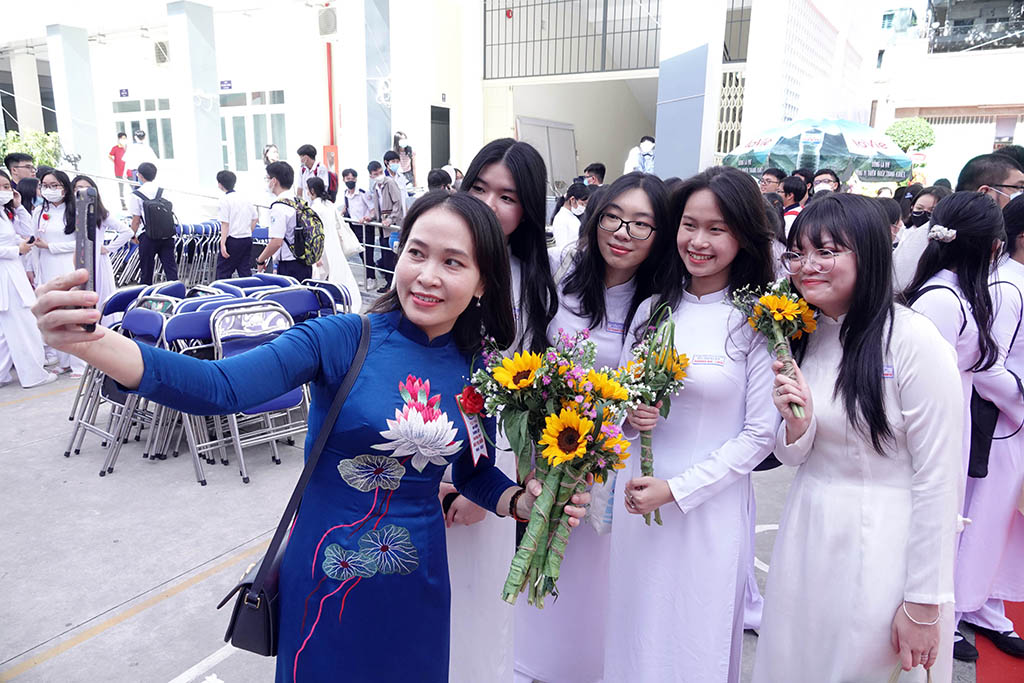
It's not academic achievement, but love that is the important factor in creating a happy school.
AVOID DEFORMATION
Speaking at the seminar, Mr. Vu Minh Duc, Director of the Department of Teachers and Educational Management Staff (Ministry of Education and Training), shared that the Ministry recognizes that students, teachers, and schools are increasingly under more pressure, especially in the context of the social media boom. Every action of a teacher, even a very small oversight, becomes a "storm" on social media. This makes teachers very hesitant, afraid, or unable to express their true feelings. Therefore, since 2018, the Ministry of Education and Training has launched the building of happy schools with three core criteria: love, safety, and respect.
Mr. Duc believes that from that time until now, the diversity of happy schools shows the concern of teachers in finding positive educational solutions that are appropriate to the context of the times. However, during the implementation of happy schools, the Ministry of Education and Training has noticed some development trends that are not in line with the goal, including commercialization, the emergence of inappropriate criteria, and exploitation for economic purposes. Therefore, Mr. Vu Minh Duc believes that in the future, the state management will certainly have to take appropriate management measures.
Specifically, firstly, the Ministry of Education and Training highly respects diversity and differences in building happy schools, but core values need to be unified to avoid distortions that are inconsistent with the goal of a happy school. Secondly, building happy schools must stem from the intrinsic needs of each school and individual, not become a movement or a competition criterion that schools are forced to implement. If we turn it into a nationwide movement and a competition criterion, it will inadvertently create pressure on schools and teachers.
"However, if we want to make building happy schools a self-driven need for schools, we need to develop very specific content, models, and approaches that respect the differences of each individual," Mr. Duc affirmed.
" Academic achievement is of little importance in predicting happiness"
Louise Aukland, a lecturer at Oxford University (UK) and an expert in wellbeing, argues that happier young people achieve better results, positively impacting academic performance and non-academic aspects, including mental health, behavior, self-esteem, efficiency, motivation, and reduced dropout rates. "Compared to emotional and behavioral health, academic achievement is a less important predictor of adult happiness," Aukland asserts.
Mr. Nguyen Van Hoa, Chairman of the Nguyen Binh Khiem Education System ( Hanoi ), recalls the early years of the school's establishment, always maintaining the educational philosophy and goals of training outstanding, talented students who would become valuable assets to society. However, when applied to reality, many problems arose that caused the "ideology of training talented individuals" to dissipate: students became disruptive, refused to study, and caused trouble; teachers were insulted and went to the principal to "complain," unable to withstand the pressure and resigned; parents, seeing their children not progressing, also went to the principal to "complain"...
"Parents expect their children to excel at school. The school implements strict measures and regulations. Many teachers have to leave the profession because they can't withstand the pressure from private schools. I spend all day 'handling lawsuits,' and sometimes I think: why is the life of a principal so hard!", Mr. Hoa recounted.
He decided he had to change the school and change himself: "I thought about freeing the students by reducing the rules and regulations in the school. Many people believe that the more rules there are, the easier it is to manage students. However, reality shows that the more rules the school imposes, the more students try to break them because they are in their adolescence, an age of hyperactivity and mischief."
Mr. Hoa persuaded teachers, and himself, to love their students and not apply harsh discipline when students make mistakes or get low grades. Teachers should not focus too much on achievement or chasing after grades, and should always create a cheerful atmosphere in the classroom. "I advise teachers not to use a classification-based or grade-based eye to look at students," Mr. Hoa shared.
Mr. Nguyen Van Hoa also argued that chasing after achievements would cause students to lose their independence and self-confidence, turning them into "practical practitioners" who are not creative individuals. Learning is only one of a person's abilities, and no student is inherently weak; education should focus on the progress and development of students, rather than achieving high scores and accomplishments.
HAPPINESS COMES FROM SIMPLE THINGS
Recently, the Department of Education and Training of Ba Dinh District (Hanoi) reviewed the first year of implementing the "Happy School" project at several schools in the district. The stories of happiness shared at this review meeting were very simple, unrelated to academic achievements, grades, or rankings.
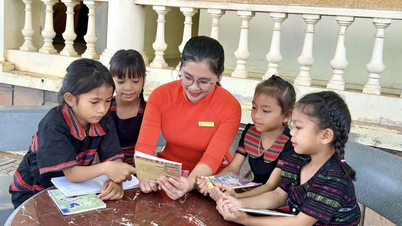
Ms. Nguyen Loan, a civics teacher at the Experimental Primary, Secondary, and High School, expressed her happiness at feeling her students' love for her subject: "Tomorrow is your class, we're really looking forward to it…", just that one sentence moved me deeply because the subject I teach is often considered dry and a secondary subject...
Ms. Nguyen Loan, Civics teacher (Experimental Primary, Secondary and High School)
There cannot be a single model that is right for every school.
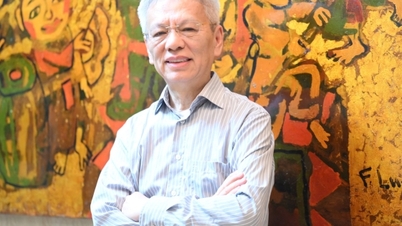
Professor Le Anh Vinh, Director of the Vietnam Institute of Educational Sciences, believes that the concept of a happy school is currently receiving much attention in Vietnam. Therefore, a systematic and comprehensive understanding of the elements that create a happy school is a matter of concern for the entire community. According to Professor Vinh, a happy school is one that develops according to the conditions and capabilities of each school, and there cannot be a single model that is right for all schools. However, it is essential to build a scientifically sound, modern, and standardized education program aimed at creating happy schools in Vietnam, in line with global trends. This is one of the important foundations for building a happy school where there is always a feeling of love, acceptance of diversity, respect for individuality, inclusion, nurturing of physical and mental health, and development of the intellect of each school, each teacher, and each student.
Source link



![[Image] Shipbuilders exposed to steel and record-breaking heat.](https://vphoto.vietnam.vn/thumb/1200x675/vietnam/resource/IMAGE/2026/06/04/1780545781745_ndo_br_img-5402-4683-jpg.webp)



















































![[Video] Sunset at Lap An Lagoon – Where the sun sets over the fishing nets](https://vphoto.vietnam.vn/thumb/1200x675/vietnam/resource/IMAGE/2026/05/31/1780192137701_beach-landscape-sea-water-nature-grass-745871-pxhere-com.jpeg)




































Comment (0)