

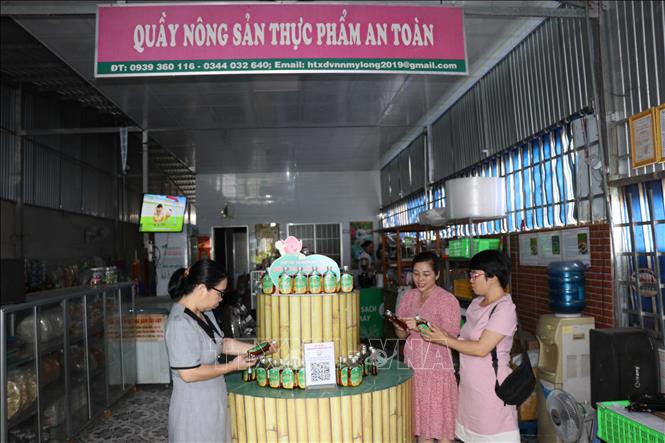
The community center model is organized according to the principles of "three no's" (no organizational structure, no budget funding, no physical facilities), "three self's" (voluntariness, self-management, self-decision-making), and "three togethernesses" (thinking together, working together, and aiming together). After seven years of formation and development, the community centers have expanded to 11 areas of activity, from livestock farming and agricultural production to business and tourism.
In My An Hung commune, Dong Thap province, there are currently four community centers: Tan Hoa Community Center, An Hung Community Center, Tan Hung Community Center, and Nhan Tam Community Center. These centers bring together members involved in production, livestock farming, and business; they also serve as forums for people to exchange experiences, share knowledge, and cooperate for development. The activities of these community centers have contributed to changing members' perceptions, shifting from a purely agricultural production mindset to an agricultural economy , fostering solidarity, voluntarism, self-reliance, and self-governance among the people in production and business.
Mr. Nguyen Dung Thach, Vice Chairman of the People's Committee of My An Hung commune, Dong Thap province, said: the community centers in the area play an important role in promoting the development of the local agricultural economy. Through networking activities, the centers have gathered members to exchange and share experiences in agricultural production, from seed selection, technology transfer and application to sharing information and experiences on how to achieve the highest production efficiency, contributing to the promotion of the local economy and society.
In the agricultural sector, the cooperative model also contributes to solving the problem of "linkage and cooperation" among households through the method of "joint purchasing and joint selling," helping to "reduce costs and increase quality," gradually forming raw material areas to serve processing and facilitating connections with businesses.
Mr. Vo Ba Tong, Chairman of Tan Hoa Association in My An Hung commune, shared: Tan Hoa Association was established on October 13, 2022, and currently has 30 members, mainly engaged in growing and trading ornamental flowers. Upon joining the association, members receive revolving capital support to invest in technical equipment, and regularly exchange and share experiences in growing and caring for ornamental flowers, helping to improve productivity and product quality.
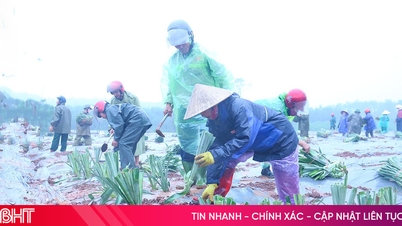
At Tan Hung Association, the main activity is taro cultivation. Members not only share production experiences but also receive support with seedlings, and cooperate in harvesting and selling their products. Mr. Nguyen Thanh Pho, the head of the association, said: Tan Hung Association currently has 85 members, who are always united and support each other in production and consumption, helping to reduce the problem of traders forcing down prices.
Besides economic benefits, these associations also help members change their perceptions, shifting from traditional, experience-based production to high-tech production methods that adhere to organic and biological processes; thereby creating agricultural products that meet biosafety standards and aiming for sustainable export.
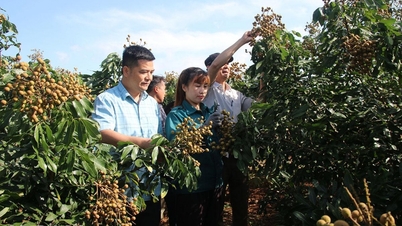
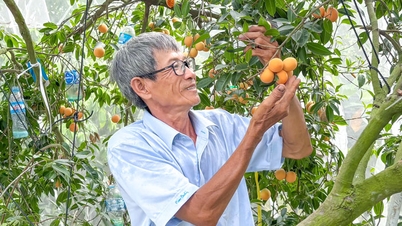
In Phu Huu commune, Dong Thap province, Hiep Tam Association currently has 57 members, mainly engaged in fruit tree cultivation. The Association's Management Board, chaired by Mr. Vo Van Hai, has focused on promoting and encouraging members to participate in collective economic models; sharing practical experiences and applying scientific and technological advancements in longan cultivation, helping to increase productivity and reduce investment costs. In particular, the Management Board has proactively linked with businesses to find stable markets for the products. As a result, the longan fruit of Hiep Tam Association members is becoming increasingly well-known, selling well at stable prices, bringing high income to the farmers.
In Cao Lanh ward, Tam Que Community Center has 45 members, meeting regularly on the 20th of each month with the participation of local government leaders, cooperatives, businesses, and scientists. Through these meetings, members exchange and update knowledge on mango production techniques according to VietGAP and organic standards; and at the same time, seek opportunities for cooperation, expand consumption markets, and find stable outlets for their products.
Community centers are gradually becoming hubs for community cohesion, acting as catalysts for socio-economic development in the locality. Through this model, a collective economic mindset is gradually formed, helping people shift from an agricultural production mindset to an agricultural economic mindset, strengthening the links between farmers and businesses, and between production and consumption.
After 7 years of establishment and development, the quality of activities of the community centers in Dong Thap province has been increasingly improved and its effectiveness has been affirmed, contributing positively to the socio-economic development of the locality, especially the movement to build new rural areas and promote the development of the agricultural economy towards a modern and sustainable direction.
Source: https://baotintuc.vn/kinh-te/diem-tua-gan-ket-nong-dan-phat-trien-kinh-te-nong-nghiep-20251022092549595.htm



![[Photo] Closing Ceremony of the 10th Session of the 15th National Assembly](/_next/image?url=https%3A%2F%2Fvphoto.vietnam.vn%2Fthumb%2F1200x675%2Fvietnam%2Fresource%2FIMAGE%2F2025%2F12%2F11%2F1765448959967_image-1437-jpg.webp&w=3840&q=75)





























![[OFFICIAL] MISA GROUP ANNOUNCES ITS PIONEERING BRAND POSITIONING IN BUILDING AGENTIC AI FOR BUSINESSES, HOUSEHOLDS, AND THE GOVERNMENT](https://vphoto.vietnam.vn/thumb/402x226/vietnam/resource/IMAGE/2025/12/11/1765444754256_agentic-ai_postfb-scaled.png)



































Comment (0)