

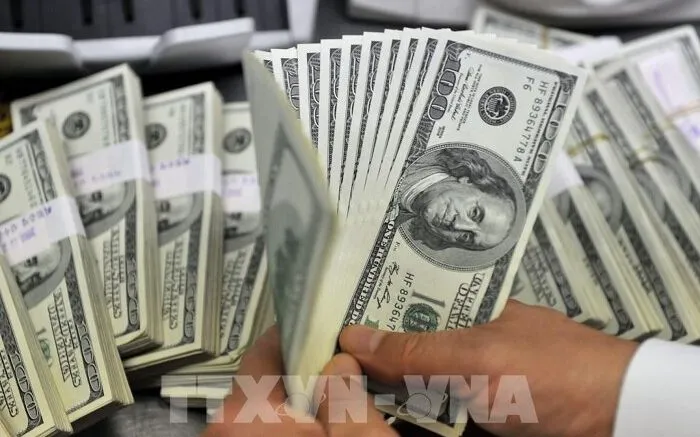
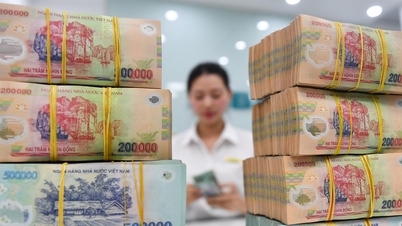
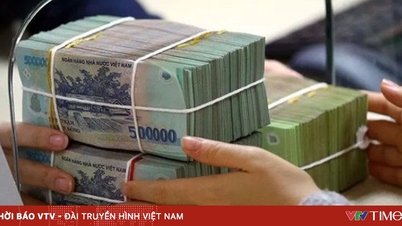
A bank employee checks US dollar bills at a bank in Seoul, South Korea. (Photo: AFP/VNA).
Instead of continuing to cut interest rates, central banks are now focusing on assessing the impact of the actions already taken on growth and inflation.
With the final monetary policy decisions of the year about to be announced, the overall picture clearly shows a lack of new impetus for an easing cycle in developed countries.
Following a 0.25 percentage point cut at its recent meeting, the US Federal Reserve (Fed) is signaling a "gloomy" outlook for any further interest rate reductions. This comes as the US economy appears to have weathered the tariff storm better than expected.
In the UK, the central bank (BoE) is expected to announce a further reduction in borrowing costs at its upcoming meeting. However, this could be one of the final moves in this easing cycle, drawing close scrutiny from investors regarding future policy signals.
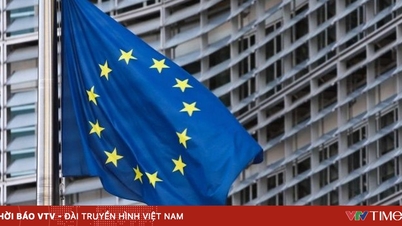
Meanwhile, the European Central Bank (ECB) is expected to release a more optimistic growth forecast, reinforcing the wait-and-see stance that policymakers have maintained since May. The focus of discussions at the ECB will revolve around a potential shift toward tighter monetary policy in the future. However, the Bank of Japan (BoJ) is predicted to take a contrasting approach, potentially raising interest rates.
In contrast to the policy narrative in developed economies, the trend in some emerging markets is less clear. Several central banks, from Mexico to Thailand, are projected to continue their easing cycles next week.
Source: https://vtv.vn/dong-luc-cat-giam-lai-suat-toan-cau-hut-hoi-100251215153909948.htm
![[Photo] Prime Minister Pham Minh Chinh receives Lao Minister of Education and Sports Thongsalith Mangnormek](/_next/image?url=https%3A%2F%2Fvphoto.vietnam.vn%2Fthumb%2F1200x675%2Fvietnam%2Fresource%2FIMAGE%2F2025%2F12%2F16%2F1765876834721_dsc-7519-jpg.webp&w=3840&q=75)
![[Photo] Prime Minister Pham Minh Chinh receives the Governor of Tochigi Province (Japan)](/_next/image?url=https%3A%2F%2Fvphoto.vietnam.vn%2Fthumb%2F1200x675%2Fvietnam%2Fresource%2FIMAGE%2F2025%2F12%2F16%2F1765892133176_dsc-8082-6425-jpg.webp&w=3840&q=75)
![[Live] 2025 Community Action Awards Gala](/_next/image?url=https%3A%2F%2Fvphoto.vietnam.vn%2Fthumb%2F1200x675%2Fvietnam%2Fresource%2FIMAGE%2F2025%2F12%2F16%2F1765899631650_ndo_tr_z7334013144784-9f9fe10a6d63584c85aff40f2957c250-jpg.webp&w=3840&q=75)
![[Image] Leaked images ahead of the 2025 Community Action Awards gala.](/_next/image?url=https%3A%2F%2Fvphoto.vietnam.vn%2Fthumb%2F1200x675%2Fvietnam%2Fresource%2FIMAGE%2F2025%2F12%2F16%2F1765882828720_ndo_br_thiet-ke-chua-co-ten-45-png.webp&w=3840&q=75)







































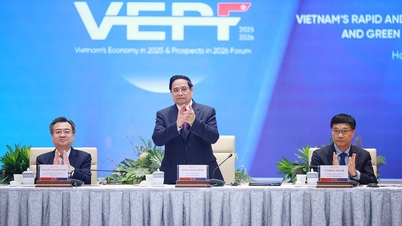
![[Photo] Prime Minister Pham Minh Chinh attends the Vietnam Economic Forum 2025](https://vphoto.vietnam.vn/thumb/402x226/vietnam/resource/IMAGE/2025/12/16/1765893035503_ndo_br_dsc-8043-jpg.webp)




















Comment (0)