

Today, I live in the city of a thousand flowers, also known as the highland city, the city of mist, the tourist city… whatever you call it, it's all fitting. When winter arrives, the cool weather in Da Lat brings about so many emotions and feelings.
Dalat in winter is perhaps the most beautiful season, with lovely weather and the most spectacular natural scenery. This is also the time of year with many festivals, making Dalat, a city with a European style, perfect for experiencing a memorable Christmas and New Year. I am currently a civil servant residing in the city, but I was born and raised in the countryside – a true farmer; a literature student who has just left the plow and hoe, as my relatives often call me. Therefore, on these dry, chilly days, I miss my roots, I miss my beloved countryside; where in the evenings I would sit by the warm fire and childhood memories would flood back. Some memories come and go, but many are unforgettable. Among them, I remember most vividly the pot of "corn with lime" that my grandmother used to cook for the whole family when winter arrived.
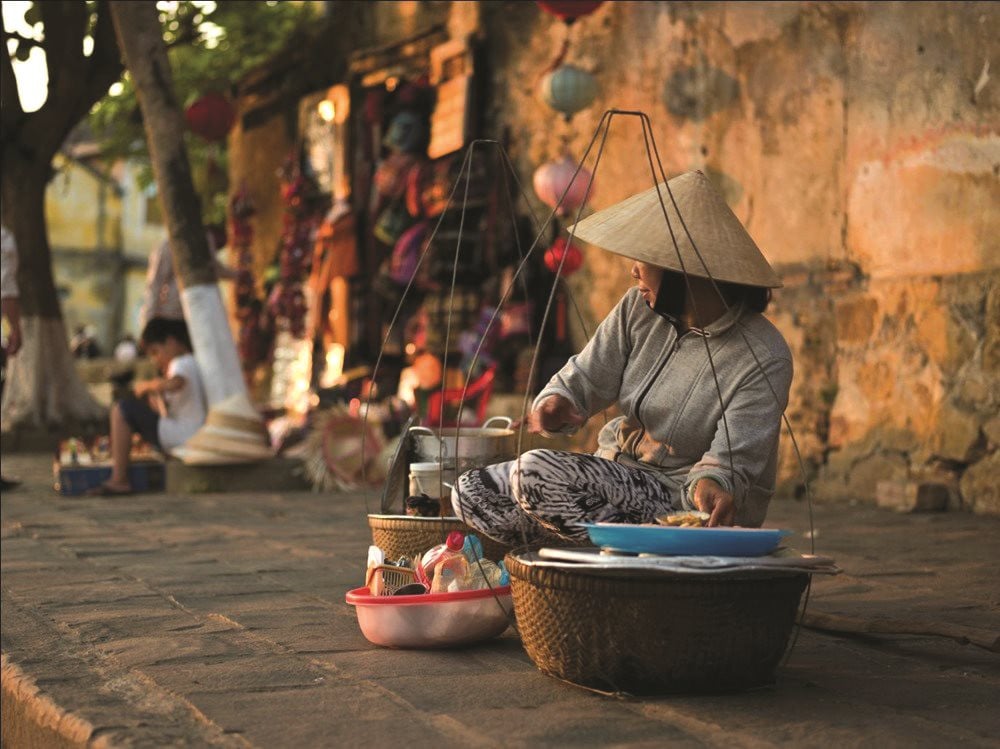
During the subsidy period of the last century, there were no gas stoves, electric rice cookers, or pressure cookers in the house... so cooking a pot of lime-coated corn porridge required a lot of effort, firewood, and time. First, select dried white corn cobs, remove the kernels, and soak them in water with an appropriate amount of betel lime for 5 to 6 hours. Put them in a pot, boil them over a fire until the kernels are soft; then remove them and rub off the husks and the thin, white outer layer of the kernels before adding water to simmer the corn. A little black beans can be added to cook together. With my grandmother's method, when eaten with a little salt and peanuts, the sticky corn porridge has a nutty flavor from the black beans, a chewy and fragrant texture from the corn kernels, and the richness of the peanuts, all blended together, making me crave it even now. In those years of poverty, when there wasn't enough rice to eat, eating lime-coated corn porridge was like a supplementary meal. But it was also the main food for large, struggling families, especially those with little land and insufficient rice to eat. They had to go to ethnic minority areas to buy it or exchange something like tobacco or salt for dried corn to store as a staple food. Because there were many siblings in the family, my grandmother usually cooked a large quantity of dried corn, enough for two meals a day, and during the lean months, she might make it once a week. At first, eating it with salted peanuts, the salty, fatty, sweet, and nutty flavors were delicious, but later we got tired of it. My siblings and I took turns scooping up the fish broth from the pot and pouring it over the corn in a bowl—that was enough for a meal, to get us through a day in a time of scarcity. Most people born in the 1960s or early 1970s who are now adults in the city have at least lived and grown up in the countryside; they know what the countryside is like. So when they hear about sticky rice with corn or dried corn, it's not unfamiliar to them. Corn is grown in hilly areas or sloping, non-flooded wetlands, planted at the beginning of the rainy season. When the corn ears are fully formed, the plants can be cut, the ears picked, boiled, and sold or used as a family meal. The remaining ears are left in the garden, the tops of the ears are cut off (one ear per plant) so that the plump ears continue to absorb nutrients until they are mature and dry, then harvested and hung on a rack or stored in a dry place for use throughout the year. There are many types of corn, but during the subsidy period, the most common were glutinous corn and hybrid corn. Glutinous corn has small ears, but the kernels are soft, chewy, fragrant, and delicious. It is short-season and easy to cultivate, so farmers preferred to grow it more to alleviate hunger. Hybrid corn has large ears, a long growing season, and can be grown in hilly areas. People often planted it in large quantities on their fields, harvesting it in large quantities, which served well for livestock. On days when my grandmother made sticky rice with lime-coated corn, the whole family would gather around the fire, preparing baskets and basins to coat the corn; Especially during the early winter months, there's an overwhelming warmth of family atmosphere. That atmosphere has lasted for over 40 years, but when I think back, my heart still aches, remembering a time of poverty.
Yet today, sticky rice with corn has become a specialty; a breakfast dish found everywhere from cities to rural areas. It's suitable for all social classes and age groups. It's convenient, yet provides a diverse range of nutrients beneficial to human health. According to functional analysis, each serving of sticky rice with corn contains an average of 8.3g of fat, 51.3g of carbohydrates, and 8.2g of protein. In addition, this food contains a variety of vitamins and minerals such as vitamins C, B1, B5, A, D… along with zinc, copper, sodium, magnesium, calcium… For corn, since ancient times, farmers have expressed it in folk songs about family affection and social relationships, specifically: "Better to eat corn with lime than to be rich but orphaned." In winter, remembering a pot of corn with lime reminds me of a time of poverty, but one that is truly unforgettable because of the love and relationships within the community and clan of my hometown.
Source
![[Photo] National Assembly Chairman Tran Thanh Man working with the Standing Committee of the Law and Justice Committee](https://vphoto.vietnam.vn/thumb/1200x675/vietnam/resource/IMAGE/2026/05/21/1779378929214_ndo_br_1-4610-jpg.webp)



![[Photo] General Secretary and President To Lam presides over a working session with the Central Policy and Strategy Committee on the development of the materials industry.](https://vphoto.vietnam.vn/thumb/1200x675/vietnam/resource/IMAGE/2026/05/21/1779359935432_a3-bnd-3129-1412-jpg.webp)
















































































Comment (0)