

The gap between perception and experience
In many schools in Dak Lak province, heritage education is integrated through the Local Education subject, experiential activities, thematic workshops, and extracurricular activities. However, practical teaching experience shows that there are still many bottlenecks that need to be frankly addressed before heritage truly becomes part of school life.
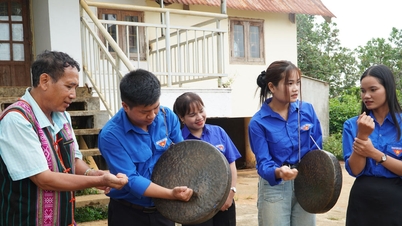
According to a survey conducted by the Dak Lak Department of Education and Training among school administrators, teachers, and students, the majority of students expressed interest and pride in learning about the cultural values of the Central Highlands. They easily recognized familiar symbols such as: the cultural space of gong music, traditional festivals, costumes, and cuisine of the indigenous ethnic groups...
However, the survey also revealed uneven levels of understanding among students, with a significant gap between positive attitudes and actual knowledge. A considerable number of students struggled with in-depth content such as historical sites, epics, rhyming verses, and traditional crafts.
This shows that heritage education in many schools still focuses on introduction and promotion, lacking opportunities for students to experience, practice, and explore heritage directly.
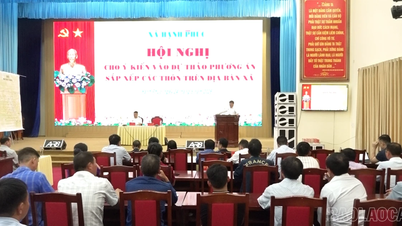
Based on that reality, Dr. Le Thi Thao - Head of the Department of General Education, Dak Lak Department of Education and Training, said that the department organized a seminar "Exchanging views on the current state of teaching and organizing educational activities on the cultural heritage values of the Central Highlands for high school students" to clearly identify the current situation and point out difficulties and limitations in the implementation process at the grassroots level.
According to Dr. Le Thi Thao, educating about the cultural heritage values of the Central Highlands is identified as an important content in the 2018 General Education Program, especially through the Local Education subject and experiential activities. Many schools have proactively developed plans, organized thematic workshops, and integrated heritage content into lessons and educational activities. However, the implementation still lacks a systematic approach, is not truly suitable for the psychological characteristics of the age group, the actual conditions of each locality, and the organizational capacity of the teaching staff.
"The students' positive attitude is a welcome sign, but without opportunities for experiential learning and practical application, heritage education can easily remain just a slogan," emphasized Dr. Le Thi Thao, adding: "The core issue now is not whether or not heritage education exists in schools, but how to organize it effectively, sustainably, and with depth."
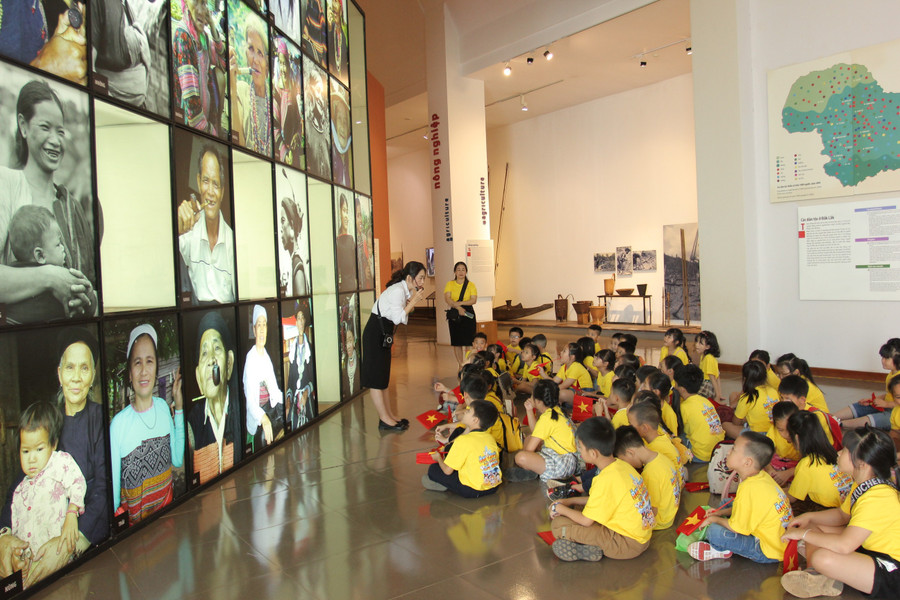
To keep heritage alive in students.
From the direct perspective of a classroom teacher, Ms. Nguyen Ngoc Thuy - Head of the Literature Department, Phan Chu Trinh Secondary School (Buon Ma Thuot ward), believes that integrating cultural heritage education into the Literature subject and school educational activities is entirely feasible. Through folklore, epics, and rhyming verses, teachers can help students develop their language skills while fostering a love for traditional culture.
However, according to Ms. Thuy, the major difficulty currently is the lack of specialized materials and specific guidelines for teachers to integrate heritage content systematically, avoiding mere formality. In addition, the conditions for organizing experiential activities and learning projects related to heritage are limited, especially in schools in disadvantaged areas.
Meanwhile, from a school management perspective, Mr. Nguyen Van Hung, Deputy Principal of Hong Duc High School (Dak Lak), noted that the 2018 General Education Program has created a favorable "framework" for heritage education, but its implementation in many places remains heavily theoretical. Field trips, visits, and learning projects related to heritage are not organized regularly due to limitations in funding, time, and facilities.
Furthermore, the coordination between schools, families, the community, and folk artisans is not yet truly strong. Many cultural values are vibrantly present in villages, but have not been effectively utilized in the school environment. "To effectively educate about heritage, students must be able to 'touch' the heritage, to hear, see, participate, and experience it," Mr. Nguyen Van Hung emphasized.
From a cultural management perspective, Mr. Tran Quang Nam, Deputy Director of the Dak Lak Provincial Museum, shared that educating high school students about cultural heritage values is an interdisciplinary task, not solely the responsibility of the Education sector. In particular, the Culture, Sports and Tourism sector, and cultural institutions such as museums and historical sites, play a crucial role.
According to Mr. Tran Quang Nam, students are the beneficiaries of heritage education, while the "product" provided by the Culture sector is knowledge, stories, and vibrant values about Central Highlands culture. Therefore, cultural units need to proactively coordinate with schools, provide learning materials and documents, and organize visits and experiences so that students can access heritage in a visual and lively way.
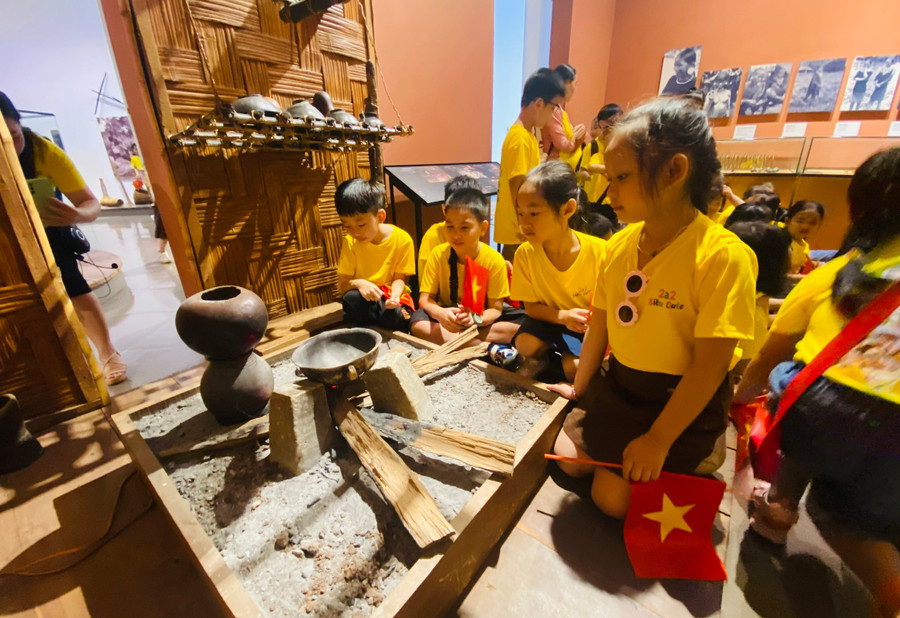
We need a comprehensive, long-term, and focused solution.
Based on school practices and the opinions of administrators, teachers, and experts, it is clear that educating about the cultural heritage of the Central Highlands in secondary schools faces many opportunities but also numerous challenges. For heritage to truly become a "living material" in education, a comprehensive approach involving multiple solutions is necessary.
According to the leaders of the Dak Lak Department of Education and Training, first and foremost, it is necessary to continue improving the curriculum and teaching materials for heritage education in an open, flexible manner, suitable for each educational level and local characteristics. More attention should be paid to training and developing teachers on methods of organizing teaching and learning related to heritage.
Furthermore, it is necessary to strengthen coordination mechanisms between the education sector and the cultural sector, museums, historical sites, folk artisans, and the community. Socializing resources and mobilizing the participation of businesses and social organizations is also a direction that needs to be promoted.
More importantly, heritage education needs to be seen as a long-term process that contributes to shaping the character and cultural identity of students. When schools, families, and society work together, the cultural heritage of the Central Highlands will not only be preserved but will also continue to spread and thrive in school life and among today's young generation.
According to a survey by the Dak Lak Department of Education and Training (150 students and 200 administrators and teachers from secondary schools in the province), areas with a high level of understanding tend to focus on easily accessible, symbolic, and widely publicized elements such as: the Central Highlands Gong Festival, traditional longhouse architecture, the coffee festival, and traditional dishes, accounting for over 76%. Meanwhile, historical sites such as Lac Temple and the CADA plantation receive less attention due to students' limited opportunities for field trips.
Source: https://giaoducthoidai.vn/dua-hoc-sinh-cham-vao-di-san-post761906.html






















































































Comment (0)