

 Viewed from above, the circular brick kilns are embraced by lush orchards and gardens. The entire landscape is adorned with passing boats, creating graceful fan-shaped patterns on the water's surface.
You can take a Vietnam Airlines flight from Hanoi to Can Tho, then hire a car from the airport to travel another 50km to Mang Thit district, Vinh Long province, or take the highway for about 150km from Ho Chi Minh City.
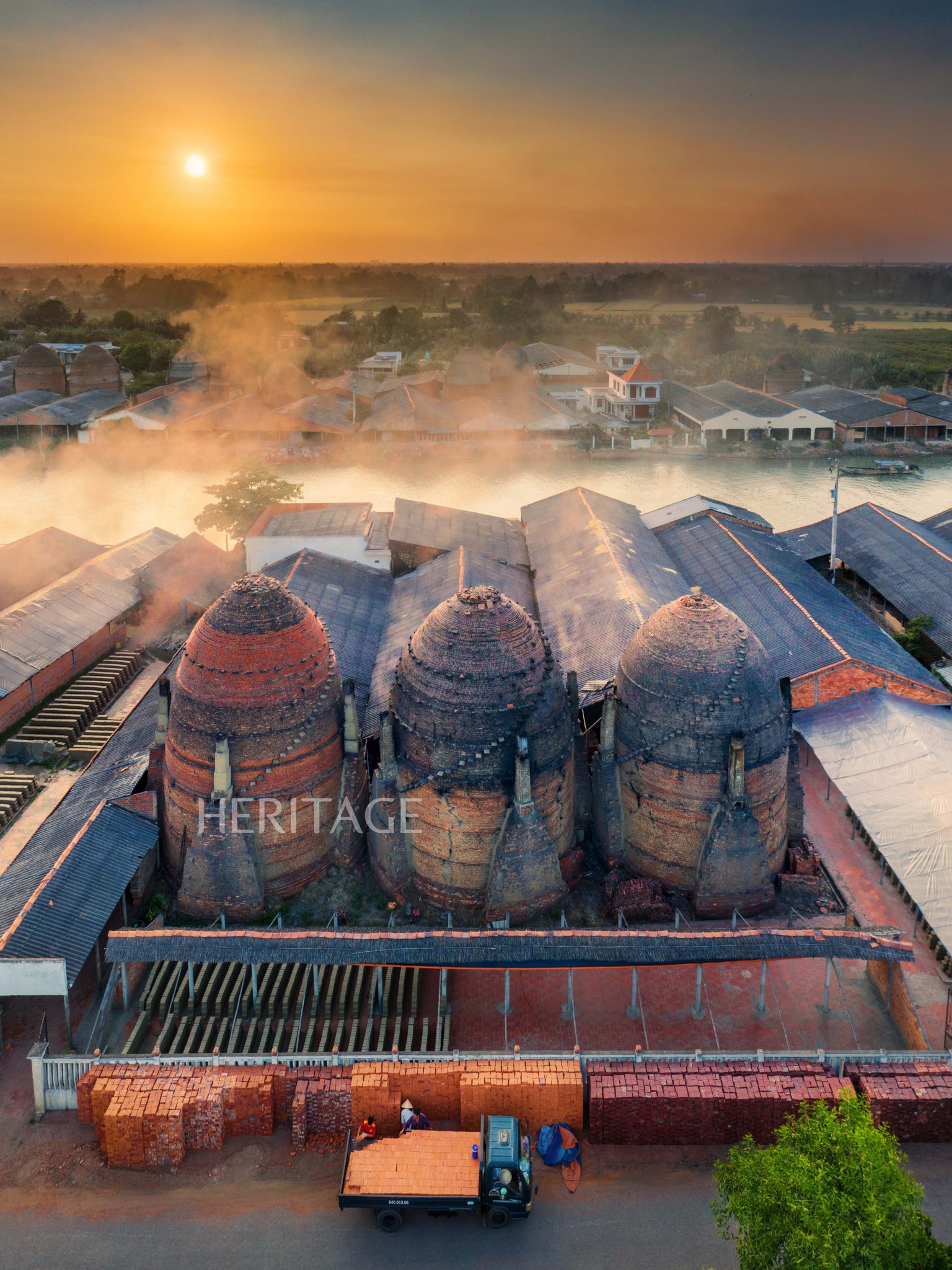
 The beauty of Mang Thít, the "red kingdom," lies in the harmonious blend of the unique shapes and structures of its round kilns and the picturesque riverine and orchard landscapes of the Mekong Delta.
  Uncle Tam Thanh, 70 years old, residing in Cai Can hamlet, My Phuoc commune, recounts that the brick and tile making profession in Vinh Long originated from people of Chinese descent who came here about 100 years ago. This is likely due to the high quality of the clay – the main raw material used for making bricks and tiles – found here.
  Perhaps that's why, along the lower Mekong River, the Mang Thít area has the highest concentration of brick kilns. Other areas like Sa Đéc, Bến Tre, and Cần Thơ also have scattered kilns, but on a scale of only a few dozen to 200 kilns.
  The secrets of brick and tile making have been passed down through generations, enriching families in Mang Thít and creating jobs for many people from other provinces.
  In the 1990s, the number of brick kilns in Mang Thít reached nearly 3,000, concentrated mainly in the four communes of Mỹ An, Mỹ Phước, Nhơn Phú, and Hòa Tịnh, creating a striking landscape.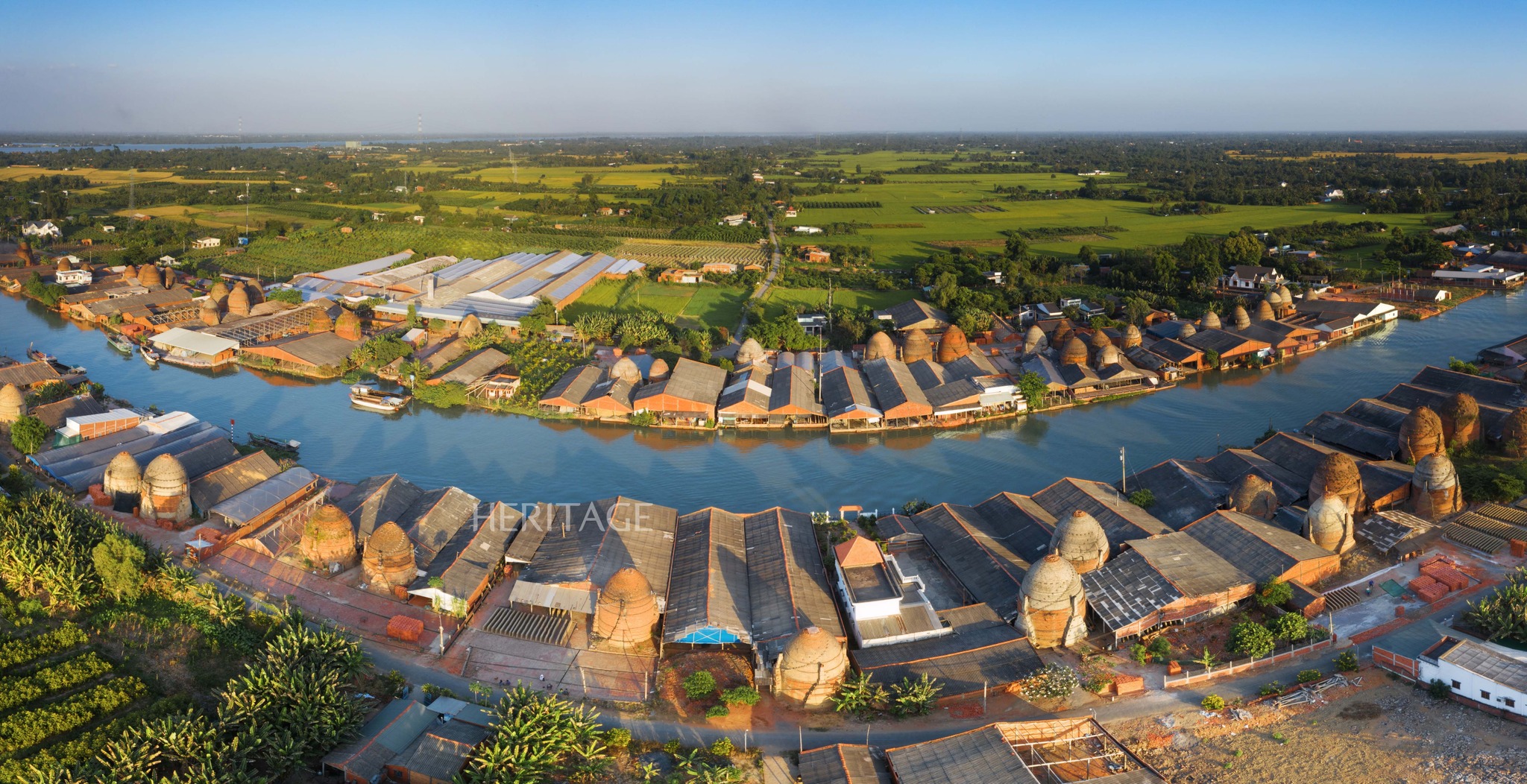
However, since the late 2000s, local materials such as rice husks for fuel and clay have gradually become expensive. From 2010, local authorities began dismantling manual brick kilns due to negative environmental impact assessments. Most young people left home to work in industrial zones. The number of brick kilns disappeared rapidly; today, only about 1,000 remain, concentrated mostly in the Thầy Cai canal area. Weeds and vines grow over the kilns that once emitted smoke. Only a very small number of kilns are still in operation.
![[Photo] Voting for the 14th Central Committee of the Communist Party](/_next/image?url=https%3A%2F%2Fvphoto.vietnam.vn%2Fthumb%2F1200x675%2Fvietnam%2Fresource%2FIMAGE%2F2026%2F01%2F22%2F1769082445591_chi-9961-jpg.webp&w=3840&q=75)

![[Image] The 14th Party Congress implements the content on personnel work.](/_next/image?url=https%3A%2F%2Fvphoto.vietnam.vn%2Fthumb%2F1200x675%2Fvietnam%2Fresource%2FIMAGE%2F2026%2F01%2F22%2F1769088146286_ndo_br_1-6165-jpg.webp&w=3840&q=75)


Comment (0)