


Without rhyme, rhythm, or musical accompaniment, through a wonderful improvisation, the folk singing and storytelling sessions of the Co Tu village elders unfold with great enthusiasm and fascination, transporting listeners to a dreamy space filled with metaphorical details.
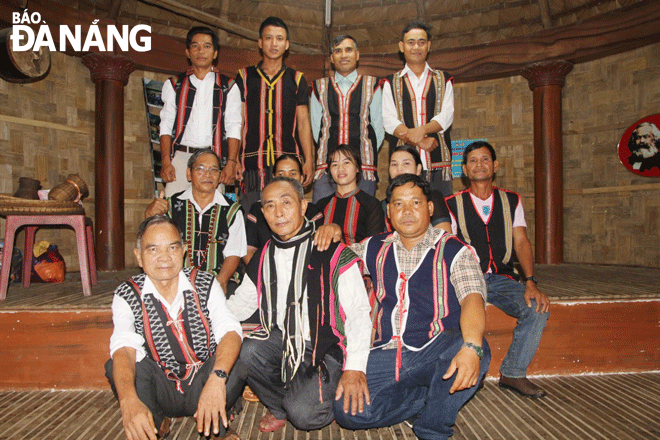 |
| Village elder Bui Van Sieng (front row, left) will be responsible for teaching the folk songs to his own people to preserve the folk melodies of his homeland. Photo: PV |
Use this example to understand the meaning of the other.
Like many conversations, there's always a beginning. The person who starts the singing session offers an opening, prompting both sides to engage. The first singer always speaks about morality and the spirit of unity among their people, then sings about the issue raised for discussion and agreement. The Katu people don't use philosophy to analyze things, but rather metaphorical imagery and personification to discuss the issue. Therefore, both the singer and the listener must grasp the meaning to understand what the singer is talking about.
Weddings are important occasions for the Katu people to sing and recite folk songs. After receiving guests, the host (usually the groom's family) prepares a feast to welcome guests or elders. The host initiates the conversation with a few verses about the purpose of the gathering. At the beginning of the recitation, a representative, usually a respected and experienced elder, will spontaneously offer humble words, saying that the esteemed guests have nothing to offer except this simple glass of wine, and hoping the guests will not disdain their kindness. The guests respond by thanking the host for the thoughtful and enthusiastic preparation of the food and fine wine, saying they don't know how to repay the host's generosity. Wine is poured and offered according to rank, and they drink and talk.
If the bride's family demands gifts such as cattle, pigs, gold, and silver, the groom's family will either comply or negotiate to reduce the amount of gifts. In this way, each issue is raised, discussed, and agreed upon by both sides. After discussing the wedding, they can talk about the harvest, the forest and fields, and the lifestyles of both families. Ms. Bich Thu, the vice principal of Hoa Bac Kindergarten, is a singer of many songs and folk melodies of her people, yet she asserts that singing and reciting these songs is very difficult. She doesn't fully understand many of the metaphorical imagery used by the singers, especially those who use clever and detailed allegorical language.
Having interacted with the Katu people many times, I thought they only sang and recited folk songs to mourn the dead. But that's not the case. Elder Bui Van Sieng of Gian Bi village, Hoa Bac commune, said he has composed over 50 folk songs to preserve. Actually, those are 50 folk songs covering a wide range of topics. For example, when singing about weddings, each ceremony, like the Kinh people's wedding, from the engagement to the wedding, is a different story. And the elders have so many stories to tell and sing about together over a bowl of wine.
When I went to Ta Lang, a family had a death, and the elders of the village came to offer their condolences. They sang to each other, sharing their grief with the family, perhaps without needing any response. They sang about the deceased's life, how they were connected to the village and the mountains from birth to death, how they got married and had children… These folk songs spoke of a life of love and sacrifice for others, similar to the eulogies of the Kinh people. The singers were both relatives and close neighbors of the deceased. Having witnessed and understood the life of the deceased, their songs were sung with empathy, sharing and remembering the departed.
Elder Bui Van Sieng believes that storytelling and singing always stimulate the listener, helping them understand the story thoroughly, sincerely, and empathetically, sharing the joys and sorrows of daily life. Singing always follows storytelling to enhance and complement it. For the Co Tu people, storytelling and singing are like call-and-response singing in Quan Ho folk songs, becoming an art form in their cultural and artistic life from ancient times to the present day.
The "logic" here isn't about using philosophy to analyze things, but rather about using metaphors, personification, and comparing one thing to another to understand the meaning of another. It's also seen as an art form that tests the skill of elders within and outside the village, between host and guest. It expresses the thoughts and intentions of the singer, while simultaneously paving the way for the guest's response. The difficulty of singing "Lý" lies in the fact that it doesn't follow any standard or set structure; it depends on the improvisation of the singer, their accumulated experience, level of understanding, and knowledge. Because of its inherent difficulty, only a select few can sing it. Many young people in Tà Lang and Giàn Bí don't fully understand the content of "Lý" songs.
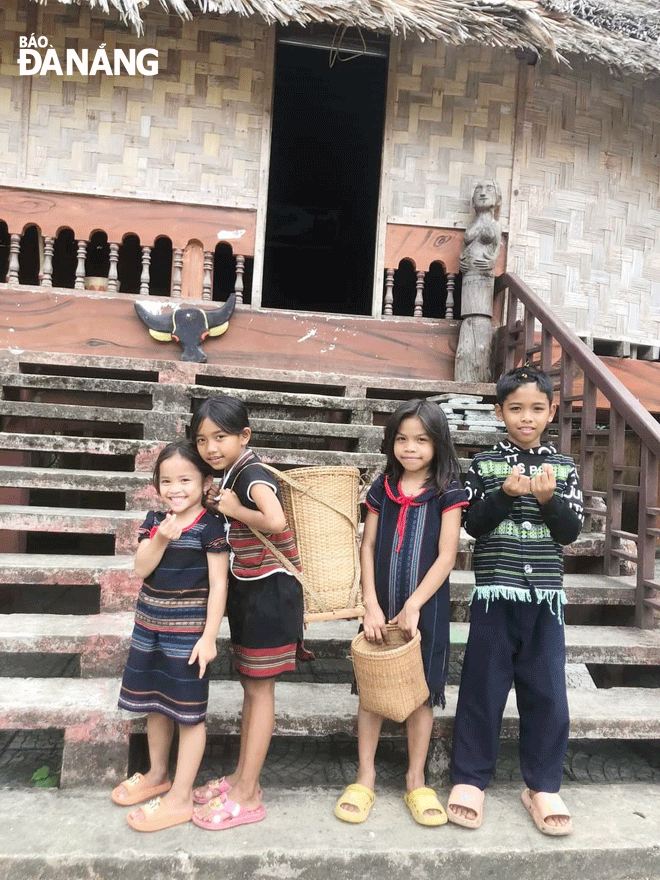 |
| Younger generations of the Katu people will continue to learn and preserve the tradition of reciting and singing folk songs, thus preserving the cultural identity that has been passed down for hundreds of years. Photo: PV |
Restoring and transmitting folk singing
The art of reciting and singing folk songs has different ways of expression and its own unique meaning. Currently, only the elderly in the villages of the Co Tu people can recite and sing folk songs well and explain their meaning correctly so that they can understand each other. Village elder Sieng counted fewer than twenty people who know how to sing folk songs in Ta Lang and Gian Bi. This shows that to recite and sing folk songs requires arduous training, learning, and accumulating life experiences and the experience passed down from their ancestors. It's not just about training singers; it's also necessary to train the Co Tu people to understand the content of the folk songs and recitations, so that they can pass on pride in their ethnic cultural identity, encourage young people to learn, and preserve their ancestral cultural traditions.
Elder Bui Van Sieng said he has recorded over 50 folk songs. That may not be the final number, as many elderly people still haven't had the opportunity to gather and sing these songs in a systematic way to preserve them. Elder Sieng wishes he could organize classes to teach young people how to sing folk songs, or at least teach them to understand the content of the songs, otherwise a part of the cultural heritage risks being lost. Good news for Elder Sieng, not just in terms of cultural preservation, but also in developing culture to enhance the capacity for community tourism for local people, is that Hoa Vang district will soon open training courses to teach folk singing and folk song performance to serve tourists participating in community exchange programs. The classes will invite experienced artisans and village elders to teach. Regardless of the aspect, singing and reciting folk songs will have a "way out" to be preserved and passed on to future generations, so that more people in Ta Lang, Gian Bi, and other places can know how to sing folk songs, thus preserving the traditional culture of the Co Tu people.
Since the launch of the project "Developing policies for the preservation and promotion of the Co Tu ethnic culture in Da Nang city from 2022 to 2030" in 2022, traditional dances such as Tung Tung Za Za and traditional brocade weaving have been largely preserved. Now it's the turn of folk singing and storytelling. The project can be seen as a driving force supporting the Co Tu people in the city, both in terms of awareness and practical life, to gradually preserve, protect, and promote their unique cultural values. The project is implemented in three communes: Hoa Bac, Hoa Phu, and Hoa Ninh in Hoa Vang district, with the goal of preserving the traditional culture of ethnic minorities, creating momentum for cultural development linked to tourism, poverty reduction; building a healthy cultural life and environment; combating backward customs and social evils in ethnic minority areas; and diversifying cultural life. Supporting research, collection, documentation, and communication about the traditional cultural values of the Co Tu ethnic group; developing content, publishing books, documentaries, and publications about the traditional culture of the Co Tu people. Building a database of tangible and intangible cultural heritage of the Co Tu community, such as festivals, customs, folk beliefs, folk arts, folk knowledge, clothing, art, cuisine , and traditional medicine...
| According to the Project "Developing policies for the preservation and promotion of the Co Tu ethnic culture in Da Nang city from 2022 to 2030", by 2030, 100% of the traditional cultural institutions of the Co Tu people will be preserved and operate effectively; 100% of the beautiful traditional festivals of the Co Tu people will be restored and preserved through documents, images, and films; the brocade weaving craft will be restored and developed; 100% of artisans from the Co Tu ethnic group will be supported in transmitting and training successors; and 100% of cultural officials in communes inhabited by the Co Tu people will receive training and professional development in preserving and promoting traditional cultural values associated with tourism development. |
HOANG NHUNG
Source link





























































Comment (0)