

Keeping the passion for the craft alive in the small kitchen.
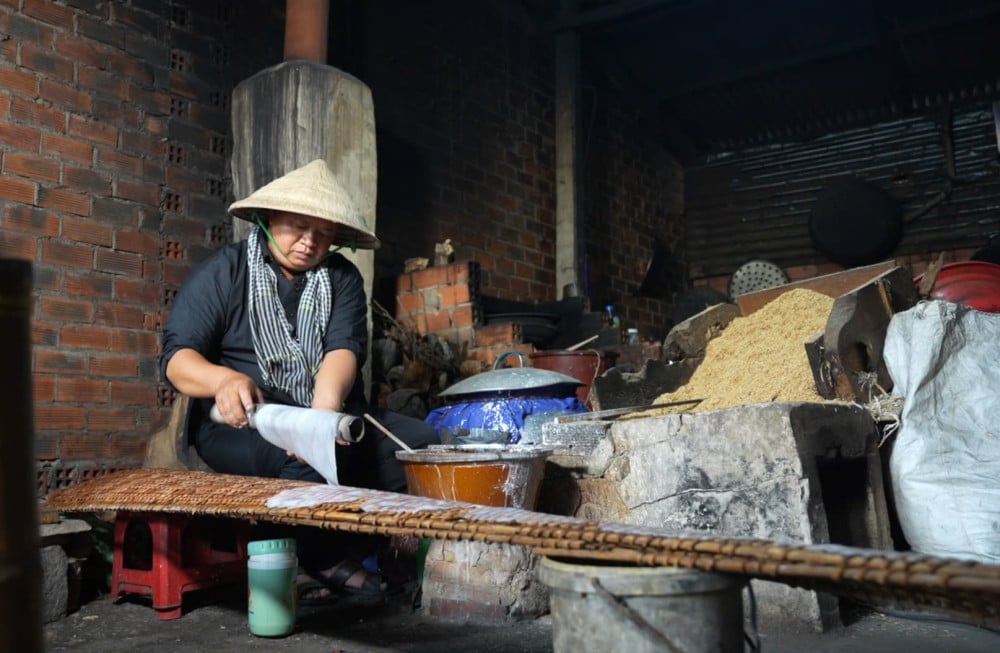
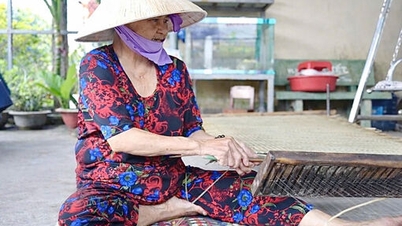
Traditional Trang Bang sun-dried rice paper must be made in two layers, lightly grilled, and then sun-dried once before being served to customers (Photo: provided by the local authorities).
In Trang Bang, it's not too difficult to find a family making rice paper, but to find the true origin of Trang Bang's sun-dried rice paper, we were directed to Loc Du neighborhood, Trang Bang ward, where there are families who have been making sun-dried rice paper for three generations.
In his small, tidy kitchen, Mr. Le Van Hung recounted that this was where he and his mother (artisan Pham Thi Phai) used to make rice paper. As a child, his mother assigned him the tasks of lighting the stove and drying the rice paper, and gradually passed on to him the secret of making sun-dried rice paper. “Sun-dried rice paper is different from other types of rice paper because it must be made in two layers. After being lightly baked and then sun-dried, the rice paper doesn't tear. But when making two layers, the worker must have enough experience to accurately time the cooking of the first layer before applying the second, ensuring the two layers of batter blend together, resulting in a thick yet evenly cooked rice paper,” Mr. Hung explained.
As one of the few people diligently preserving the traditional craft of making sun-dried rice paper, Mr. Hung knows by heart the "secrets" to making delicious rice paper, from choosing the right type of rice simply by scooping it up in his hand to mixing the flour and "observing" the weather to know if it's sunny, rainy, or foggy. For him, it's all about experience, meticulousness, and the heart of a traditional sun-dried rice paper maker.
Every day, when the weather is good, Mr. Hung starts his workday before dawn to make the rice flour batter he prepared the day before. The finished rice sheets are then sun-dried, grilled over charcoal, and then exposed to dew again to achieve the desired softness and flexibility. It sounds easy and quick, but making a finished product is extremely meticulous, because too much sun, too little dew, or the wrong oven temperature will waste all the hard work of the past few days.
Knowing it's hard work, Mr. Hung can't give up the craft of making sun-dried rice paper, nor does he want to "upgrade" from a rice husk stove to an electric one to save effort and increase productivity. He confided: "Before, I worked in another profession, but when my mother got old and frail, I wanted to return to preserve the craft that my grandmother passed down to my mother, a craft she has diligently preserved her whole life, for 40 years now. Every time I sit in this kitchen making rice paper, I often remember the days I worked with my mother and listened to her advice to keep the craft alive." And now, Mr. Hung is still diligently following his mother's instructions. His kitchen still burns brightly on sunny days with enough dew. During Tet (Lunar New Year), he sometimes has to stay up all night making rice paper.
And because he cherishes his craft, he wholeheartedly shares and passes on the art of making sun-dried rice paper to anyone who wants to learn. He knows that, with its arduous manual labor and meager income, the traditional sun-dried rice paper making craft isn't really appealing to young people in his hometown. "I only hope that if a training class can be organized, I'm willing to teach, completely free of charge, just so the sun-dried rice paper making craft of Trang Bang doesn't fade away," Mr. Hung said.
The person who "keeps the soul" of the profession alive.
Naturally, due to market forces and societal demands, the number of people practicing the traditional sun-dried rice paper making craft is no longer as large as before. Instead, many young people are starting to apply technology to the production process, and with their creativity, they are creating various types of rice paper to meet customer preferences.
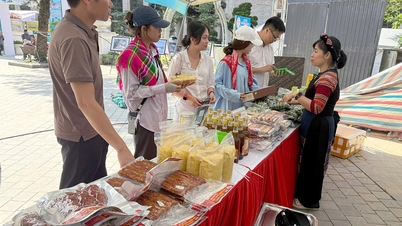
Today, Trang Bang rice paper is not just the traditional sun-dried rice paper eaten with boiled meat and raw vegetables, but also countless other types of rice paper have emerged thanks to the sophisticated combination of rice paper and spices, especially chili salt, another specialty of Tay Ninh . Therefore, when visiting Trang Bang, tourists can not only enjoy the famous local specialty but also experience many other types of rice paper, diverse in variety and flavor.
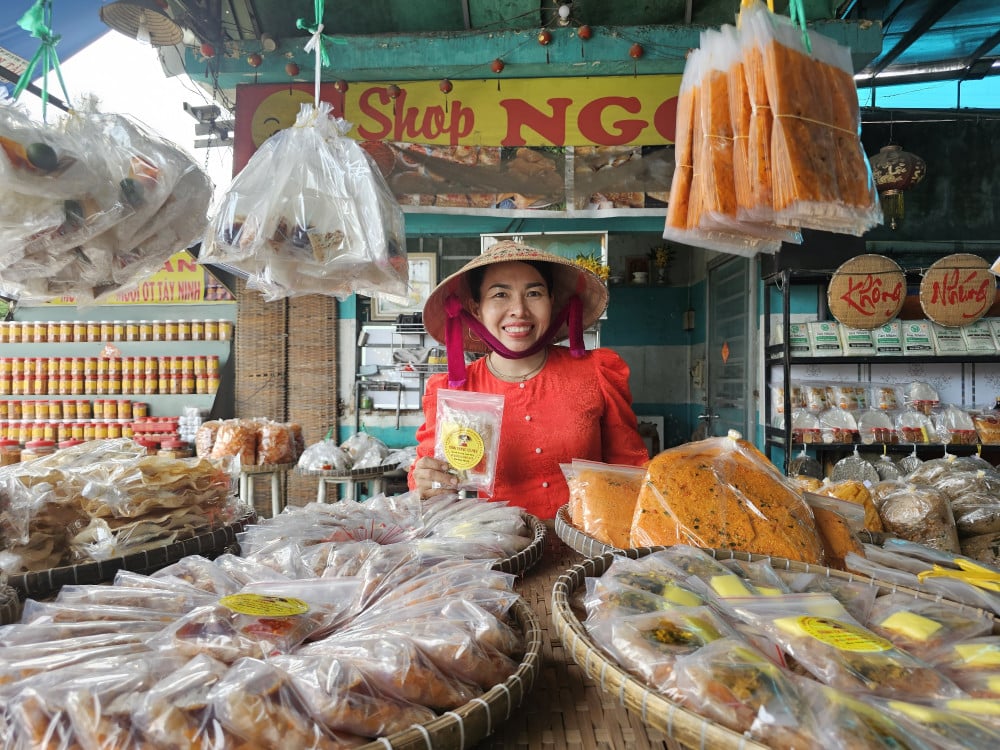
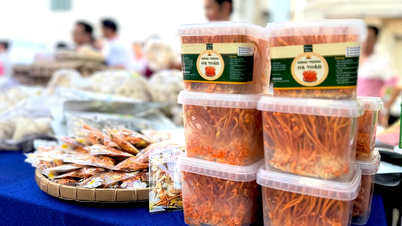
Most of the rice paper products at the shop are created by Mr. Vo Minh Cong and his friend, Ms. Luong Thi Men, by combining rice paper with various spices.
Having grown up in Trang Bang and witnessed his relatives and neighbors making rice paper since childhood, Mr. Vo Minh Cong (residing in An Khuong neighborhood, An Tinh ward, formerly part of Trang Bang town) nurtured the dream of spreading his hometown's rice paper to more places. Seeing many rice paper makers reluctantly giving up their craft, Mr. Cong knew that to preserve the rice paper making tradition, he first needed to connect customers and local rice paper makers. Acting on this idea, he and his friend, Ms. Luong Thi Men, started a business selling this local specialty. Understanding consumer preferences, Mr. Cong and Ms. Men created many different types of rice paper: kumquat rice paper, tamarind rice paper, butter rice paper, cheese rice paper, etc. From there, the Co Men rice paper brand was born, becoming a favorite among customers near and far, especially young people.
Although not the traditional version, the mixed rice paper is also sun-dried using the correct technique to achieve the desired softness, chewiness, and sweetness of the night dew. To offer such a diverse range of rice paper and seasonings, artisans like Mr. Cong and Ms. Men don't hesitate to stay up late and wake up early, meticulously preparing each ingredient to ensure that the seasonings and accompaniments are always high-quality, enhancing the flavor of this traditional dish.
Mr. Cong shared: “I think that to preserve the traditional craft of my hometown, those who make rice paper must first be able to make a living from their craft. And doing business honestly with our local specialty will help people near and far learn about our hometown, increase the value of the product, and create income for local rice paper makers. The people here are very creative and talented; as long as they understand the preferences and demands of customers, they can create many different types of rice paper, rich in variety and delicious. Anyone can do that, not just me.” With his dedication, Mr. Cong strives to connect rice paper makers and businesses with the goal of making Trang Bang rice paper a specialty associated with tourism in the province.
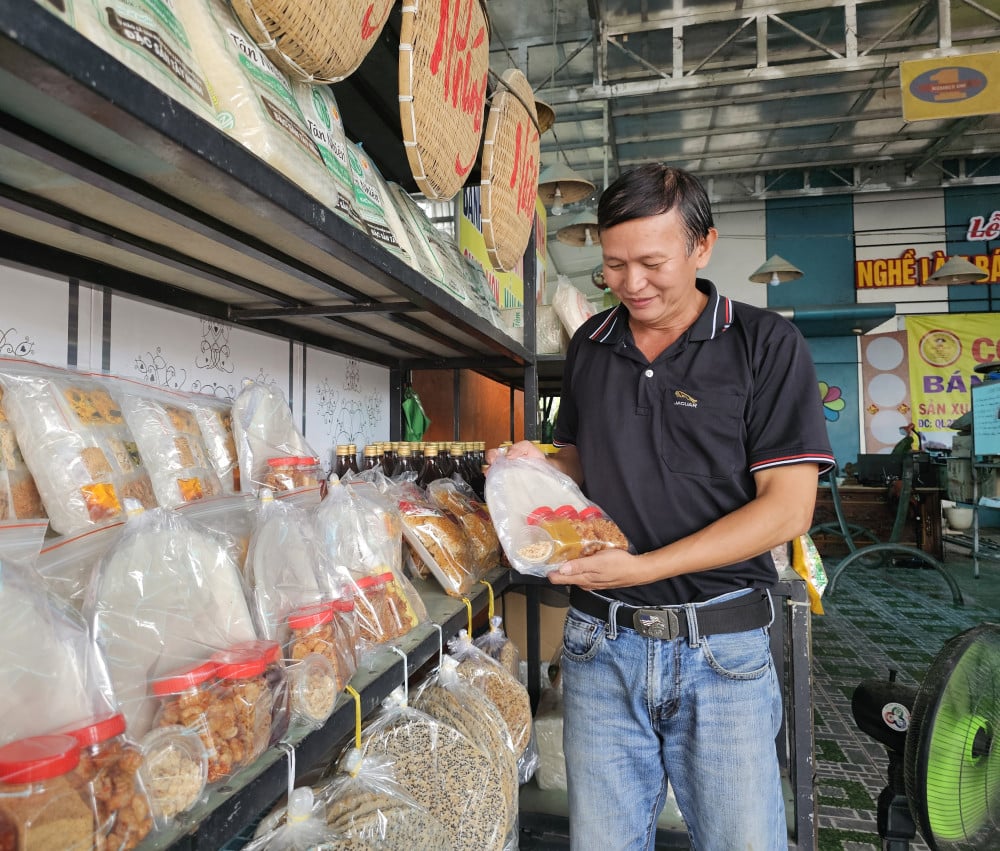
According to Mr. Vo Minh Cong, in order to preserve the rice paper making craft, the first step is to connect customers and local rice paper makers. (In the photo: Mr. Cong at his family's rice paper and chili salt business.)
And the hopes and efforts of the Trang Bang rice paper makers have been "given wings" by the government with the Trang Bang Sun-Dried Rice Paper Making Culture and Tourism Festival. Held every two years, the festival is a meaningful activity connecting heritage with tourism development, contributing to the preservation and promotion of the value of the national intangible cultural heritage of sun-dried rice paper making, while honoring the artisans who are tirelessly preserving and passing on this traditional craft. Through this, the image of Tay Ninh's homeland and people is introduced more widely.
With the collective efforts of passionate individuals and supportive local policies, the soul of Trang Bang rice paper, despite changes, is preserved and passed down through generations. Through the diligence of those holding the "secrets" of the traditional craft and the creativity and enthusiasm of young people, the Trang Bang rice paper making tradition continues, preserving the authentic taste of the past while opening up new avenues for this Tay Ninh specialty. And in each soft, chewy sheet of rice paper, one can not only taste the sweetness of the night dew but also feel the love of the land and the people of Trang Bang.
Moc Chau
Source: https://baolongan.vn/giu-nghe-tram-nam-xu-trang-a204879.html


































































Comment (0)