

The application of science, technology, and monitoring equipment to training, testing, and issuing driver's licenses helps to steer the current teaching and learning of car driving in the right direction, enabling students to drive on the road immediately after receiving their license.
Improve quality, reduce negativity.
Circular 04/2022, issued by the Ministry of Transport in 2022, is considered a "revolution" in driving instruction, requiring that from June 15th, trainees must complete a longer practical driving distance using driver and distance monitoring equipment (DAT).
By January 2023, driver training was further elevated to a new level when centers were required to equip themselves with simulator cabins for teaching purposes.
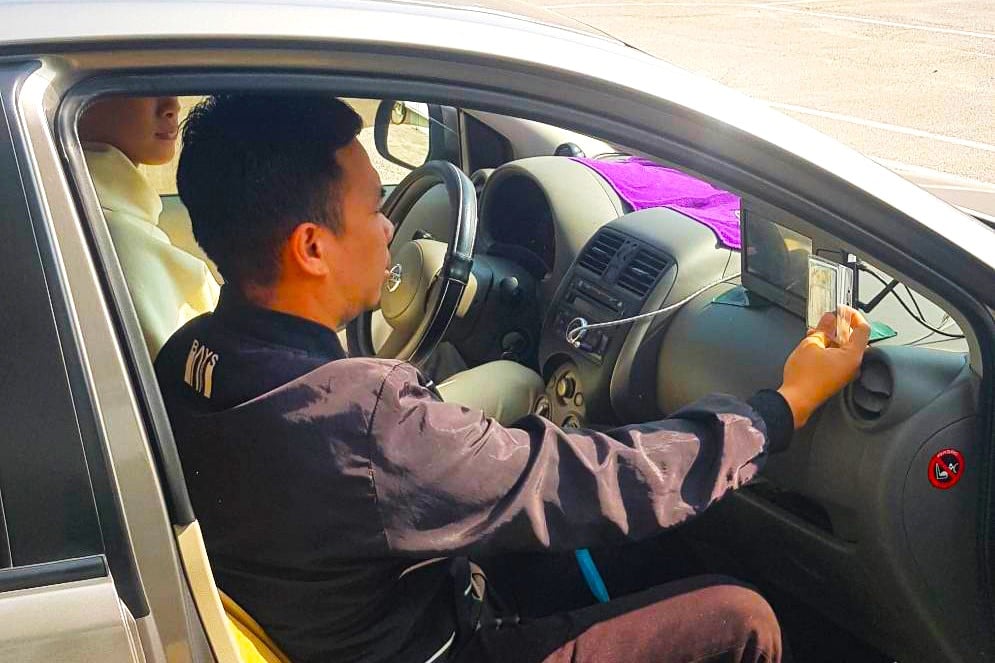
With basic exercises such as how to operate a vehicle, and exercises like driving on a test track, driving on more complex terrains such as hilly roads, highways, and city streets, students become familiar with different terrain conditions and improve their vehicle control skills.
Mr. Luong Duy Thong, Head of the Department of Transport Management, Vehicles and Drivers, Vietnam Road Administration, said that promoting the application of technology in driver training management is an important solution to improve the quality of teaching and learning, bringing this work closer to many advanced countries in the world .
Technology helps learners acquire additional training content to enhance their driving skills on the road and ensure compliance with the driver training program regulations. To achieve high results, learners need to fully participate in all required training content and monitor the learning process according to the contract signed with the driver training facility to ensure their rights are protected.
"Applying technology is not about making things difficult for trainees, but rather about tightening driver training, aiming to create a team of drivers with sufficient skills to control and handle unsafe situations, contributing to ensuring traffic safety and order," Mr. Thong said.
Drive confidently and safely on the road.
Sharing about her recent driving lessons, Ms. Nguyen Thuy Dung (30 years old, Thanh Xuan, Hanoi) said that with the DAT device and simulation software, she was "given the opportunity" to get behind the wheel more often. After getting her driver's license last June, she and her friends drove on a trip without any hesitation.
"I was lucky to get over 800km of practice on various roads, so driving in real-world conditions felt completely natural. If I had learned in the way I did before, with less practical training, I definitely wouldn't have dared to get behind the wheel, let alone drive long distances. I think it would be fantastic if the academy could even offer virtual driving practice in a simulator in the future," Ms. Dung said.
According to Tong Van Thuan, a driving instructor at the Dong Do Driving Training and Testing Center, the awareness and competence of learners have been a significant concern recently, with many places offering "unofficial" or shortcut training, failing to meet the required mileage. He believes that the use of monitoring equipment will encourage learners to take their driving skills more seriously from the very beginning. Instructors can no longer afford to be irresponsible.
"More than anyone else, driving instructors are the first people to interact with students in the process of developing their knowledge, skills, and especially their awareness when driving. If the instructor drives recklessly and hastily during lessons; or if they overtake recklessly, swear, or litter indiscriminately on the road... how can they expect their students to have good awareness when participating in traffic later? Therefore, the instructor must first and foremost be exemplary in every situation, no matter how small," Mr. Thuan shared.
Experts believe that tightening the management of driving instruction and training is necessary to minimize superficial and perfunctory learning, thereby contributing to ensuring safety for the community as well as for the drivers themselves in the future.
Mr. Nguyen Van Quyen, Chairman of the Vietnam Automobile Transport Association, believes that technology does not hinder trainees but rather helps improve skills and reduce traffic accidents. "The use of modern equipment helps train drivers who can handle situations quickly and avoid safety risks while driving. The quality of driver training has improved significantly. Trainees are very confident behind the wheel after receiving their licenses," Mr. Quyen said.
Thanks to automated scoring equipment, the pass rate for the driving test has decreased from 80-85% (when it was manual) to approximately 65-70%, depending on the center, accurately reflecting the students' skill level. This not only ensures the quality of the driver workforce but also limits negative practices in the testing process. Thus, the application of technology in driver training and testing meets practical requirements while also aiming for the long-term goal of building a safer, more transparent, and modern traffic environment.
Source: https://www.baogiaothong.vn/hoc-that-thi-that-trong-dao-tao-lai-xe-o-to-192241126100112801.htm
![[Image] The tenacious fighting spirit of Vietnamese women's football](/_next/image?url=https%3A%2F%2Fvphoto.vietnam.vn%2Fthumb%2F1200x675%2Fvietnam%2Fresource%2FIMAGE%2F2025%2F12%2F17%2F1765990260956_ndo_br_4224760955870434771-copy-jpg.webp&w=3840&q=75)
![[Live] 2025 Community Action Awards Gala](/_next/image?url=https%3A%2F%2Fvphoto.vietnam.vn%2Fthumb%2F1200x675%2Fvietnam%2Fresource%2FIMAGE%2F2025%2F12%2F16%2F1765899631650_ndo_tr_z7334013144784-9f9fe10a6d63584c85aff40f2957c250-jpg.webp&w=3840&q=75)

![[Photo] Prime Minister Pham Minh Chinh receives Lao Minister of Education and Sports Thongsalith Mangnormek](/_next/image?url=https%3A%2F%2Fvphoto.vietnam.vn%2Fthumb%2F1200x675%2Fvietnam%2Fresource%2FIMAGE%2F2025%2F12%2F16%2F1765876834721_dsc-7519-jpg.webp&w=3840&q=75)
![[Photo] Prime Minister Pham Minh Chinh receives the Governor of Tochigi Province (Japan)](/_next/image?url=https%3A%2F%2Fvphoto.vietnam.vn%2Fthumb%2F1200x675%2Fvietnam%2Fresource%2FIMAGE%2F2025%2F12%2F16%2F1765892133176_dsc-8082-6425-jpg.webp&w=3840&q=75)
![[Image] Leaked images ahead of the 2025 Community Action Awards gala.](/_next/image?url=https%3A%2F%2Fvphoto.vietnam.vn%2Fthumb%2F1200x675%2Fvietnam%2Fresource%2FIMAGE%2F2025%2F12%2F16%2F1765882828720_ndo_br_thiet-ke-chua-co-ten-45-png.webp&w=3840&q=75)























































![[Live] Closing Ceremony and Award Presentation for the "Impressive Vietnam Tourism" Video/Clip Creation Contest 2025](https://vphoto.vietnam.vn/thumb/402x226/vietnam/resource/IMAGE/2025/12/17/1765974650260_z7273498850699-00d2fd6b0972cb39494cfa2559bf85ac-1765959338756946072104-627-0-1338-1138-crop-1765959347256801551121.jpeg)



















Comment (0)