

Some believe that the sound "Trà" originates from the Cham language (Trà/Chà), while "Khúc" represents the continuous bends and changes in direction of the river from its source to the sea ( Trà Giang Cửu Khúc Hồi Hoàn - a poem by Cao Bá Quát).
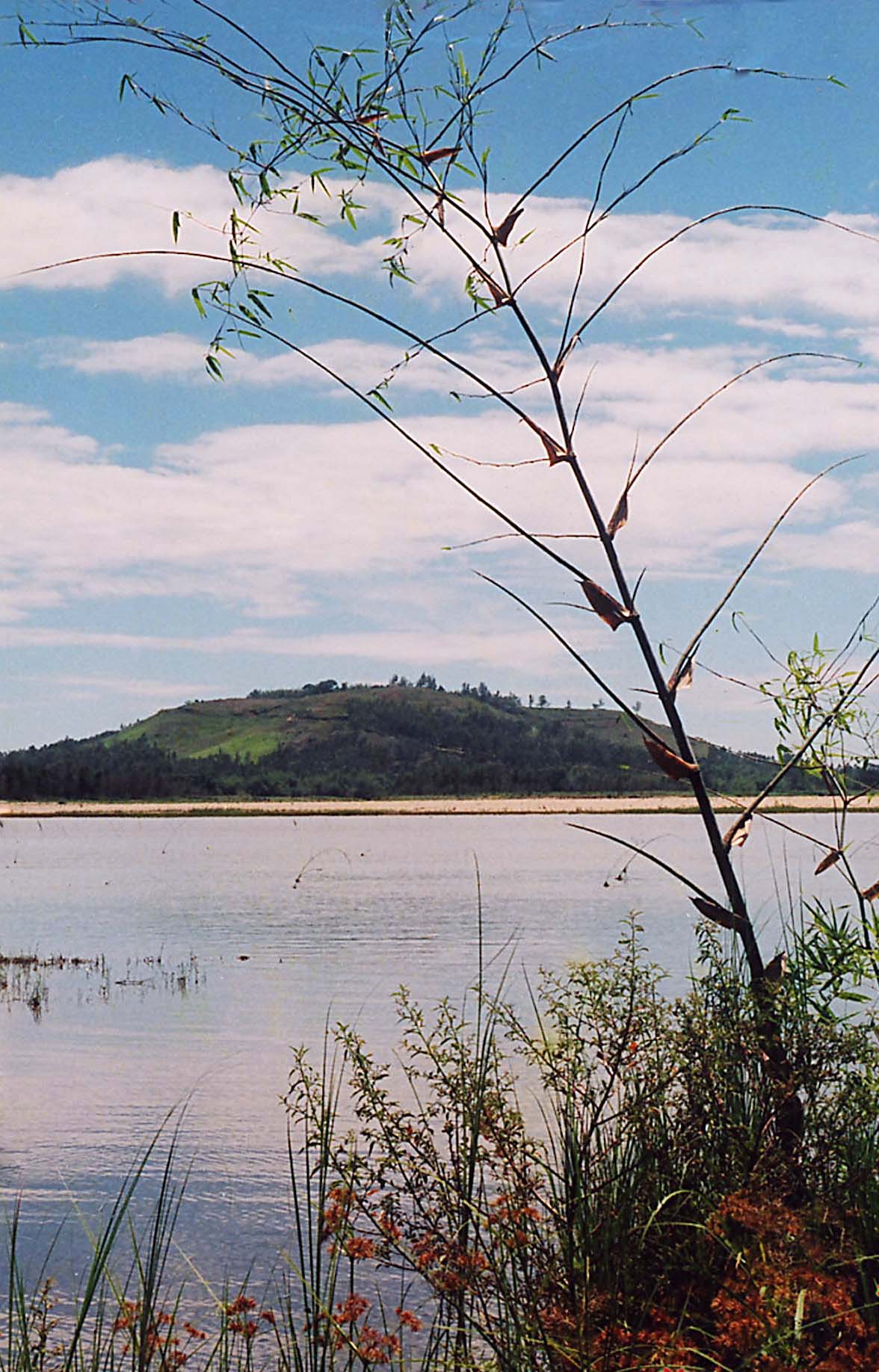
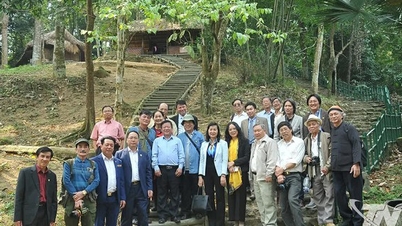
Thien An Mountain by the Tra Khuc River
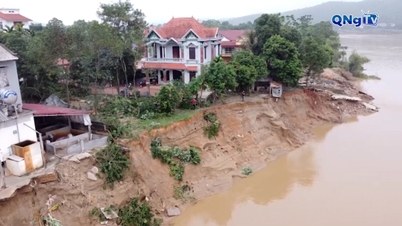
Rivers in Central Vietnam in general, and the Tra Khuc River in particular, are characterized by small drainage basins, narrow and steep riverbeds, and fast-flowing water, resulting in a relatively low capacity to store groundwater during the dry season. Meanwhile, due to the influence of weather and climate conditions, rainfall varies greatly between the rainy and dry seasons. Droughts during the dry season (January-August) and floods during the rainy season (September-December) become a constant threat to the lives of residents on both sides of the river. There have been many historical floods causing environmental disasters, property damage, and loss of life, such as the devastating floods of the years Mau Dan (1878), Giap Thin (1964), and Ky Mao (1999).
But it is precisely from such harsh natural conditions that the patience, perseverance, ingenuity, skillful hands, and sense of community cooperation of the people of Quang Ngai have been highly developed. From generation to generation, green bamboo groves have been planted along both banks of the river, protecting villages against the fierce floodwaters; hundreds of kilometers of canals have been dug to divert water from the Tra Khuc River in many directions, providing water for irrigation during the dry season and diverting floodwaters during the rainy season.
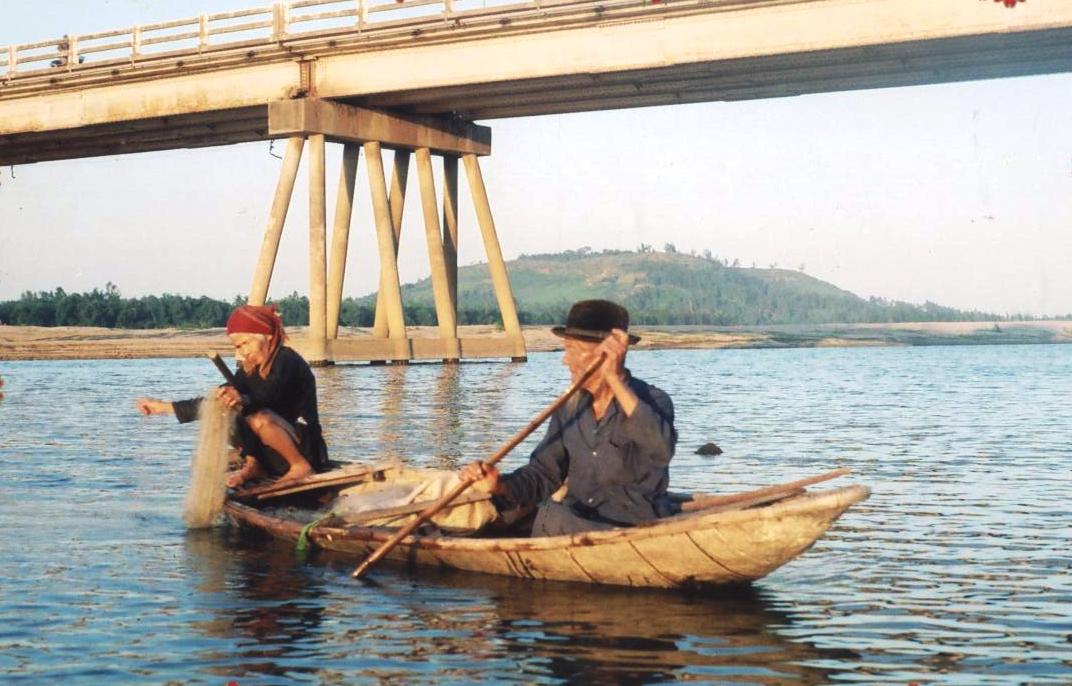
Casting nets on the Tra Khuc River
The Tra Khuc River also serves as a waterway connecting the coastal plains with the upstream areas, linking the inhabitants of the Ve River delta with those of the Tra Khuc River delta, and more broadly, facilitating maritime trade between the mainland and Ly Son Island (approximately 18 nautical miles northeast of the coast), and further afield between Quang Ngai and the Hoang Sa and Truong Sa archipelagos, as well as with other regions in Vietnam and Southeast Asia through the Dai Co Luy estuary. This is a crucial condition for the formation of the "Tra Khuc River cultural sub-region," with its distinctive spiritual culture, including a rich collection of folk songs and ballads, many of which are closely associated with agricultural production and riverine trade.
Many historians believe that the land of Co Luy Dong (Chiem Luy Dong) that the Champa king ceded to the Ho dynasty in 1402 only extended to the north bank of the Tra Khuc River. Also on the north bank of the Tra Khuc River, for a long time after King Le Thanh Tong established the Quang Nam administrative region (1471), successive feudal dynasties chose it as the location for building administrative offices in the Quang Ngai region: During the Le dynasty, the Tam Ty garrison was located within the old Champa citadel in Chau Sa (now Chau Sa village, Quang Ngai city, on the left bank, downstream of the Tra Khuc River); until the beginning of the Nguyen dynasty (before 1817), the provincial capital of Quang Ngai was still located in Phu Nhon village, now Quang Ngai city, on the left bank of the Tra Khuc River.
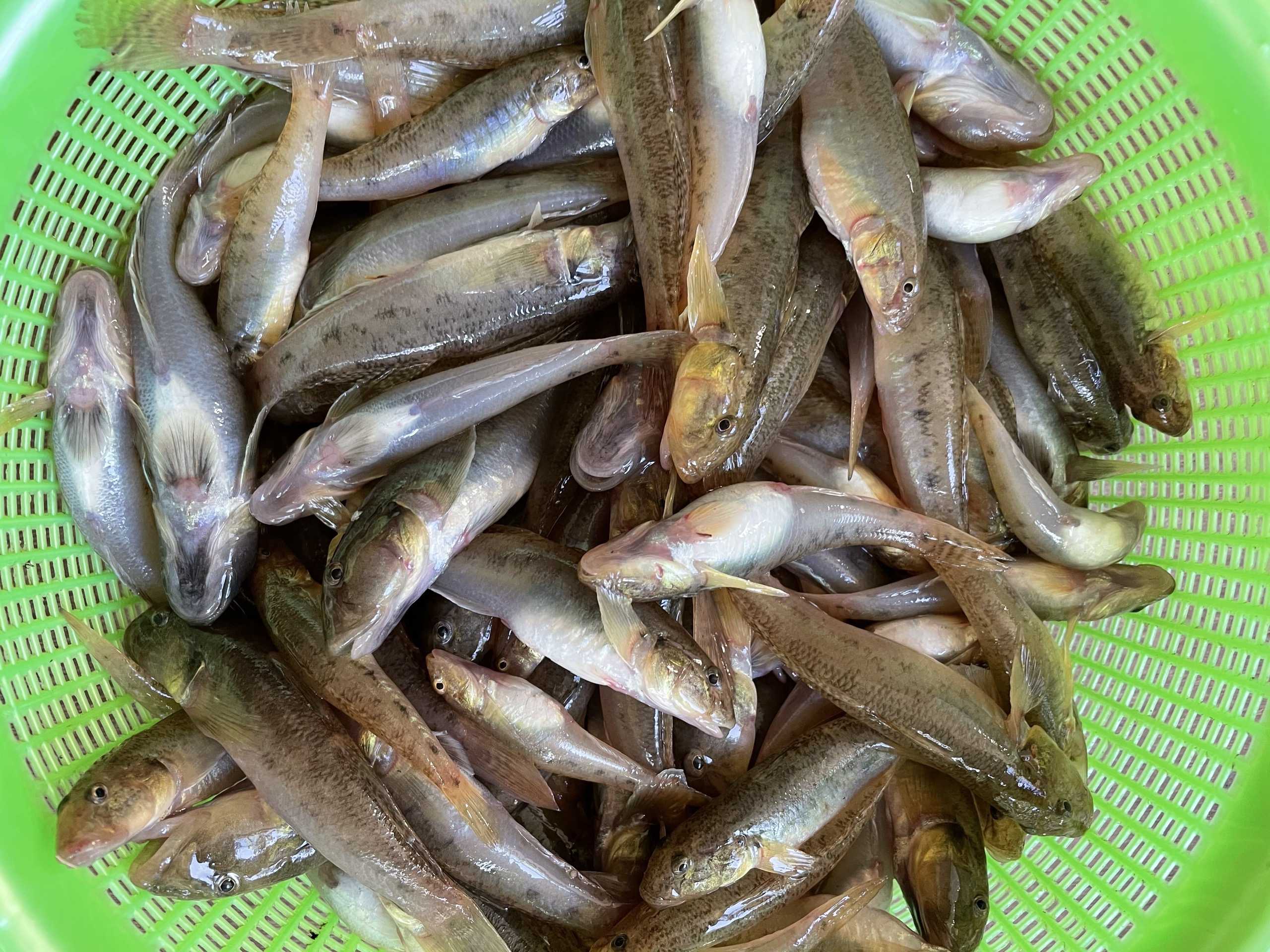
Tra Khuc River goby fish specialty
Among the 12 natural landscapes of Quang Ngai that the ancients called "wonderful" (Quang Ngai Twelve Scenic Spots), there are 4 scenic spots located along the Tra Khuc River (Thien An Niem Ha, Long Dau Hy Thuy, Co Luy Co Thon, Ha Nhai Van Do) and many other scenic spots visible from the viewpoint of Thien An mountain peak (Quang Ngai's first scenic spot) such as: Thien But Phe Van, Thach Bich Ta Duong, An Hai Sa Ban, Thach Ky Dieu Tau, Vu Son Loc Truong...
Land of Poetry
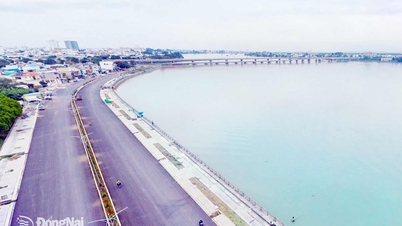
For the people of Quang Ngai, the Tra Khuc River is the largest river, a symbol of their homeland. Therefore, when they say " Tra River ," just as they say "Mount An - Tra River" or "An Tra," everyone understands it to mean the Tra Khuc River, and not the Tra Bong or Tra Cau rivers (two other, smaller rivers flowing through Quang Ngai). The ordinary people of Quang Ngai have etched the image of the Tra River, Mount An, and Mount Long Dau into their hearts through folk songs imbued with deep feelings for their homeland: " The Tra River flows close to Mount Long Dau / The water flows on forever, where dragons once bowed / Mount Long Dau leaves its name for posterity / Thien An Pagoda leaves its mark for future generations / Whoever goes to Quang Ngai, let the maiden follow."
The Tra Khuc River also provides its riverside residents with significant and unique resources such as mung bean sprout cultivation on the riverside sandbanks (Van village), clam harvesting, mussel gathering, river transport and trade, fishing, especially catching the Thai bai fish and goby. The braised goby from the Tra Khuc River with pepper has long been a famous specialty throughout the country: "When I leave, I remember my homeland / I remember the braised goby from the Tra Khuc River with pepper."
From folk songs and ballads to written literature, through countless generations, it's difficult to list all the poems and poets associated with the Tra Khuc River. Bich Khe, a talented but ill-fated poet, was so captivated by the river that he rented a boat to live a nomadic life, traveling back and forth across the lower reaches for many months. It's strange, isn't it? A poet whose verses and poems were innovative compared to his time and even long after, yet also had classical verses about "the Tra River and Mount An": " For a thousand years, Mount An lies covered in moss / A strip of the Tra River flows dark green." (Looking at the Tra River from Mount An) . (to be continued)
Source: https://thanhnien.vn/ke-chuyen-dong-song-xu-quang-tra-khuc-dong-song-me-185241118220829044.htm

![[Photo] Prime Minister Pham Minh Chinh receives the Governor of Tochigi Province (Japan)](/_next/image?url=https%3A%2F%2Fvphoto.vietnam.vn%2Fthumb%2F1200x675%2Fvietnam%2Fresource%2FIMAGE%2F2025%2F12%2F16%2F1765892133176_dsc-8082-6425-jpg.webp&w=3840&q=75)
![[Live] 2025 Community Action Awards Gala](/_next/image?url=https%3A%2F%2Fvphoto.vietnam.vn%2Fthumb%2F1200x675%2Fvietnam%2Fresource%2FIMAGE%2F2025%2F12%2F16%2F1765899631650_ndo_tr_z7334013144784-9f9fe10a6d63584c85aff40f2957c250-jpg.webp&w=3840&q=75)
![[Image] Leaked images ahead of the 2025 Community Action Awards gala.](/_next/image?url=https%3A%2F%2Fvphoto.vietnam.vn%2Fthumb%2F1200x675%2Fvietnam%2Fresource%2FIMAGE%2F2025%2F12%2F16%2F1765882828720_ndo_br_thiet-ke-chua-co-ten-45-png.webp&w=3840&q=75)

![[Photo] Prime Minister Pham Minh Chinh receives Lao Minister of Education and Sports Thongsalith Mangnormek](/_next/image?url=https%3A%2F%2Fvphoto.vietnam.vn%2Fthumb%2F1200x675%2Fvietnam%2Fresource%2FIMAGE%2F2025%2F12%2F16%2F1765876834721_dsc-7519-jpg.webp&w=3840&q=75)






































![[Live] Closing Ceremony and Award Presentation for the "Impressive Vietnam Tourism" Video/Clip Creation Contest 2025](https://vphoto.vietnam.vn/thumb/402x226/vietnam/resource/IMAGE/2025/12/17/1765974650260_z7273498850699-00d2fd6b0972cb39494cfa2559bf85ac-1765959338756946072104-627-0-1338-1138-crop-1765959347256801551121.jpeg)





















Comment (0)