

The resurgence after 50 years
With the bombings and shelling ceasing in their homeland, the Party Committee, military, and people of Ca Mau continued to unite, striving to heal the wounds of war while persistently overcoming difficulties and determined to move forward. People returned to their fields and gardens, restoring production and rebuilding villages devastated by the war. The economic structure during this period was primarily agriculture, forestry, and fisheries. The Gross Regional Domestic Product (GRDP) in 1975 was 226.2 million dong, rising to 3,446.3 million dong in 1985.
Implementing the reform policy during the 1986-1990 period, Minh Hai province (now the two provinces of Ca Mau and Bac Lieu) developed its economy with three strengths: agriculture, forestry, and fisheries, achieving many important accomplishments. In particular, the development of the fisheries sector, with its joint venture model of scientific production (intensive shrimp farming combined with forest planting, shrimp farming combined with forest protection, etc.), attracted visits and learning opportunities from many provinces such as Quang Ninh, Ha Nam Ninh, Gia Lai, Long An, etc. The average GRDP growth rate was 4.48% during the 1986-1990 period and 6.88% during the 1991-1995 period.
Colonel Nguyen Xuan Hung, former Deputy Chief of Staff of the Bac Lieu Provincial Military Command, recalled: “In 1997, when the province of Ca Mau was separated from Minh Hai province into Ca Mau and Bac Lieu provinces, the average income was only over 3 million VND per person per year. The first Congress of the Ca Mau Provincial Party Committee (11th term) for the 1997-2000 term also took place in that year, marking a new turning point for our homeland. From then on, electricity gradually reached the centers of the communes, transportation routes connecting the province to the centers of the districts developed, and the appearance of Ca Mau gradually improved.”
Industrial development reached the southernmost region of Vietnam during the period of 2008-2012, when the Ca Mau Gas-Electricity-Fertilizer Industrial Complex, a national-scale project, with the MP3-Ca Mau gas pipeline, power plant, and fertilizer plant, successively came into operation, creating a strong impetus for Ca Mau's economy in the process of industrialization and modernization. To date, the total revenue of the units belonging to the Ca Mau Gas-Electricity-Fertilizer Complex has reached approximately 13.5 billion USD, contributing over 21,000 billion VND to the state budget, carrying out social welfare work worth nearly 731 billion VND, including supporting Ca Mau province with 300 billion VND, and creating jobs for more than 1,533 workers...
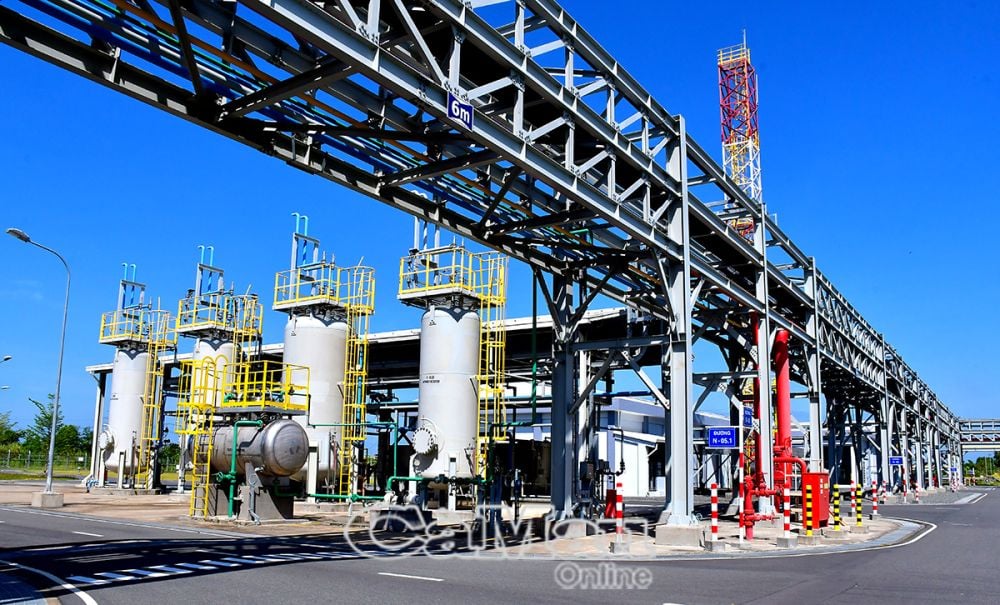
To date, the total revenue of the units belonging to the Ca Mau Gas-Electricity-Fertilizer Complex has reached approximately 13.5 billion USD, contributing over 21,000 billion VND to the State budget.
Alongside economic development, there has been a flourishing of socio-cultural fields, digital transformation, etc., promoting comprehensive innovation. To date, 66 out of 82 communes in the province have been recognized as meeting new rural standards, reaching 80.5%; 386 out of 486 schools have met national standards, reaching 79.4%. Significant achievements have been made in poverty reduction; by the end of 2024, the province had only 2,890 poor households, accounting for 0.94%, and 3,865 near-poor households, accounting for 1.26%. There are no longer any poor or near-poor households belonging to people who have rendered meritorious services to the revolution.
Affirming the strengths of the southernmost region.
Ca Mau is the only province in the country with three sides bordering the sea, boasting a coastline of over 250 km (accounting for one-third of the total coastline of the Mekong Delta), possessing immense potential for fisheries. Its vast 71,000 km² sea area is considered one of the four key national fishing grounds, with abundant and diverse marine resources and a powerful fishing fleet of over 4,500 vessels. The province's seafood products have been exported to over 60 countries, including demanding markets such as the US, Japan, and the EU.
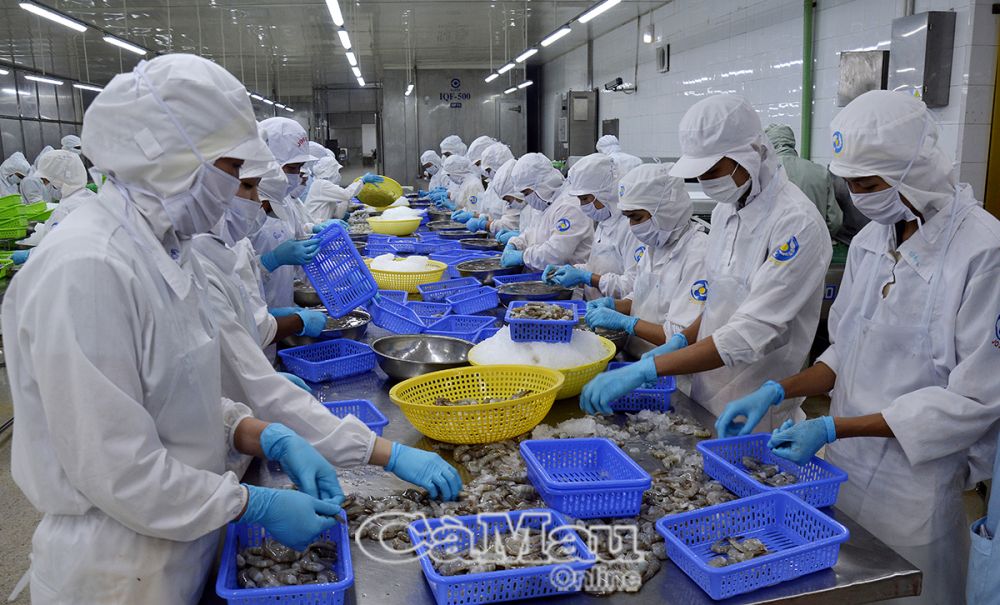
As the province with the largest area for aquaculture and fisheries in the country, Ca Mau has favorable conditions to develop into a seafood processing center for the region and the whole country.
In addition, Ca Mau has great potential for developing renewable energy, especially wind and solar power. The province has 12 wind power projects under implementation, with a total capacity of 700 MW, of which 3 wind power plants have commenced commercial operation, connecting to the national grid with a capacity of over 100 MW.
With its strategic geographical location in the heart of Southeast Asia and close to international shipping routes, Ca Mau has many advantages in trade with countries in the region and around the world. The construction of a bridge to Hon Khoai Island is a very important strategic direction for the nation as well as for Ca Mau province, thereby opening up great opportunities to strengthen cooperation in socio-economic development, especially in the fisheries sector.
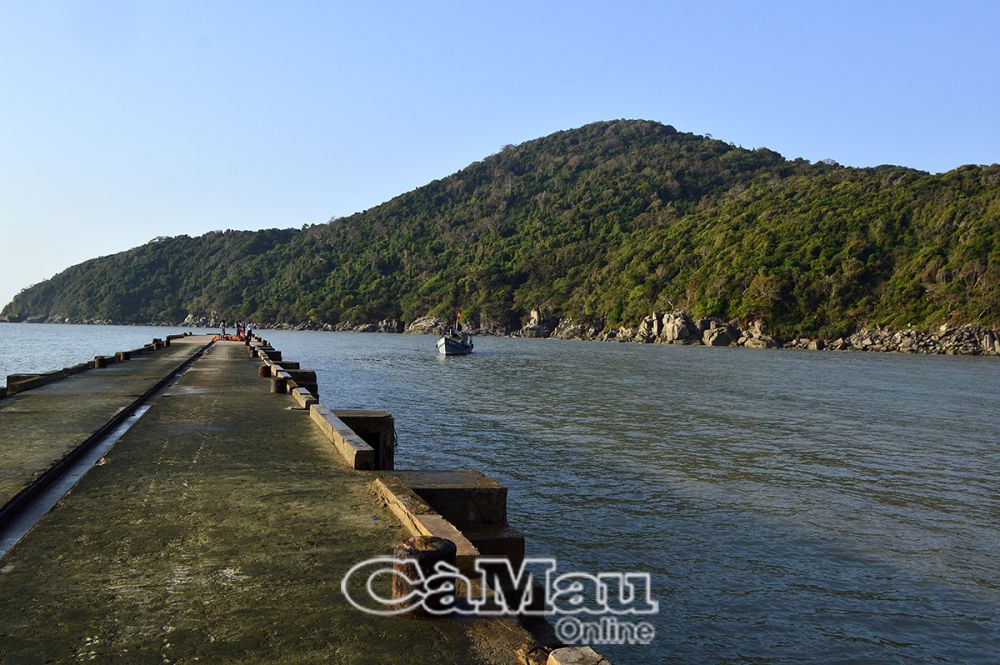
The construction of a bridge connecting the mainland to Hon Khoai Island is a very important strategic direction for the nation as well as for Ca Mau province.
Based on its potential strengths, Ca Mau province is promoting economic restructuring, linked with innovation in growth models, improving productivity and competitiveness, based on digital transformation, science and technology, innovation, green economy development, circular economy, and adaptation to climate change... Accordingly, the province focuses on developing industries with higher added value and greater growth potential, such as renewable energy, deep processing industries and supporting services; applying scientific and technical advancements to aquaculture and seafood processing, such as biofloc shrimp farming, greenhouse farming, and automation of processing processes... in order to build effective and sustainable value chains.
To date, the province's per capita GRDP has reached 72.6 million VND/person/year, total aquatic product output has reached 647,000 tons, export turnover is estimated at 1.26 billion USD, total rice production is approximately 570,000 tons, and budget revenue has reached 5,945 billion VND. Transportation has developed rapidly, with many large projects completed, meeting the needs of trade within and outside the province.
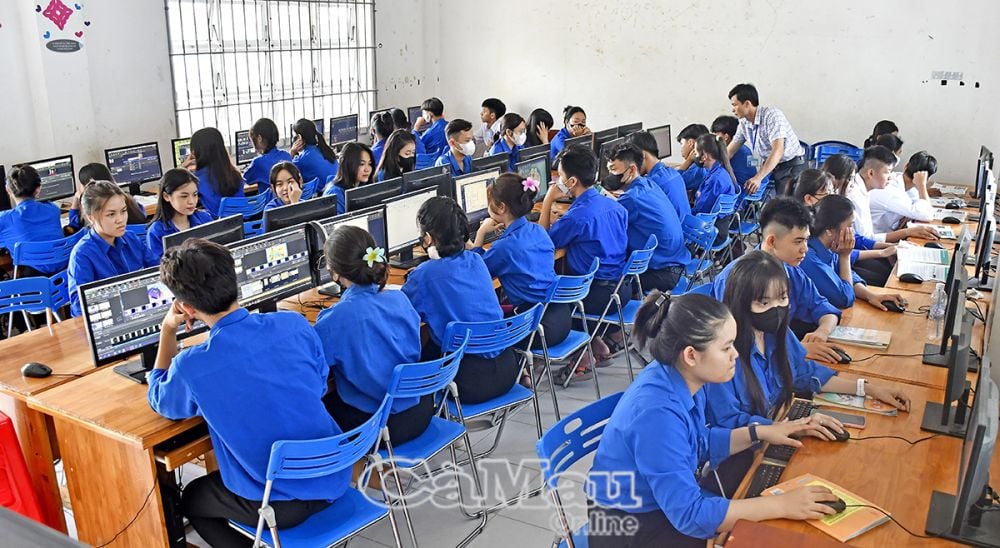
In implementing digital transformation, Ca Mau has integrated technology into its education system to improve the quality of teaching, learning, and management.
The Ca Mau Provincial Planning for the period 2021-2030, with a vision to 2050, was approved by the Prime Minister under Decision No. 1386/QD-TTg dated November 16, 2023. Accordingly, Ca Mau province will prioritize the allocation of resources to comprehensively and effectively implement the development plan based on a model of 3 economic zones, 5 growth poles, 2 economic corridors, and numerous development linkage axes, aspiring to become the "southernmost continent" of the country, as directed by the Central Government for Ca Mau province.
At every meeting with retired officials, former Chairman of the Provincial People's Committee Pham Thanh Tri always expressed his enthusiasm that Ca Mau province has many conditions and opportunities to accelerate development, especially with the priority investment in the synchronous development of infrastructure, such as: completing the Can Tho - Ca Mau expressway by 2025; upgrading and expanding Ca Mau Airport; investing in the construction of the Ca Mau - Dat Mui expressway; upgrading and expanding key transportation routes; building the Hon Khoai integrated seaport project along with the connecting road from the mainland to the island; expanding factories in the Ca Mau Gas - Electricity - Fertilizer Industrial Cluster...
The 50th anniversary of the Liberation of Southern Vietnam and the reunification of the country is an opportunity to recall the glorious history of the nation and the homeland, while also strengthening the will and determination for Ca Mau to break through and become the "southernmost continent," joining the rest of the country in entering a new era.
Mong Thuong
Source: https://baocamau.vn/khat-vong-phat-trien-vung-dat-cuc-nam-a38577.html


![[Photo] Reflections on "Building for Tet 2026" at the Sycamore High-Rise Project construction site.](https://vphoto.vietnam.vn/thumb/1200x675/vietnam/resource/IMAGE/2026/02/08/1770550642411_t4-jpg.webp)





























































Comment (0)